
Vine Ventures Closes $236M Fund III for US-Israel Bets
TL;DR
Vine Ventures has closed its third fund at $236 million, exceeding its roughly $200 million target and marking the firm's largest raise to date. The early-stage, generalist fund invests across the U.S. and Israel, typically as a company's first institutional check, and expects about half of the new fund's capital to go toward Israeli companies. The raise pushes Vine's total assets under management past $500 million just five years after its founding, following a $50 million debut fund and a $140 million second fund. Fund III's early moves include AI-driven defense and infrastructure investments, continuing a strategy that has already produced stakes in Cognition, Wonderful, Eon, Ornn, and Sail Research.
Key Takeaways
This is a fast scale-up for a five-year-old firm. Vine's funds have gone $50 million, then $140 million, then $236 million, a roughly 4.7x increase from its debut vehicle. That kind of step-up usually tracks realized markups in a firm's earlier bets, and Vine's partners point specifically to early, seed-stage positions in Cognition, Wonderful, Eon, and Ornn as the companies driving that case to LPs.
Half the fund is earmarked for Israel, by design, not by accident. Vine describes its strategy as allocating capital across what it calls the U.S.-Israel technology corridor rather than treating the two markets separately, and says it usually invests before larger multi-stage firms or alongside them, citing five existing co-investments with Sequoia as evidence it can get access alongside bigger names.
The firm is leaning into AI-driven defense and infrastructure as a new thesis thread. Eric Reiner, Vine's co-founder, says Fund III has already begun investing in AI-driven defense companies and related infrastructure, an area he frames as a natural extension of Vine's existing focus on the application, defense, and cyber layers being built in Israel.
Vine has built out a notably public-facing advisory and platform bench alongside the raise. The firm added a senior advisory group including Michael Lynton (Chairman of Snap, former Sony Entertainment CEO) and Bob Mylod (Chairman of Booking.com), brought on Adam Valkin from General Catalyst and Idan Tendler from Palo Alto Networks to lead investment and deal execution, and named Noa Argamani, a survivor of Hamas captivity during the October 7 attacks, as Platform Manager, connecting portfolio founders with potential customers and partners in the U.S.
Fund Overview
Fund Name: Vine Ventures Fund III
Fund Size: $236 million (final close, exceeded an approximately $200 million target)
Stage: Earliest-stage, typically as first institutional investor, occasionally alongside larger multi-stage firms
Check Size: Not disclosed
Geography: U.S. and Israel, with roughly half of fund capital expected to go to Israeli companies; offices in New York, San Francisco, Boston, and Tel Aviv
Focus: Generalist early-stage investing in companies aiming to be global and category-defining from inception, with recent emphasis on AI infrastructure and AI-driven defense technology
Key LPs: Not individually disclosed; Vine describes its backers as a mix of new and returning limited partners including global asset managers, family offices, and CEOs of large corporations
Why This Fund Matters
Vine's pitch is built around a specific structural bet: that the U.S. and Israel function as one technology corridor rather than two separate venture markets, with the U.S. supplying capital, scale, and frontier AI models, and Israel supplying the infrastructure, defense, and cyber layers that make those models actually work in production. That framing matters less as marketing language and more as an explanation for why Vine says it can get into competitive rounds early, often ahead of the large multi-stage firms that dominate headline deals, and then co-invest alongside those same firms later, with five existing co-investments alongside Sequoia cited as proof.
The fund-over-fund growth curve is the more concrete evidence. Going from a $50 million debut fund to $140 million to $236 million in roughly five years, with total AUM now above $500 million, is a steep trajectory for a firm that didn't exist a decade ago. Vine attributes that growth directly to early, seed-stage positions in companies it says are now among the fastest-growing in its portfolio, pointing specifically to Cognition, Wonderful, Eon, and Ornn as the proof points it took to LPs during the raise.
The team build-out alongside the raise is also a signal worth reading on its own. Adding Adam Valkin, a General Catalyst alum, to lead investing from Boston, and Idan Tendler, formerly of Palo Alto Networks, as a venture partner leading deal execution, suggests Vine is deliberately building sector depth in cybersecurity and enterprise software rather than staying a purely relationship-driven, founder-led shop as it scales. The senior advisory group, which includes a sitting public-company chairman (Michael Lynton at Snap) and a major travel-platform chairman (Bob Mylod at Booking.com), functions as a customer-and-credibility network for portfolio founders trying to land enterprise deals, which is a different value proposition than capital alone.
What isn't disclosed is nearly as notable as what is. Vine has not named specific check sizes, specific LPs, or specific valuations for its stakes in Cognition, Wonderful, Eon, or Ornn, so the strength of the step-up from Fund II to Fund III rests on Vine's own characterization of those positions rather than independently verified marks. Founders and co-investors evaluating Vine should treat "some of the fastest-growing companies we've ever seen," Reiner's own description of the portfolio, as the firm's claim rather than an audited fact.
The Team
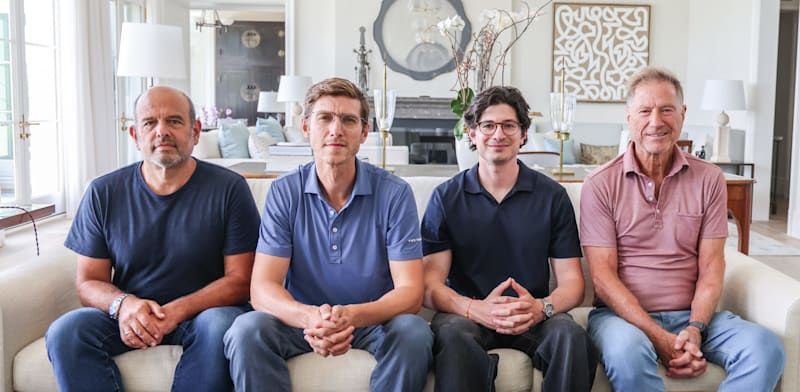
Vine Ventures was founded by Eric Reiner and Dan Povitsky, who serve as co-founders and partners; Reiner previously worked at Dynamic Yield and on the investment team at Insight Partners, while Povitsky was previously an investment manager at TA Associates. Gary Reiner, Eric's father and the former Chief Information Officer of General Electric and an operating partner at General Atlantic, serves as Senior Advisor. Partners Barak Kaufman, Demren Sinik, and Alex Moskowitz round out the investing team alongside Adam Valkin, who joined roughly a year ago from General Catalyst to lead investing from Boston. Idan Tendler, formerly of Palo Alto Networks, is a Venture Partner leading deal execution. John McIlree serves as CFO and Racheli Adler as Chief of Staff, with Naftaly Gluskin as Principal. Noa Argamani, a survivor of Hamas captivity during the October 7, 2023 attacks on Israel, joined roughly six weeks before the fund's announcement as Platform Manager, a role focused on connecting Vine's portfolio founders with prospective customers and partners, particularly in the U.S. Vine's senior advisory group, announced alongside Fund III, includes Michael Lynton, Chairman of Snap and former CEO of Sony Entertainment, and Bob Mylod, Chairman of Booking.com.
Early Portfolio
Vine's portfolio spans roughly 30 companies across its three funds. The firm points to Cognition, Wonderful, Eon, and Ornn as its highest-conviction, fastest-growing current positions, all taken at the seed stage. More recent additions named in the firm's own Fund III announcement include Sail Research, Trajectory, Spring Silicon, and X5 Labs, alongside earlier investments in Maven Robotics, Cayena, and Remepy. Vine's site lists a longer tail of portfolio companies spanning AI, cybersecurity, and infrastructure, including Qodo, Komodor, Lava, and Attestable, though the firm has not broken out which fund backed which company or disclosed entry valuations for any of them.
What This Means for Founders
Founders building category-defining, globally ambitious companies, rather than narrow point solutions, in either the U.S. or Israel are Vine's explicit target, and the firm is positioning itself to write some of the earliest institutional checks a company gets, sometimes ahead of larger multi-stage firms rather than only following their lead. For Israeli founders specifically, Vine's pitch includes direct help building a U.S. go-to-market motion, with Noa Argamani's platform role and the firm's senior advisory group both aimed at generating warm introductions to enterprise customers and partners that an early-stage company based in Tel Aviv might otherwise struggle to reach from outside the U.S.
The trade-off is that Vine is explicit about wanting founders who aim to be global from day one, which may make it a weaker fit for a founder building a more contained, regional, or narrowly scoped business, even a profitable one. Given the firm's emphasis on AI-driven defense and infrastructure as a growing part of its thesis, founders in those categories, particularly ones with ties to Israel's established defense and cyber ecosystem, appear to be a current area of active sourcing.
Fund Momentum Take
The real story in this raise isn't the $236 million figure, it's the speed of the step-up and what Vine is explicitly telling LPs justified it: concentrated, seed-stage conviction in a small number of companies, Cognition chief among them given its profile in the AI coding space, that the firm says are now outperforming. That's a classic emerging-manager pitch, and it's a reasonable one when it works, but it also means Fund III's own success is more dependent on a handful of existing positions continuing to compound than on a broad, diversified book. The U.S.-Israel corridor framing and the senior advisory bench are real differentiators worth tracking, but the honest read is that this is a firm betting its next chapter heavily on validating the picks it's already made.
Frequently Asked Questions
How big is Vine Ventures Fund III?
$236 million at final close, exceeding an approximately $200 million target and making it Vine's largest fund to date.
Who founded Vine Ventures?
Eric Reiner and Dan Povitsky co-founded the firm roughly five years ago. Gary Reiner, Eric's father and former CIO of General Electric, serves as Senior Advisor.
What does Vine Ventures invest in?
Vine is an early-stage generalist fund that typically writes a company's first institutional check, with a strategy built around connecting the U.S. and Israeli technology ecosystems. It expects roughly half of Fund III's capital to go to Israeli companies, and has recently emphasized AI infrastructure and AI-driven defense technology.
What companies has Vine Ventures backed?
The firm highlights Cognition, Wonderful, Eon, and Ornn as its highest-conviction current positions, all initial seed-stage investments. Other named portfolio companies include Sail Research, Trajectory, Spring Silicon, X5 Labs, Maven Robotics, Cayena, Remepy, and Qodo.
Who is Noa Argamani and why did Vine Ventures hire her?
Noa Argamani, a survivor of Hamas captivity during the October 7, 2023 attacks on Israel, joined Vine Ventures as Platform Manager roughly six weeks before the Fund III announcement. Her role focuses on connecting Vine's portfolio companies with prospective customers and partners, particularly in the U.S.
Raising a fund? Submit your fund to be featured on Fund Momentum.
Need help with your fundraise? Explore fundraising advisory services.
Related funds in the index
Seed funds from the verified index
| Fund | Size | Stage | Location | Focus |
|---|---|---|---|---|
| Starfire Ventures | Targeting $200 million USD | Seed | United States | Wellness & Lifestyle, FemTech +2 |
| Sinew Impact Fund | CA$8 million at initial close, targeting CA$10 million USD | Seed | Global | |
| Conexus Venture Capital Fund II | $35M USD | Seed | Canada | Enterprise Software, SaaS +1 |
| Vine Ventures Fund III | $236M USD | Seed | Israel | AI/ML, Defense |
| Brightmind Partners Fund II | Targeting roughly $250 million, in line with Fund I USD | Seed | Israel | Cybersecurity, AI/ML |