
Sofinnova Closes €725M Crossover II, Its Biggest Fund Ever
TL;DR
Sofinnova Partners has closed its second crossover fund, Sofinnova Crossover II, at €725 million, clearing its original target and becoming the largest fund the Paris-based life sciences firm has raised to date. The vehicle will put roughly 15 large checks behind European clinical-stage biopharma and medtech companies that need capital to finish trials, expand internationally and prepare for a listing or sale, with selective bets in the US and other markets outside Europe. It lands as a handful of specialist European life sciences investors, Jeito Capital, Forbion and Kurma Partners among them, are raising record sums for the same late-stage gap, and as the region still pulls in only a fraction of what US biotech startups raise.
Key Takeaways
This is Sofinnova's biggest fund in 54 years of investing. Founded in 1972, the firm has backed more than 500 companies and now manages over €4 billion. Crossover II is the largest single vehicle in that history, and it arrives just a year after Sofinnova closed its early-stage flagship, Capital XI, at €650 million, so the firm has raised more than €1.3 billion across its two main strategies inside twelve months.
The fund is purpose-built for the stage Europe struggles to fund. Crossover money sits between venture and public markets: it backs companies with clinical data in hand that need growth-size checks to get to commercial launch, a stage where European biotech has historically had to go to US investors for the capital to finish the job. Sofinnova's own numbers on Crossover I, exits at LimFlow, Calliditas, Amolyt Pharma and a Nasdaq listing for Abivax, are the track record it is using to argue it can do the same again at more than 1.5 times the size.
The European Tech Champions Initiative backing is a policy signal, not just capital. ETCI, the fund-of-funds the European Investment Fund set up specifically to help European tech companies avoid relying on US or Asian capital at scale, has put money into Crossover II. That's the EU's late-stage financing gap concern showing up directly in a single fund's cap table, and it's a vote of confidence that carries more than LP money with it.
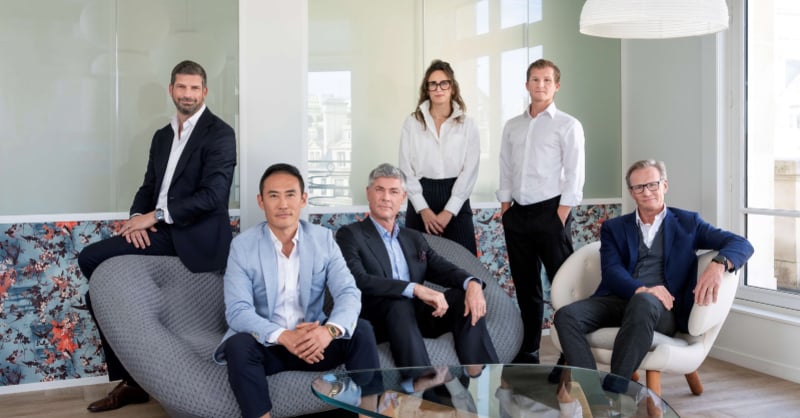
Three deals are already done, and the team is unchanged from Crossover I. Hemab Therapeutics, CellCentric and Neurent Medical are already in the portfolio, and the strategy stays with the same five partners, Joe Anderson, Kinam Hong, Cedric Moreau, Jacques Theurillat and David Evans, who ran Crossover I. Continuity of team is worth noting here: crossover investing lives or dies on knowing which late-stage calls to make, and Sofinnova isn't handing that judgment to a new bench.
Fund Overview
Fund Name: Sofinnova Crossover II
Fund Size: €725 million (~$815 million), exceeding its original target
Stage: Late-stage, clinical-stage private and public companies ahead of a listing or sale
Check Size: Not disclosed
Geography: Primarily Europe, with selective investments in the US and other international markets
Focus: Biopharma and medtech companies that need capital to advance clinical programmes, expand globally and prepare for commercial launch
Key LPs: European Tech Champions Initiative (ETCI), a fund of funds managed by the European Investment Fund
Why This Fund Matters
European life sciences has a sequencing problem. The region is good at seeding biotech, there's no shortage of academic spinouts or early rounds, but the money tends to thin out exactly when a company needs it most: after proof of concept, when a therapy or device has to run through expensive late-stage trials and build out the commercial operation to actually sell the thing. According to PitchBook, Europe now accounts for 20.5% of global biotech funding this year, its best share since 2018, and US biotech startups still raise about three times as much. Crossover funds exist to close exactly that gap, writing growth-size checks into companies that already have clinical data and a plausible path to an exit.
Sofinnova isn't the only firm chasing that opportunity right now. Jeito Capital closed its second fund at €1 billion in April. Forbion raised €2.3 billion across two vehicles for roughly 30 biotechs in Europe and North America. Kurma Partners closed Biofund IV at €215 million. Taken together with Sofinnova's €725 million, that's several billion euros of fresh European capital aimed specifically at the clinical-to-commercial stage inside a single year, which is either a sign that European life sciences has genuinely matured enough to support funds this size, or a sign that LPs are consolidating around a small number of firms with the track record to prove it, or more likely both at once.
What makes Crossover II worth watching beyond its size is who's underwriting it alongside Sofinnova's usual institutional base. ETCI was built by the European Investment Fund specifically to stop promising European tech companies from having to relocate or sell to US and Asian capital once they outgrow early-stage venture. Its presence in this fund's cap table is the EU policy apparatus putting money directly behind the argument that Europe can retain and scale its own biotech winners, rather than just producing them for someone else to commercialize.
The real test for Crossover II isn't the fundraise, it's what the fund does with Hemab Therapeutics, CellCentric and Neurent Medical, and the roughly twelve companies still to come. Crossover I's exits, LimFlow to Inari Medical, Calliditas to Asahi Kasei, Amolyt Pharma to AstraZeneca, and Abivax's Nasdaq listing, all went through acquisition or a US listing rather than a European one. If Crossover II's portfolio follows the same pattern, the fund will have done its job financially while leaving the underlying question, whether Europe can actually hold onto its best late-stage companies through to a European exit, unanswered for another cycle.
The Team
Crossover II is led by the same five partners who ran Sofinnova's first crossover vehicle: Joe Anderson, Kinam Hong, Cedric Moreau, Jacques Theurillat and David Evans, with Claire Catherinet and Elliott Puttock supporting as senior associate and analyst on the strategy. Antoine Papiernik, Chairman and Managing Partner of the firm, sits above the crossover team as part of Sofinnova's overall leadership. Anderson joined the Crossover team as partner after a career in the sector; Evans joined more recently to strengthen the London side of the strategy. The continuity from Crossover I to Crossover II, same partners, same mandate, is the clearest signal that Sofinnova sees this as a proven playbook being scaled up rather than a new bet.
Early Portfolio
Crossover II has already backed three companies: Hemab Therapeutics, CellCentric and Neurent Medical. Sofinnova has not disclosed check sizes or ownership stakes for any of the three, and none of the three has yet reached a liquidity event under this fund.
What This Means for Founders
This fund isn't for first-time founders or early rounds. Crossover II exists for companies that have already cleared proof of concept, have real clinical or regulatory data behind them, and need growth-size capital to get through the expensive final stretch toward commercial launch, whether that's a Phase 3 trial, international expansion, or balance-sheet strength ahead of a listing or sale. If that's your stage, Sofinnova brings 54 years of sector-specific judgment and a crossover team that has already taken four companies through to exit via its first fund.
For earlier-stage founders, the more useful signal is what this fund says about the exit environment two or three years out. A €725 million war chest aimed specifically at late-stage biopharma and medtech means more capital will be available at that stage when today's seed and Series A companies get there, which should, in theory, make it easier to raise a bridge to commercialization rather than get stuck hunting for US investors once European early-stage money runs dry.
Fund Momentum Take
The step-up here, from Crossover I to a larger, oversubscribed Crossover II, backed by the EU's own tech-champions vehicle, reads as a genuine vote of confidence in Sofinnova's late-stage judgment rather than just a bigger number for its own sake. The team didn't change, the thesis didn't change, and the four Crossover I outcomes it's pointing to are real, not projected. That's a reasonable basis for LPs to write bigger checks the second time around.
Where we'd push back a little is on what "closing Europe's late-stage funding gap" actually requires. Several billion euros raised across Sofinnova, Jeito, Forbion and Kurma inside a single year is a lot of dry powder, but dry powder solves a financing problem, not a market-structure problem. Europe's biotech exits still skew heavily toward US acquirers and US listings, Crossover I's own track record included, and no amount of European LP capital changes where the biggest pharma buyers and the deepest public markets for biotech currently sit. Sofinnova can underwrite more companies through to exit; it can't on its own change where those exits happen.
Over the next few years, the question that actually matters is whether a fund like this changes founder behavior at the margin, keeping a European late-stage company headquartered and listed in Europe instead of relocating for a Nasdaq listing, or whether it just pushes the handoff to US capital and US exchanges a round later and at a higher valuation. Either outcome is a win for Sofinnova's LPs. Only one of them is a win for the European life sciences ecosystem Crossover II says it's trying to build.
Frequently Asked Questions
What is Sofinnova Crossover II?
It's a €725 million fund from Sofinnova Partners that invests in late-stage, clinical-stage biopharma and medtech companies in Europe (with selective bets in the US and elsewhere) that need capital to finish clinical development, expand internationally and prepare for a commercial launch or exit.
How big is Sofinnova Crossover II compared to the firm's first crossover fund?
Sofinnova hasn't disclosed Crossover I's exact size in this announcement, but the firm says Crossover II is its largest fund to date, exceeding its original fundraising target.
Who are the lead partners on the fund?
Joe Anderson, Kinam Hong, Cedric Moreau, Jacques Theurillat and David Evans lead the Crossover strategy, the same team that ran Crossover I, with Antoine Papiernik as the firm's Chairman and Managing Partner.
What companies has Crossover II already invested in?
Hemab Therapeutics, CellCentric and Neurent Medical. Check sizes and ownership stakes haven't been disclosed.
Who are the fund's investors?
The only publicly named backer is the European Tech Champions Initiative (ETCI), a fund of funds managed by the European Investment Fund that was set up to help scale European tech companies without them having to rely on non-European capital.
Have a fund closing to announce? Submit your fund here.
Need help raising capital? Check out our Fundraising Advisory services.
Related funds in the index
Late Stage · MedTech funds from the verified index
| Fund | Size | Stage | Location | Focus |
|---|---|---|---|---|
| Sofinnova Crossover Fund II | €725 million EUR | Series C | France | Biotech, MedTech +1 |
| Genesys University Seed Fund | C$30M CAD | Seed | Canada | Biotech, MedTech |
| Sofinnova MD Start Fund IV | €82M EUR | Seed | France | MedTech |
| GD1 Core Fund II | NZ$56.7M NZD | Pre Seed | New Zealand | EnergyTech, Space +6 |
| Cross Border Impact Ventures Fund II | $58M USD | Series A | Canada | Digital Health, MedTech +2 |