
Plural Raises €1B to Chase Europe's Frontier Tech Bets
TL;DR
Plural, the London, Tallinn and Paris-based venture firm run entirely by former founders and operators, has pulled together €1 billion in fresh capital, split between a new early-stage fund and a separate vehicle to double down on its existing winners. The raise is roughly double the firm's 2024 second fund and nearly four times its 2022 debut, and it lands as Plural leans harder into the riskiest corner of European tech: defense, energy, space and the infrastructure underneath AI. The firm already backed defense AI company Helsing and fusion startup Proxima Fusion before either was a household name in venture circles, and partner Khaled Helioui argues that founders in these categories have gone from being seen as uninvestable to being the most sought-after talent on the continent.
Key Takeaways
The raise is really two funds in one. About two-thirds of the €1 billion goes into Fund III, Plural's new early-stage vehicle for backing founders from the earliest rounds. The remaining third sits in a separate pool earmarked for following on into the firm's existing portfolio leaders, a split that lets Plural keep writing first checks while also protecting its ownership in companies like Helsing and Proxima Fusion as they raise larger rounds.
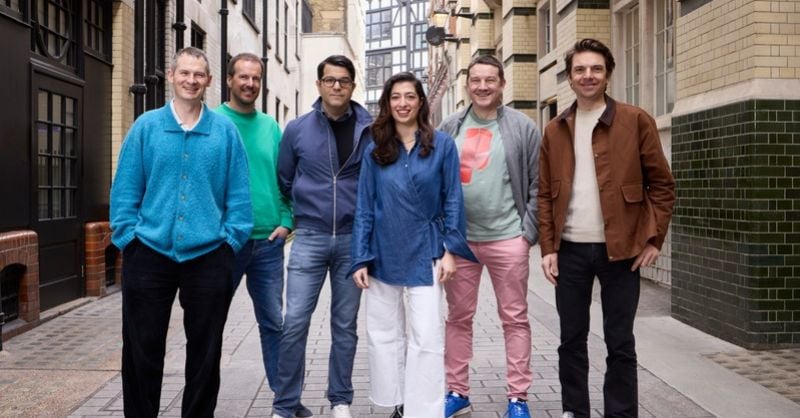
Every partner has already built or run a company. Plural's six equal partners, Taavet Hinrikus (Wise, Skype), Sten Tamkivi (Teleport), Ian Hogarth (Songkick, now chair of the UK AI Security Institute), Khaled Helioui (former CEO of Bigpoint), Carina Namih (co-founder of mRNA biotech HelixNano) and Pierre-Dimitri Gore-Coty (a former senior Uber executive who joined full-time in October 2025), have all run operating businesses before writing checks. That bench is the firm's core pitch to founders: capital from people who have actually sat in the operator's chair.
The thesis has hardened around categories most European funds still avoid. Fund III is aimed squarely at defense, energy, space and AI infrastructure, areas that were treated as uninvestable by most of the European venture industry for years because of long development timelines, regulatory complexity or capital intensity. Plural's own portfolio, which also includes Hypersonica, Robeauté, Monumental, Frankenburg Technologies, Ore Energy, Rivan, Teton and Everlab, reads like a bet that this is where the next generation of large European outcomes will come from.
The fund arrives inside a genuine European VC rebound. European venture firms raised roughly $14.9 billion in the first nine months of 2026, already closing in on the $15.5 billion raised across all of 2025, with large vehicles like EQT's €5 billion Scaleup Europe Fund closing alongside Plural's. Deeptech took a record 32% share of European venture capital in 2025, more than double its share a decade ago, so Plural's bet on frontier categories is part of a broader shift in where European capital is heading, not a lone contrarian call.
Fund Overview
Fund Name: Plural Fund III (plus a separate follow-on vehicle for existing portfolio companies)
Fund Size: €1 billion combined, with roughly two-thirds allocated to new early-stage investments
Stage: Earliest-stage, pre-seed and seed
Check Size: Plural's founding mandate centers on leading early-stage rounds of €1 million to €10 million
Geography: Europe, with the firm based in London, Tallinn and Paris
Focus: Defense, energy, space and AI infrastructure, plus deep tech more broadly
Key LPs: University endowments and foundations (the largest group), plus fund-of-funds, insurers, pension plans and family offices; the six partners themselves are also among the fund's largest investors
Why This Fund Matters
Plural's own numbers tell a fairly unusual growth story for a European early-stage firm. It closed its debut fund at €250 million in 2022, went out in January 2024 targeting €400 million for Fund II and ended up closing that fund at €500 million by the end of the year, comfortably past its own target. Fund III at €1 billion is roughly double that second fund and close to quadruple the first, a growth curve that puts Plural among the largest early-stage-focused managers in Europe inside four years of operating.
What makes the raise notable isn't just the size, it's where the capital is pointed. Defense technology, fusion and space have historically struggled to attract traditional venture capital in Europe, partly because return timelines run longer than a typical ten-year fund life and partly because many LPs have been reluctant to back dual-use or defense-adjacent technology. Plural's existing bets on Helsing and Proxima Fusion predate the current wave of interest in those categories, and the firm is using that track record as the basis for raising a fund explicitly built to go deeper into the same territory.
The split structure, a dedicated early-stage fund alongside a separate vehicle for doubling down on existing winners, also addresses a problem that has become more visible across European venture over the past two years: funds that make great first bets and then get diluted out of their best companies because they don't have reserves to follow on into later, larger rounds. By ring-fencing roughly a third of the new capital for follow-on, Plural is building in the ability to stay meaningfully invested in Helsing or Proxima Fusion as those companies raise growth-stage rounds that dwarf their original checks.
The timing also lines up with a broader capital shift. AI companies alone drew €44.1 billion of European venture funding in the first nine months of 2026, and deeptech's share of the overall pie has grown steadily. Large funds like EQT's €5 billion Scaleup Europe vehicle and Plural's own €1 billion raise suggest LPs are increasingly comfortable backing European managers at a scale that was rare just a few years ago, at least for firms with a credible thesis and a track record to back it up.
The Team
Plural operates with six equal partners rather than a traditional senior-junior structure, and all six have operating backgrounds rather than purely financial ones. Taavet Hinrikus co-founded Wise (formerly TransferWise) and was an early Skype employee before that. Sten Tamkivi founded logistics startup Teleport and was previously a senior executive at Skype. Ian Hogarth founded music discovery company Songkick and now chairs the UK's AI Security Institute, giving the firm a direct line into how European governments are thinking about AI safety and defense policy. Khaled Helioui was CEO of gaming company Bigpoint before moving into investing. Carina Namih co-founded mRNA vaccine and AI biotech HelixNano and joined Plural as a partner in 2023. The newest addition, Pierre-Dimitri Gore-Coty, spent years in senior roles at Uber before joining Plural full-time as a partner in October 2025, rounding out the team's exposure to large-scale operations and logistics.
Early Portfolio
Plural's existing book includes Helsing (European defense AI), Proxima Fusion (fusion energy spun out of the Max Planck Institute), OLIX, the Exploration Company (space reentry vehicles), Hypersonica, Robeauté, Monumental, Frankenburg Technologies, Ore Energy, Rivan, Teton and Everlab. Several of these, particularly Helsing and the Exploration Company, are now among the best-funded private companies in their respective categories in Europe, which is the track record Plural is leaning on to justify the size and focus of Fund III.
What This Means for Founders
Founders building in defense, energy, space or AI infrastructure in Europe now have a well-capitalized, operator-led fund explicitly hunting in their category, at a moment when many generalist European funds still treat those sectors as too capital-intensive or too regulatorily complex to pursue seriously. Plural's pitch to founders centers on its partners having actually built and scaled companies themselves, plus a platform team that helps with legal, fundraising, marketing and product work rather than just writing a check and stepping back.
The firm's willingness to lead rounds of €1 million to €10 million also matters for founders who want a single investor capable of anchoring an early round rather than assembling a syndicate. Combined with the follow-on vehicle, founders who take Plural's first check also get a credible path to continued support from the same firm through growth-stage rounds, assuming the company performs.
Fund Momentum Take
The real story here isn't the headline €1 billion, it's the split between new money and follow-on reserves. Plenty of funds raise bigger follow-on vehicles once a portfolio company breaks out, but building that discipline into the fund structure from day one is a sign Plural learned something from watching other European early-stage firms get diluted out of their best companies over the past decade. It's a sensible structural response to a real problem, and it signals the firm expects at least a few of its frontier bets to keep needing serious capital for years.
The bigger question is whether the category itself can support a fund this size. Defense, fusion and space are genuinely capital-intensive, slow-moving sectors by venture standards, and a €1 billion fund betting heavily on them is making a multi-decade wager that Europe's appetite for sovereign capability in these areas keeps growing rather than fading with the next political cycle. Given how central defense spending and energy security have become to European policy over the past few years, that looks like a reasonable bet today. Whether LPs still feel that way in a 10-year fund's back half is a different question entirely.
What's harder to argue with is the team. Six partners who've all built real companies, writing checks into founders tackling genuinely hard technical problems, with enough capital behind them to actually follow their money, is about as credible a setup as European early-stage venture has right now.
Frequently Asked Questions
How big is Plural's new fund?
Plural raised €1 billion in total, split between a new early-stage fund (Fund III) that accounts for roughly two-thirds of the capital and a separate vehicle reserved for following on into existing portfolio companies.
How does this compare to Plural's previous funds?
Plural's debut fund closed at €250 million in 2022. Its second fund was announced in January 2024 targeting €400 million and ultimately closed at €500 million later that year. Fund III is roughly double the second fund and close to four times the first.
What does Plural invest in?
Plural focuses on early-stage European founders building in defense technology, energy (including fusion), space and AI infrastructure, typically leading rounds of €1 million to €10 million.
Who are Plural's partners?
Taavet Hinrikus, Sten Tamkivi, Ian Hogarth, Khaled Helioui, Carina Namih and Pierre-Dimitri Gore-Coty, all of whom built or ran operating companies before becoming investors.
What has Plural already backed?
Notable portfolio companies include defense AI firm Helsing, fusion energy startup Proxima Fusion and space company the Exploration Company, alongside Hypersonica, Robeauté, Monumental, Frankenburg Technologies, Ore Energy, Rivan, Teton and Everlab.
Have a fund closing to announce? Submit your fund here.
Need help raising capital? Check out our Fundraising Advisory services.
Related funds in the index
Seed · Deep Tech funds from the verified index
| Fund | Size | Stage | Location | Focus |
|---|---|---|---|---|
| Inovia Capital Fund VI | $200M USD | Seed | Canada | AI/ML, Deep Tech +4 |
| Antares Ventures Fund I | $50M USD | Seed | Singapore | Deep Tech, EnergyTech +2 |
| Linse Ignition | $75M USD | Seed | United States | Deep Tech, Defense +4 |
| Graduate Ventures Seed Fund II | €125 million target EUR | Seed | Netherlands | AI/ML, Deep Tech +2 |
| Headline EU Fund VIII | $400M USD | Seed | United Kingdom | AI/ML, Deep Tech +4 |