
Mission Street Capital Launches Sub-$2M Fund From a Hacker House
TL;DR
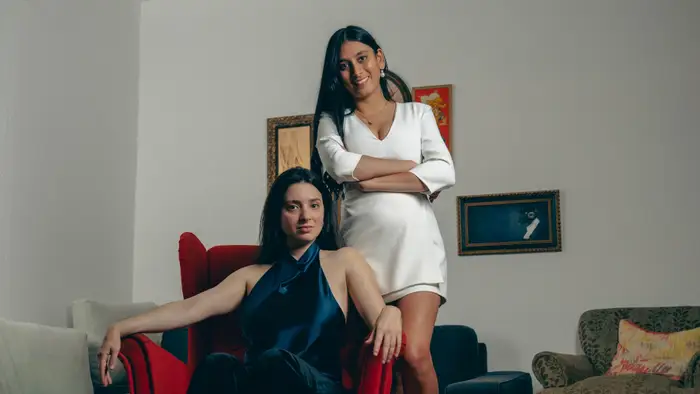
Surabhi Todi and Lisa Shmulyan, former roommates at Mission Control, San Francisco's oldest hacker house, have come out of stealth with Mission Street Capital, a sub-$2 million "Fund 0" writing first checks into pre-seed and seed AI-native startups emerging from hacker houses and talent clusters. The fund's dozen-company portfolio already includes Aside, HydraDB, Smallest, Bild AI, Clera, and Ruvo. Its limited partners include researchers at OpenAI, Anthropic, and Meta AI, investors from Andreessen Horowitz, CRV, and Emergence Capital, and an anchor commitment from cloud infrastructure startup Fly.io. The pitch is distinctive even by scout-fund standards: Todi says the firm's scouts spend up to 100 hours living alongside a prospective founder, doing laundry and dishes, before deciding whether to write a check.
Key Takeaways
This is a scout fund with a very specific origin story, not a generic pre-seed vehicle. Todi and Shmulyan built Mission Street Capital directly out of their own experience living at Mission Control, a hacker house founded by Thiel Fellows in 2013 whose alumni include Vitalik Buterin and the founders of Hightouch, Pylon, and Scale AI.
The fund is genuinely tiny, and that's the point. Mission Street raised less than $2 million for its debut "Fund 0," a deliberately small first vehicle meant to prove a track record before raising something larger, rather than a fund trying to compete on check size with traditional seed firms.
The LP base reads like a who's-who of AI-lab insiders and top-tier VC scouts. Named limited partners include researchers at OpenAI, Anthropic, and Meta AI, and investors affiliated with Andreessen Horowitz, CRV, Emergence Capital, Afore Capital, and Uncork Capital, alongside an anchor commitment from Fly.io.
It's part of a broader, newly visible trend of hacker houses turning into investors. Mission Street joins AGI House Ventures and HF0 as hacker-house-adjacent communities that have moved from hosting founders to actually writing checks into their companies.
Fund Overview
Fund Name: Mission Street Capital, "Fund 0"
Fund Size: Less than $2 million (self-described as a deliberately small debut vehicle)
Stage: Pre-seed and seed, typically the first institutional check
Check Size: Not disclosed; consistent with a sub-$2M fund, likely small initial checks
Geography: San Francisco Bay Area center of gravity, with a scouting network spanning hacker houses and talent clusters globally
Focus: AI-native pre-seed and seed companies emerging from hacker houses and talent clusters
Key LPs: Researchers from OpenAI, Anthropic, and Meta AI; investors from Andreessen Horowitz, CRV, Emergence Capital, Afore Capital, and Uncork Capital; anchor investor Fly.io
Why This Fund Matters
The structural story here is more interesting than the dollar figure. Mission Control, where Todi and Shmulyan met, was founded by a group of Thiel Fellows in 2013 and bills itself as San Francisco's oldest hacker house. Its alumni list is genuinely remarkable for a single shared house: Ethereum co-founder Vitalik Buterin, the co-founders of Hightouch (now valued near $2.75 billion), Pylon co-founder and CEO Marty Kausas, and Scale AI co-founder and Passes CEO Lucy Guo have all lived there. Todi has described the fund's origin as a late-night conversation outside the house's bathroom, reflecting on how many of those former roommates had gone on to build companies worth billions, and realizing the fund's founders could have invested at a pre-seed valuation if they'd had capital and the conviction to deploy it earlier.
That's the core thesis: proximity as diligence. Rather than a single coffee meeting, Todi says Mission Street's scouts spend up to 100 hours getting to know a prospective founder, including mundane shared-living moments like washing dishes or doing laundry together. The firm points to a resident who replaced the house's couch cushions without being asked as exhibiting exactly the kind of initiative it looks for; its own standard, in the GPs' words, is roughly "if they're a leader in the house, we're going to invest in their company." Whether sustained proximity actually produces better investment decisions than traditional diligence is an open and genuinely unproven question, not a demonstrated edge, and it's worth treating the framing with real skepticism rather than taking the founders' own narrative at face value.
Mission Street isn't alone in making this bet. AGI House, a competing hacker house and AI-researcher convening space in Hillsborough, has launched AGI House Ventures to invest in startups from its own network, and HF0 (Hacker Fellowship Zero) has been running a live-in founder program with housing and capital since 2021. This is a small but now visibly growing category of hacker-house communities monetizing the proximity they already had to early founders, rather than just donating space and vibes to them.
The LP list is the part of this story that elevates it above a typical angel-scale fund. Named limited partners, per the firm's own site, include researchers at OpenAI (Ari Weinstein), Meta AI (Ashvin Nair), and Anthropic (Michael Graczyk, Soheil Koushan), alongside investors affiliated with CRV (Caitlin Bolnick), Andreessen Horowitz (James da Costa), and Emergence Capital (Lotti Siniscalco), plus individuals tied to Afore Capital, Uncork Capital, Better Capital, PayPal, Perplexity, and Replit. Business Insider also reports an institutional anchor investor in cloud computing startup Fly.io. That's an unusually dense, well-networked cap table of backers for a fund this small, and it's arguably more valuable to the fund's portfolio companies than the capital itself: those LPs are exactly the kind of people who can make warm introductions, validate technical hires, or help a startup get noticed inside a frontier AI lab.
The Team
Mission Street Capital is co-founded and led by Surabhi Todi and Lisa Shmulyan, both General Partners. Shmulyan has described the firm's diligence philosophy as prioritizing how a founder thinks, what they've built, who they're building with, and whether customers are starting to show real interest, over a traditional pitch deck, which she says comes later in the process. Todi previously held growth roles at later-stage startups before co-founding the fund, and has said she deliberately moved out of Mission Control itself after launching Mission Street, in part because she wants the fund's scouting to extend across the broader hacker house and talent-cluster ecosystem rather than staying tied to one specific house.
Early Portfolio
Mission Street's own site lists six current portfolio highlights, all first or early institutional checks: Aside, an AI browser that separately raised a $6 million seed round led by Y Combinator; HydraDB, which is building knowledge graph infrastructure for AI agents; Smallest (also referenced as Smallest AI), a voice AI company; Bild AI, an AI-powered construction takeoff and estimation tool for Division 8 distributors that raised a $3.1 million seed round led by Khosla Ventures in mid-2025; Clera; and Ruvo, which builds cross-border BRL/USD accounts for Brazil-US money movement using Pix, stablecoins, and Visa rails, and raised a $4.6 million seed round led by 1confirmation in February 2026 with Coinbase Ventures also participating. Business Insider's reporting puts the full early portfolio at about a dozen companies total, meaning several names beyond these six have not yet been made public. A third-party fund tracker has also floated two additional, unconfirmed possible portfolio companies, Cortex AI and Cacao, neither of which currently appears among the firm's own published highlights, so those two should be treated as unverified rather than confirmed.
What This Means for Founders
If you're a technical founder inside a hacker house, talent cluster, or residency program (Mission Street's own site lists dozens of these globally, from established SF houses to international ones in India, Sri Lanka, Austria, and the UK), this is a direct signal that there's now institutional capital specifically watching for signs of conviction and initiative within those communities, not just traditional pitch materials. Mission Street's explicit thesis favors unconventional background signals: a high-school rare-coin business, a sneaker-botting operation, a construction business built before age 23, and college dropouts with no prior venture experience are all cited approvingly in the firm's own positioning.
Be realistic about what a sub-$2 million fund can actually do for you financially. This is explicitly a "Fund 0," a proof-of-concept vehicle meant to earn the right to raise something larger, so checks are likely to be small, and the fund's real value for a founder is probably the access to its LP network (frontier AI lab researchers, scouts at top-tier VC firms) more than the capital itself. If you're being courted by a hacker-house-affiliated fund, ask directly what the actual check size will be and how the firm thinks about fundraising introductions for your next round, since that's likely to matter more than the first check.
Also worth asking: what happens to the relationship if you don't live in the house, or if the fund declines to invest in you despite shared housing. Proximity-based investing raises real, underexplored questions about how informal evaluation during shared living translates into formal investment terms, and about what it's like socially to be a housemate the fund didn't back.
Fund Momentum Take
This is absolutely a story worth covering, and not because of the fund's size. A sub-$2 million debut vehicle wouldn't normally clear the bar on its own, but the LP list here (researchers at all three frontier AI labs, scouts tied to a16z, CRV, and Emergence) is a genuinely unusual signal for a fund this small, and it tells you something real about how seriously the AI-insider community is taking the hacker-house-to-startup pipeline right now.
I'd push back hard on the "proximity as diligence" framing as presented, though. Spending 100 hours doing laundry with a founder is a nice story, and it's plausible it surfaces some real signal a single coffee meeting wouldn't catch. But it's also exactly the kind of structure that can quietly reward charisma, social fit, and who-you-already-know over businesses that will actually work, especially in a house that's self-selected for a narrow founder archetype to begin with. The replaced-couch-cushions anecdote is charming, but it's also a single, cherry-picked story standing in for an entire investment methodology that hasn't had time to prove anything yet, since the fund itself is brand new and has zero exits.
The more durable value proposition here is probably the LP network, not the scouting method. A pre-seed company that gets a Mission Street check is also getting implicit access to people embedded at OpenAI, Anthropic, Meta AI, and several top venture firms, and that's worth something concrete regardless of whether the "watch them do dishes" diligence process is actually predictive. Founders should take the pitch and the capital, use the network aggressively, and reserve judgment on whether the underlying thesis is genuinely differentiated until this fund, or one of its hacker-house-fund peers, actually produces an exit.
Frequently Asked Questions
How big is Mission Street Capital's fund, and who runs it?
Mission Street Capital raised less than $2 million for its debut "Fund 0." It's co-founded and led by General Partners Surabhi Todi and Lisa Shmulyan, who met as roommates at Mission Control, San Francisco's oldest hacker house.
What does Mission Street actually invest in, and at what stage?
The fund writes pre-seed and seed checks, typically as the first institutional investor, into AI-native companies emerging from hacker houses and talent clusters. It explicitly favors unconventional founder backgrounds over traditional pitch-deck polish or prior fundraising experience.
Who are Mission Street's limited partners?
Named LPs on the firm's own site include researchers at OpenAI, Anthropic, and Meta AI, plus individuals affiliated with Andreessen Horowitz, CRV, Emergence Capital, Afore Capital, Uncork Capital, Perplexity, Replit, and PayPal. Business Insider additionally reports an anchor institutional investment from cloud computing startup Fly.io.
What's in Mission Street's portfolio so far?
The firm's own site highlights six companies: Aside, HydraDB, Smallest (Smallest AI), Bild AI, Clera, and Ruvo. Business Insider reports the full early portfolio totals about a dozen companies, meaning several names have not yet been made public; two additional names floated by a third-party tracker, Cortex AI and Cacao, are unconfirmed by the firm itself.
What makes Mission Street's diligence process different from a typical seed fund?
Todi says the fund's scouts spend up to 100 hours living alongside a prospective founder, including everyday shared-living activities, before deciding whether to invest, compared to a typical VC coffee meeting lasting a few hours. The firm says it looks for signs of initiative and leadership within the house itself as a proxy for founder quality, an approach that is distinctive but entirely unproven at this early stage.
Raising a fund and want it covered here? Submit your fund.
Need help getting in front of the right LPs? Talk to our fundraising advisory team.
Related funds in the index
Active funds from the verified index
| Fund | Size | Stage | Location | Focus |
|---|---|---|---|---|
| Starfire Ventures | Targeting $200 million USD | Seed | United States | Wellness & Lifestyle, FemTech +2 |
| Plural Fund III | €1 billion combined, with roughly two-thirds allocated to new early-stage investments EUR | Pre Seed | United Kingdom | Defense, EnergyTech +3 |
| Sofinnova Crossover Fund II | €725 million EUR | Series C | France | Biotech, MedTech +1 |
| Sinew Impact Fund | CA$8 million at initial close, targeting CA$10 million USD | Seed | Global | |
| The 81 Collection Fund II | $82M USD | Growth | United States | Manufacturing, Supply Chain |