
Inovia Capital Hits $200M First Close on AI-Native Fund VI
TL;DR
Montreal's Inovia Capital has banked a $200 million first close on its sixth flagship early-stage fund, putting it more than halfway to a $325 million target it hopes to hit by Q1 2027. What makes Fund VI notable isn't the size, it's roughly in line with Fund V, it's the framing: partner Karamdeep Nijjar is calling it Inovia's first "completely AI-native" fund, meaning every company it backs is expected to be built around AI from day one rather than bolting it on later. Returning LPs include Canada's Business Development Bank (BDC), La Caisse de dépôt et placement du Québec (CDPQ), CIBC, and Teralys Capital, pushing Inovia's total assets under management to roughly $2.7 billion.
Key Takeaways
This is a steady-state fund, not a growth fund, and that's the point. At a $325 million target against a prior vehicle of similar size, Inovia isn't chasing a bigger number for its own sake. In a cycle where plenty of funds are either ballooning to compete for AI infrastructure deals or shrinking because LPs have gone cautious, holding fund size flat while sharpening the thesis is a deliberate signal of discipline, not a lack of ambition.
"AI-native" is doing real portfolio-construction work here, not just marketing copy. Nijjar's framing implies a filter at the top of the funnel: Inovia isn't layering AI messaging onto a generalist seed strategy, it's using AI-nativeness as a qualifying criterion for the 15 to 20 core investments the fund plans to make. That's a narrower aperture than most seed funds operate with, and it will show up in how concentrated the portfolio ends up looking by cybersecurity, infrastructure, devops, energy, compute, and robotics.
The LP base is the real story, not the fund size. Business Development Bank of Canada, CDPQ, CIBC, Fondaction, Fonds de solidarité FTQ, Investissement Québec, and Teralys Capital all came back for Fund VI. That's essentially the full roster of Quebec and Canadian institutional capital re-upping on a nineteen-year-old firm, which is a far stronger signal of conviction than any single check size. When your LP base is this concentrated in domestic institutional money, first-close velocity becomes a referendum on past performance more than on market timing.
Fund V's track record is carrying this raise, and the numbers back it up. Nijjar points to top-quartile performance against Cambridge Associates and Carta benchmarks, with Cohere, Flare, Gaia, and Spellbook as reference points. Cohere alone, as one of the better-known foundation model companies globally, gives Inovia a marquee logo that most Canadian seed funds simply don't have, and it's almost certainly doing outsized work in LP re-up conversations even if it isn't the headline of this announcement.
Fund Overview
Fund Name: Inovia Capital Fund VI
Fund Size: $200 million USD first close (~C$282 million); $325 million USD target
Stage: Seed to Series A
Check Size: Not disclosed; fund plans 15-20 core investments
Geography: North America and Europe
Focus: AI-native startups and frontier technology in cybersecurity, infrastructure, devops, energy, compute, robotics, and quantum
Key LPs: Business Development Bank of Canada (BDC), La Caisse de dépôt et placement du Québec (CDPQ), CIBC, Fondaction, Fonds de solidarité FTQ, Investissement Québec, Teralys Capital
Why This Fund Matters
Canadian venture has spent the last several years fighting a narrative problem: great research output, strong exits in pockets (Cohere being the most visible current example), but a persistent sense that the biggest rounds and the biggest outcomes still get captured by US funds parachuting in at Series A and beyond. Inovia's response, across nineteen years and now six flagship funds, has been to build a platform wide enough to stay relevant across the whole lifecycle, from its Discovery fund-of-funds program for emerging managers through venture and into growth equity, rather than ceding the later stages to outsiders.
Fund VI's AI-native framing matters because it's a bet on where the defensibility actually sits in this cycle. The thesis implicit in Nijjar's comments is that companies retrofitting AI onto existing products are structurally disadvantaged against teams that designed their cost structure, data flywheel, and go-to-market around AI from the outset. That's not a contrarian view at this point, most sophisticated seed investors would nod along, but putting institutional capital explicitly behind it as a fund mandate, rather than leaving it as an informal preference, is a more assertive stance than most peer funds have taken publicly.
The sector spread, cybersecurity, infrastructure, devops, energy, compute, and robotics, reads like a deliberate avoidance of the most crowded part of the AI market: consumer-facing application-layer startups where differentiation is thin and foundation model dependency risk is high. Energy and robotics in particular put Inovia closer to the physical-world AI thesis that's been gaining traction among growth-stage investors over the past year, which is a reasonable hedge against the possibility that pure software AI multiples compress before this fund's companies reach their next rounds.
The Mila partnership on a $100 million Venture Scientist Fund is a smaller data point worth watching. Mila is one of the most credible AI research institutions in the world, and co-launching a dedicated vehicle with them gives Inovia a research-to-startup pipeline that's genuinely hard for competitors to replicate without similar academic relationships. If that program starts producing deal flow at scale, it could end up mattering more to Inovia's long-term differentiation than Fund VI's headline number.
The Team
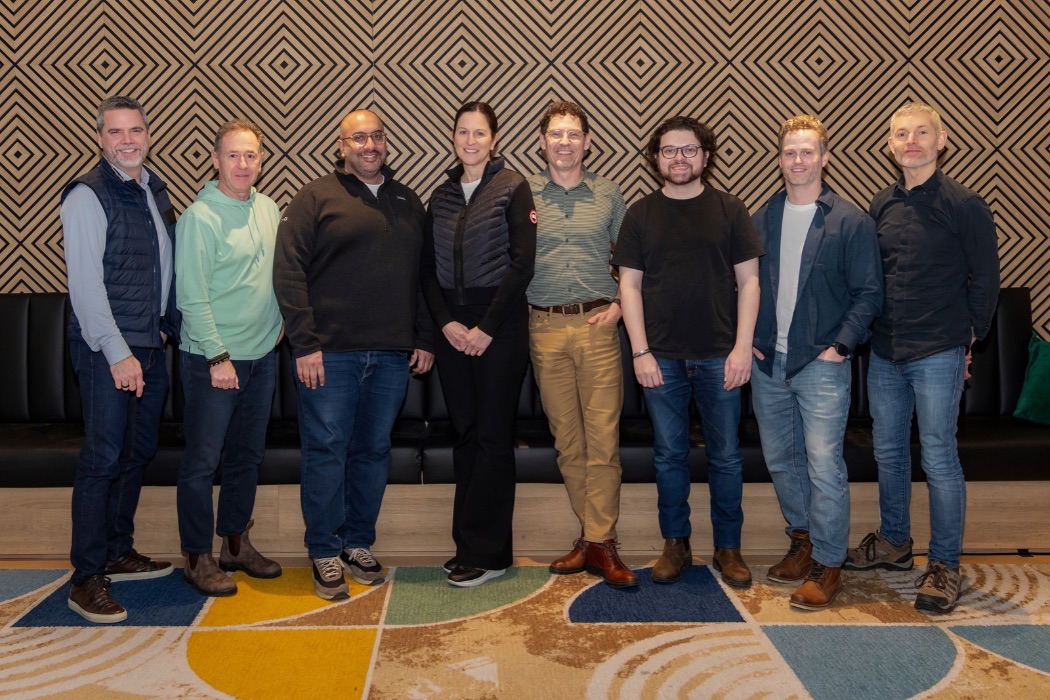
Fund VI is being led by a bench that includes Karamdeep Nijjar, Magaly Charbonneau, Shawn Abbott, Kory Jeffrey, Taha Mubashir, and Steve Woods, all of whom hold partner-level roles on Inovia's venture team per the firm's own team page; the firm does not formally distinguish a separate "general partner" title from "partner" in its public materials, so we're using the firm's own terminology rather than the "general partners" framing used in some trade coverage. Jeffrey and Mubashir were promoted to partner within the past year, a sign the firm is actively building bench strength underneath its more senior names rather than concentrating decision-making in a small founding group. Mia Morisset leads the firm's separate growth equity vehicle, which has raised $365 million of a $450 million target, a parallel raise that's proceeding alongside Fund VI and underscores how much capital Inovia is simultaneously trying to bring in across its platform this cycle.
Early Portfolio
Inovia hasn't named specific Fund VI investments yet, the fund is still mid-raise. For context on the firm's track record, Nijjar points to Fund V's top-quartile performance against Cambridge Associates and Carta benchmarks, citing Cohere, Flare, Gaia, and Spellbook as portfolio reference points from that prior vehicle.
What This Means for Founders
If you're building something where AI is load-bearing in the product and not an add-on, feature, Inovia's explicit mandate here makes them a more obvious first call than firms still running a generalist seed thesis with an AI tag layered on top. The sector list, cybersecurity, infrastructure, devops, energy, compute, robotics, is also a useful signal of where the firm believes it has the technical depth to add value beyond capital, which matters most for founders building in categories with long technical sales cycles or regulatory complexity.
The flip side is that a 15-to-20-company target portfolio against a $325 million fund implies meaningfully larger average check sizes than a typical 30-to-40-company seed fund, which means a higher bar to get in and less tolerance for spray-and-pray pitching. Founders should expect a more concentrated diligence process and should come in with a clear point of view on why their category is genuinely AI-native rather than AI-adjacent.
Fund Momentum Take
We like this one. A flat fund size with a sharper thesis is a harder story to tell LPs than "we're raising a bigger fund because the market's bigger," but it's the more honest one, and the fact that essentially the entire Quebec and Canadian institutional LP base came back for it tells you the performance numbers are real enough to not need a size story to carry the raise. The AI-native framing is also well-timed: we're far enough into this cycle that "AI company" has become a near-meaningless label, and funds that can actually articulate a differentiated filter for what that means in underwriting terms are going to out-perform funds still running generic seed theses with an AI veneer.
The risk sits in the sector concentration. Energy, compute, and robotics are categories with longer development timelines and more capital intensity than typical software seed bets, and a 15-to-20-company portfolio has less room to absorb a couple of expensive, slow-moving misses than a more diversified fund would. If even two or three of those bigger-check bets in capital-intensive categories stall out, it'll show up in fund-level returns faster than it would in a more spread-out portfolio. We'd also flag that "first fully AI-native fund" is a framing choice Inovia is making now, with the benefit of hindsight on what's worked in AI over the past two years; the real test is whether that filter still looks sharp three years from now when the category has moved again.
Frequently Asked Questions
How big is Inovia Capital's Fund VI?
Fund VI has reached a $200 million USD first close toward a $325 million USD target, which Inovia hopes to reach by Q1 2027.
What stage does Inovia Capital Fund VI invest in?
The fund focuses on seed to Series A, and plans to make 15 to 20 core investments.
What does "AI-native" mean for this fund's investment thesis?
Partner Karamdeep Nijjar describes it as backing companies where every part of the business uses AI from inception, rather than companies that have added AI capabilities to an existing, non-AI product.
Who are Inovia Capital's returning LPs in Fund VI?
Reported returning limited partners include the Business Development Bank of Canada, La Caisse de dépôt et placement du Québec, CIBC, Fondaction, Fonds de solidarité FTQ, Investissement Québec, and Teralys Capital.
What is Inovia Capital's total AUM after this raise?
Inovia's total assets under management are reported at approximately $2.7 billion across its venture, growth, and discovery vehicles following the Fund VI first close.
Have a fund closing to announce? Submit your fund here.
Need help raising capital? Check out our Fundraising Advisory services.
Related funds in the index
Seed funds from the verified index
| Fund | Size | Stage | Location | Focus |
|---|---|---|---|---|
| Brightmind Partners Fund II | Targeting roughly $250 million, in line with Fund I USD | Seed | Israel | Cybersecurity, AI/ML |
| Yosemite Fund II | $350M USD | Seed | United States | Therapeutics |
| Not publicly disclosed; referred to in press coverage as NSV Fund I | S$70M SGD | Seed | United States | Biotech, Digital Health +3 |
| AP Ventures Fund III | $300M USD | Seed | United Kingdom | Manufacturing, EnergyTech +3 |
| Magnolia MedTech Fund | Not disclosed | Seed | Netherlands | Digital Health |