
After the Close #3: The Product Just Happens to Be a Venture Firm
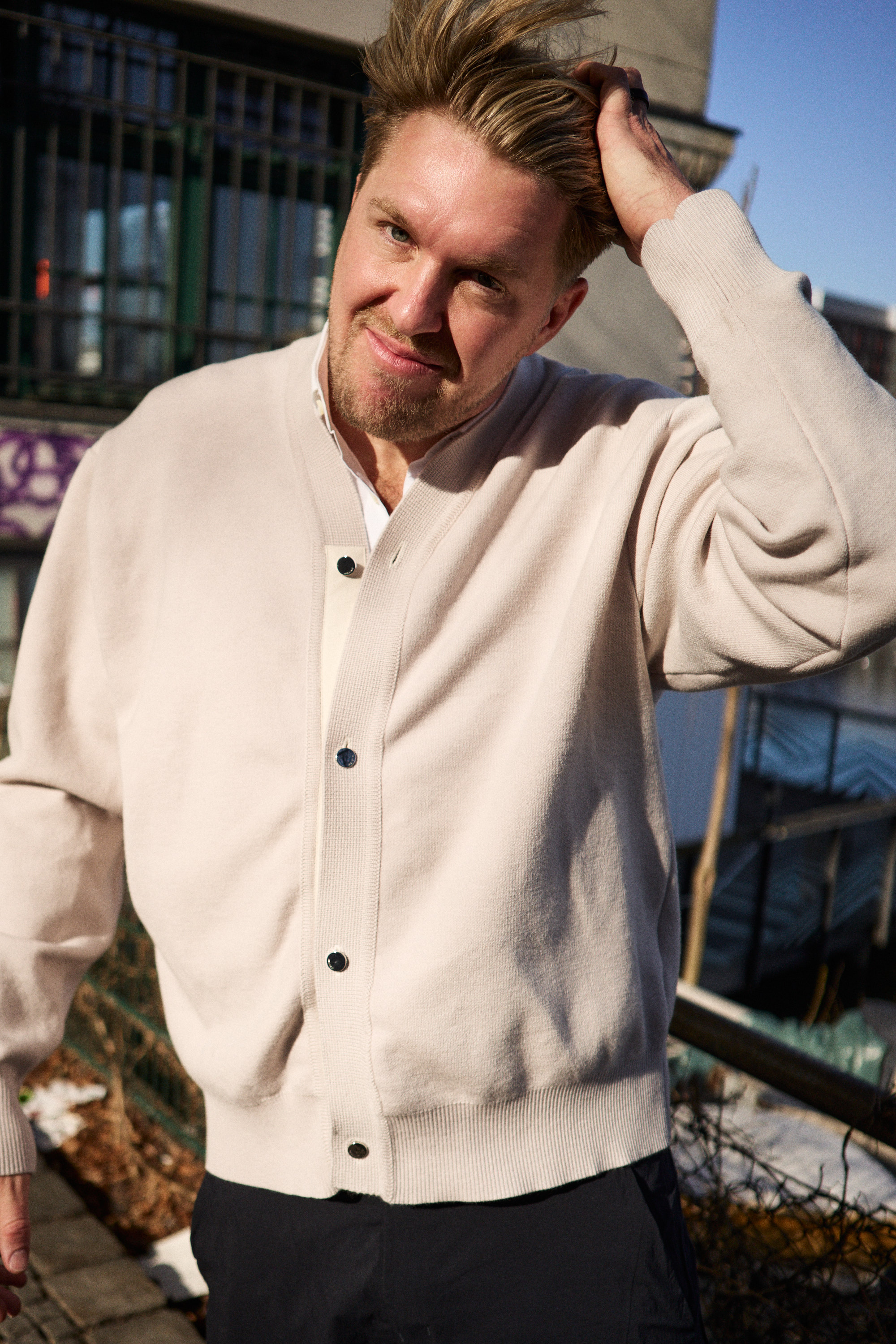
After the Close #3: Robin Capital. Robin Haak, A solo GP on why ARX Robotics started as a 10% "YOLO bucket" bet, why he'd rather be useful than be the biggest check on the cap table, and the deal he still thinks he should have found a way to make work.
Key takeaways for emerging managers
- Reserve a small bucket for the bets that don't fit your thesis. Robin Capital's biggest outcome so far, ARX Robotics, came out of a roughly 10% allocation Haak set aside in Fund I for opportunities outside the core mandate.
- Solo-GP speed is a real edge, not just a staffing constraint. Haak doesn't need an investment committee to agree before acting on a contrarian or early-looking bet, and he treats that independence as the structural advantage of the model, not a workaround for lacking partners.
- LPs who are principals, not checks, take years to build and one bad moment to lose. Haak declined to name which relationship was hardest to close, but was specific that trust compounds slowly and breaks fast, and that it's the main thing he's actually selling.
Robin Capital closed its second fund on November 3 at €15 million, bringing the Berlin solo-GP firm's total commitments across two funds to €30 million. It invests at pre-seed and seed across enterprise software, applied AI, and a growing layer of deeptech, robotics, defense and space, and its disclosed portfolio includes ARX Robotics, Marble Imaging and Helicity Space.
For After the Close, we talk to GPs right after a close, while the lessons are fresh and the LP war stories are still honest. Robin Capital is #3 because Haak's firm is really a decade of his own angel-investing track record wrapped in a fund structure, and he's unusually direct about what that means: no second general partner, no investment committee, and a bet that his personal judgment and network are the differentiated asset rather than a traditional partnership.
Q1: The origin to fund story
"I still feel like a founder myself. The product just happens to be a venture capital firm now."
Robin Haak · Robin Capital · After the Close #3
There wasn't one defining moment. It was the culmination of almost 15 years of building companies, investing in them, making mistakes, and gradually understanding what kind of investor he wanted to become.
Haak started in M&A at Axel Springer, helped establish Axel Springer Plug & Play, and co-founded Jobspotting. After joining SmartRecruiters, he helped scale the business to more than 500 people and over $100 million in annual recurring revenue, profitably, reaching a $1.5 billion valuation before SAP acquired the company. Alongside that, he'd been angel investing for more than a decade, and later joined the founding team of Revaia as a general partner, helping raise its first €250 million fund.
Eventually he realized he'd been lucky enough to see both sides of the table: starting a company with very little and scaling one through major financing rounds, writing his first angel checks and investing at growth and pre-IPO stages. For the first time, he felt ready to bring those experiences together, not because he thought he knew everything, but because he knew what he wanted to build: an investment firm that felt like a product designed by a founder, for founders. Personal, straightforward, built around trust, independent conviction and a genuine willingness to help.
That's how Robin Capital came about. Two funds later, he still describes himself as a founder. The product just happens to be a venture capital firm now.
Q2: One deal where the network was the actual edge
"After meeting thousands of founders over the years, you develop a certain appreciation for those rare teams that have both an extraordinary vision and the ability to execute against it."
Robin Haak · Robin Capital · After the Close #3
Haak is upfront that he didn't predict the rise of European defense technology before everyone else, and isn't a defense specialist. In Fund I, Robin Capital reserved roughly 10% for exceptional opportunities outside its core thesis, a bucket Haak jokingly calls the "YOLO bucket," even though every investment inside it still got the same level of diligence.
Through relationships with investors who understood the sector far better than he did, Haak was introduced to ARX Robotics and its founders, Marc Wietfeld, Stefan Roebel and Maximilian Wied. What struck him wasn't just the technology or the market opportunity, but the combination of technical understanding, ambition and execution. Robin Capital invested and kept supporting the company through subsequent rounds, eventually establishing a dedicated growth SPV around it.
He's careful not to claim the outcome is settled: nobody knows the final result of an investment. But he's clear-eyed about what his actual contribution has been and hasn't been. ARX's founders know defense technology infinitely better than he does; where he hopes to be useful is fundraising, hiring, building teams, finance, communications, branding, and the general mechanics of scaling a business. Sometimes that's an introduction, sometimes it's challenging an assumption, sometimes it's just being available for an honest conversation. He names ARX Robotics alongside Helsing, Quantum Systems and STARK as part of a new generation of European defense technology companies he thinks matter for the continent's technological sovereignty.
Q3: What's currently wrong about how deeptech and defense capital gets deployed
"We don't need to be the biggest investor on the cap table. We'd much rather be one of the most useful."
Robin Haak · Robin Capital · After the Close #3
Haak's core worry is a subtle one: confusing an exciting market with an attractive investment. A sector can be important, growing fast, and still full of companies that won't succeed; some of the best businesses don't look fashionable the first time you meet them. What he's actually underwriting is whether a company is genuinely difficult to replicate, whether that's proprietary technology, unique data, critical infrastructure, deep customer relationships, or simply a team that executes better than anyone else.
He pushes back on framing Fund II as a pivot. Robin Capital's DNA is still enterprise software, AI and go-to-market, and the expansion into defense, robotics, space, security and fintech is the same underlying principles applied to different industries, not a new thesis. Many of those deals come through relationships with founders, operators and other investors who understand specific technologies better than he does, which he says is one of the actual pleasures of the job.
On the solo-GP structure itself, he's unambiguous: it lets Robin Capital move quickly, decide independently, and be flexible about its role in a round. Most importantly, it gives him the freedom to develop his own conviction without needing an investment committee to agree, which matters because some of the best opportunities don't arrive with universal agreement. That said, he's quick to credit larger, multi-partner firms for the expertise and resources Robin Capital doesn't have, and says the real question isn't whether a solo GP beats a ten-partner firm, but whether you're the right partner for a particular founder. "We don't need to be the biggest investor on the cap table. We'd much rather be one of the most useful."
Q4: The LP conversation that almost didn't work
"You can't ask people to trust you. You have to give them reasons to."
Robin Haak · Robin Capital · After the Close #3
Haak traces his approach to a German principle he grew up with, der ehrbare Kaufmann, the honourable merchant: your word should mean something, you honour your commitments, and you try to do the right thing even when it isn't the easiest one. He says Robin Capital's LP base, many of them entrepreneurs themselves, others experienced investors or members of families that have built businesses over generations, are genuine personal relationships developed over years, not names collected for a deck. The firm's wider community now brings together around 200 founders and investors who share experience and make introductions for each other.
Asked which relationship was hardest to close, he declined to single anyone out, citing respect for the privacy of those relationships. What he was willing to say is that fundraising is rarely easy, that he's learned as much from the people who said no as from the ones who said yes, and that trust isn't something you can argue someone into. "You can't ask people to trust you. You have to give them reasons to. And usually, that starts by doing what you said you would do."
Q5: A deal you talked yourself out of, or you're still not sure about
"There's an important distinction between making a good investment decision and achieving a good investment outcome."
Robin Haak · Robin Capital · After the Close #3
Haak names two. The first is Isembard, founded by Alexander Fitzgerald. He liked the founder and the team and had developed genuine conviction, but the timing was difficult, around Christmas, spending time with his father, having just closed another investment that would have required an additional capital call. He passed. Isembard went on to attract Notion Capital and Union Square Ventures as investors, and he says he wishes he'd found a way to make it work. The lesson he took wasn't to follow instinct blindly, but to recognize that after years of investing, judgment becomes a mix of analysis, experience and intuition, and sometimes you have to trust it rather than let circumstance override conviction you've already built.
The second is Proofs, a bet on the broader opportunity around AI-powered software development. Robin Capital believed in the market and the team, but the competitive landscape moved faster than expected as companies like Lovable gained momentum. He's careful not to reduce it to a simple winner-and-loser story, calling it instead a reminder of how hard it is to anticipate the speed a market develops at, particularly in AI. "There's an important distinction between making a good investment decision and achieving a good investment outcome. You can do excellent work and still be wrong."
Q6: How founders should reach out, and what the red flags are
"Dishonesty is probably the clearest instant pass. If we can't trust each other, it becomes very difficult to build something meaningful together."
Robin Haak · Robin Capital · After the Close #3
Robin Capital receives around 300 investment opportunities a month from founders, angels, other funds, operators and its wider community, built across Haak's years at Axel Springer in Berlin, Slush and the Nordics, Revaia in Paris, and San Francisco. The firm also runs a newsletter reaching more than 10,000 readers and a digital presence generating roughly three million impressions a month. Haak says a founder shouldn't need to know the right person to get the firm's attention; a thoughtful cold email can work as well as a warm introduction if it's clear what's being built, why it matters, and why this founder is the right person to build it.
Robin Capital typically invests at pre-seed and seed, generally in financing rounds of at least €1 million, across enterprise AI, software, robotics, defense, space, security, fintech and other technically differentiated businesses. Haak says founders don't need a perfect deck or even a complete team, Robin Capital has backed solo founders, but he does want evidence that someone has already started: a prototype, a bootstrapped first version, a pilot customer, meaningful technical progress on limited resources.
The instant pass is dishonesty. Markets change, strategies evolve, products fail, and none of that necessarily breaks a relationship, but a broken trust does. "If we can't trust each other, it becomes very difficult to build something meaningful together."
About Robin Capital and Robin Haak
Robin Capital is a €15 million pre-seed and seed fund based in Berlin, investing in enterprise software, applied AI and a growing layer of deeptech, robotics, defense and space. Robin Haak, its founder and sole general partner, co-founded Jobspotting before it was acquired by SmartRecruiters, where he helped scale the business past 500 employees and $100 million in ARR before SAP's acquisition; he was a founding team member and later general partner at Revaia, and has personally angel-invested in more than 60 companies, including seven unicorns.
Robin Capital's early backers
Robin Capital has not publicly named its limited partners. Haak describes the base as including self-made entrepreneurs and billionaires, unicorn founders, and GPs of leading VC and PE firms, citing entrepreneurs and families connected to Ferrari, the Moratti family, Adyen and FTMO, alongside individuals associated with Permira, Macquarie and FJ Labs.
Raising your own fund?
LP Radar shows which LPs are actively backing emerging managers, so you can see who writes first-time-fund checks before you start outreach.
Have a fund closing to announce? Submit your fund here.
Related funds in the index
Robotics & Automation funds from the verified index
| Fund | Size | Stage | Location | Focus |
|---|---|---|---|---|
| Northside Ventures Fund II | $30 million USD target USD | Pre Seed | Canada | AI/ML, Robotics & Automation +1 |
| Zacua Ventures Fund II | $135M USD | Pre Seed | United States | Built Environment, Manufacturing +3 |
| LEA Ventures | Around EUR 70M per fund, investing since 2017 EUR | Pre Seed | Germany | Deep Tech, Robotics & Automation +4 |
| Octopus Ventures Fund II | £10M GBP | Pre Seed | United Kingdom | AI/ML, Robotics & Automation +2 |
| Entourage Fund II | €100M EUR | Pre Seed | Belgium | AI/ML, Enterprise Software +3 |