
White Star Capital Closes $250M Fund IV for Global Series A/B Bets
TL;DR
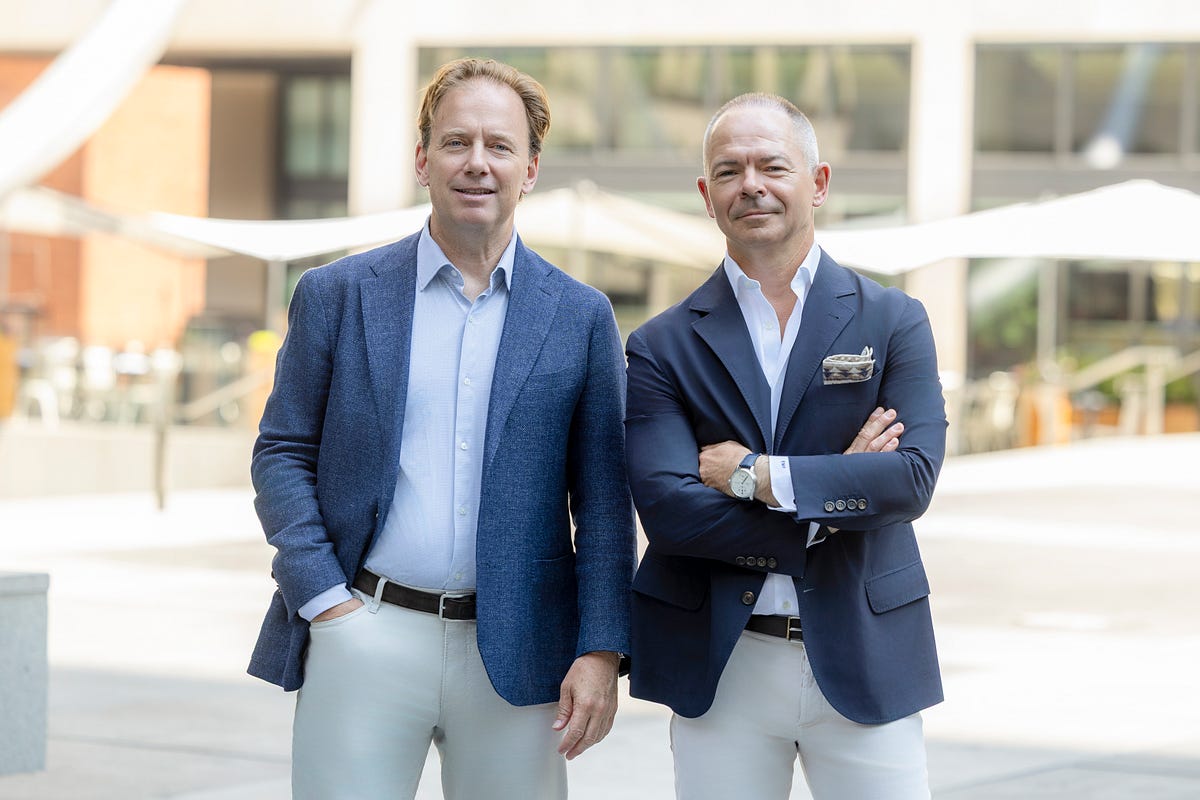
White Star Capital, the multi-stage venture firm co-founded by Eric Martineau-Fortin and Jean-Francois Marcoux in 2014, has held the final close of Fund IV at $250 million USD (roughly $350 million CAD). The vehicle leads Series A and B rounds for globally ambitious founders out of hubs in New York, London, Montreal, Toronto, Paris and Milan. Combined with the firm's $50 million North American Seed Fund and several new special purpose vehicles, White Star has raised more than $350 million USD in fresh capital since late 2025. Fund IV has already backed eight companies, including Montreal's Tetrix, New York's Sequen, OatFi and Trayd, and Paris-based Veesion and AMI Labs, with plans to write $5-15 million checks while holding back roughly half the fund for follow-ons.
Key Takeaways
The headline number is smaller than Fund III, and that's by design. White Star's Fund III closed at $360 million USD in October 2021, above a $300 million target. Fund IV's core vehicle is $250 million USD. Rather than chase a bigger single number, the firm split its capital formation into a flagship fund, a dedicated $50 million North American Seed Fund, and SPVs, pushing total fresh capital raised since late 2025 past $350 million. That's a structural shift, not a step-down in ambition.
Canadian fundraising conditions made this a grind. Canadian VC funds raised just $2.1 billion combined in 2025, the toughest year since 2016. Managing partner Eric Martineau-Fortin has said the raise took 18 months, slightly longer than prior funds, citing thin liquidity across the LP base. For a firm anchored in Montreal and Toronto as much as New York and London, closing a nine-figure fund in that market is a real signal.
Distributions, not just thesis, closed this fund. Co-founder Jean-Francois Marcoux has pointed to the sale of New York fintech TheGuarantors to Warburg Pincus, which returned roughly 23x the firm's initial investment, with proceeds equivalent to the entirety of White Star's Fund I. In a market where LPs are pulling back from unproven managers, realized distributions like that carry real fundraising weight.
The strategy leans into concentration, with a sharper AI filter. White Star is leading Series A and B rounds with $5-15 million checks and reserving roughly half of Fund IV for follow-on support. GP Christophe Bourque has framed the firm's approach as deliberately narrow given how AI-saturated the market has become, concentrating on areas with deep expertise and a track record, including physical AI, AI-powered commerce infrastructure, healthcare and financial services, and favoring bets with serious deep tech, legacy-industry traction, or a genuine data moat over generic AI wrappers.
Fund Overview
Fund Name: White Star Capital Fund IV
Fund Size: $250 million USD (roughly $350 million CAD), final close
Stage: Series A and Series B
Check Size: $5 million to $15 million
Geography: North America (US, Canada), Europe (UK, France, Italy, Germany), with a growing presence in the Middle East and Asia
Focus: Globally ambitious technology founders; thematic emphasis on physical AI, AI-powered commerce infrastructure, healthcare, financial services and cybersecurity
Key LPs: Returning Canadian backers Fonds de solidarité FTQ, Investissement Québec, Desjardins and Teralys Capital, plus a small subset of Canadian banks; European backers include Italian sovereign wealth fund CDP Equity, France's Swen Capital Partners and Groupe ADP, and the pension fund of the States of Guernsey. The firm has not published a full LP list.
Why This Fund Matters
Fund IV lands at a moment when Series A and B investing has bifurcated hard. US mega-funds are writing outsized AI checks at valuations that price out most non-AI-native teams, while a swath of smaller, generalist funds have struggled to raise at all. White Star's answer is to stay disciplined: lead rounds at the stage where founders most need a hands-on partner, keep check sizes in the $5-15 million band, and apply a narrower AI filter toward deep tech, legacy-industry traction or genuine data moats rather than chasing every AI deal.
The Canadian angle is the more interesting story here. Canadian VC fundraising fell to roughly $2.1 billion in 2025, its weakest year since 2016, as LPs concentrated commitments in fewer, larger, often US-based managers. White Star closing a $250 million fund with a Montreal-and-Toronto co-headquarters, on top of a dedicated $50 million North American Seed Fund, is a data point that cuts against the narrative that Canadian-anchored venture firms can't compete for global LP capital.
Splitting capital across a flagship fund, a seed fund and SPVs also reflects a broader shift in how multi-stage firms are structuring themselves. Rather than raising one large vehicle that tries to do everything from first check to Series C, White Star is building purpose-specific pools: the seed fund for first checks, Fund IV for Series A/B leads, and SPVs for opportunistic follow-on or co-investment capital, including a recent move to become an inaugural co-investor in the Qatar Science & Technology Park's $30 million tech venture fund. That structure gives LPs more granular exposure choices, at the cost of added administrative complexity.
The firm's realized returns are doing real work here too. Beyond the 22 exits from a 100+ company portfolio, including TheGuarantors (Warburg Pincus), Dialogue Health Technologies (Sun Life) and Freshly (Nestle), White Star has pointed to TheGuarantors alone returning roughly 23x its initial check, with proceeds equivalent to the firm's entire first fund. That's a concrete distribution story in a market where LPs are increasingly skeptical of managers without realized returns.
The Team
White Star Capital was founded in 2014 by Eric Martineau-Fortin, who remains Founder & Managing Partner and splits time across London, New York and Dubai, alongside Co-Founder & Managing Partner Jean-Francois Marcoux, based across Montreal, Toronto and New York. A third co-founder, Christian Hernandez Gallardo, helped lead the firm in its early years but is now a former co-leader and no longer an active partner at White Star. The current General Partner bench spans Matthieu Lattes (Paris), Christophe Bourque (Montreal/Toronto/New York), Sep Alavi (New York/Dubai), Cristina Ventura (Abu Dhabi, also Chief Catalyst Officer), Hemal Fraser-Rawal (London), Eddie Lee (New York/Seoul), Catherine Ouellet-Dupuis (Montreal), Sanjay Zimmermann (Toronto) and Henry Davis (New York), the firm's newest GP as of early 2026. Tony Corbin (CFO) and Patrick Recasens Morente (General Counsel) hold General Partner titles on the operations side. The firm's venture partner bench, including Alberto Lopez Toledo, Shun Nagao, Nicolas Zylberstein, Vargha Moayed, Alex Thabet, Jakob Schreyer and Dominique Houde, sits a level below the GP roster and functions as an extended advisory network rather than fund decision-makers. White Star has grown from a five-person team split across New York, Montreal and London in 2014 to more than 50 people across eight offices today, with official headquarters in the UK and New York.
Early Portfolio
Fund IV has already led rounds in eight companies. Named investments to date include Sequen and OatFi (both New York), Veesion and AMI Labs (both Paris), Tetrix (Montreal, an investment-intelligence platform) and Trayd (New York), with additional Toronto-area deals still to be announced. On the broader portfolio side, White Star points to category leaders including Butternut Box (UK), Vention (Canada), Petfolk (US), Numan Health (UK) and FINN (Germany), plus growth-stage names Flare, Ledn (both Canada) and Spiko (France).
What This Means for Founders
Founders raising Series A or B rounds who need international expansion support, not just capital, are the clearest fit here. White Star's stated wedge is helping companies scale across borders using its hub network in New York, London, Toronto, Montreal, Paris, Milan and Berlin, so a founder with US traction eyeing European expansion (or vice versa) gets more out of this relationship than one who only needs a domestic lead investor.
The firm's AI filter is narrower than "we invest in AI": expect the strongest reception for physical AI, AI-powered commerce infrastructure, healthcare and financial services companies with deep technical moats, legacy-industry commercial traction, or genuinely defensible data assets, rather than thin wrapper products on top of frontier models. With roughly half of Fund IV reserved for follow-ons, portfolio companies that hit their milestones should expect a genuinely engaged follow-on partner rather than a fund that leads and then goes quiet.
Fund Momentum Take
The smart read on Fund IV isn't "White Star raised less than last time," it's that the firm restructured how it raises capital and leaned on realized distributions to close in a brutal Canadian fundraising market. $250 million for the core Series A/B vehicle, plus a $50 million seed fund, plus SPVs, is a more LP-friendly, more flexible structure than one monolithic fund, and it's one more multi-stage firms will likely adopt as LPs get pickier about where in the stack their capital sits. The risk is coordination: running four-plus vehicles across eight offices requires more discipline on reserve allocation and conflict management than a single fund does, and even a firm with a 23x TheGuarantors exit needed 18 months and real patience from its LPs to get this one closed.
Our bet: the combination of a genuine global-hub network and a disciplined, narrower AI thesis is White Star's real differentiator, and it will matter more as US mega-funds increasingly dominate domestic Series A/B pricing on generic AI deals. Founders building companies that need to be credible in more than one market, especially in physical AI, AI commerce infrastructure and regulated verticals like healthcare and financial services, are the ones most likely to find this fund's network worth the equity. White Star is already signaling it will be back out fundraising for Fund V in 2027, with the Middle East, via moves like the Qatar Science & Technology Park co-investment, positioned as its next growth market. The open question is whether $250 million, spread across leads at $5-15 million with a 50% follow-on reserve, gives the firm enough dry powder to defend pro-rata across a genuinely global portfolio without getting diluted out of its own winners.
Frequently Asked Questions
How big is White Star Capital's Fund IV?
Fund IV held its final close at $250 million USD, roughly $350 million CAD, the firm's fourth flagship venture fund.
How does Fund IV compare to White Star's previous funds?
Fund II closed at $180 million and Fund III closed at $360 million in 2021. Fund IV's $250 million core vehicle is smaller than Fund III on its own, but combined with the firm's $50 million North American Seed Fund and several SPVs, White Star has raised more than $350 million in fresh capital since late 2025.
What stage and check size does White Star invest at?
Fund IV leads Series A and Series B rounds with initial checks of $5 million to $15 million, reserving roughly half the fund for follow-on investments.
Who founded White Star Capital, and who runs it today?
White Star was founded in 2014 by Eric Martineau-Fortin, Jean-Francois Marcoux and Christian Hernandez Gallardo. Hernandez Gallardo is a former co-leader no longer active at the firm; Martineau-Fortin and Marcoux remain Managing Partners today, alongside a bench of nine other General Partners across North America, Europe, the Middle East and Asia.
What has White Star Capital exited?
The firm reports 22 exits from a portfolio of 100+ companies, including TheGuarantors (acquired by Warburg Pincus at a reported 23x return, with proceeds equivalent to White Star's entire Fund I), Dialogue Health Technologies (acquired by Sun Life) and Freshly (acquired by Nestle).
Have a fund closing to announce? Submit your fund here.
Need help raising capital? Check out our Fundraising Advisory services.
Related funds in the index
Series A funds from the verified index
| Fund | Size | Stage | Location | Focus |
|---|---|---|---|---|
| Headline EU Fund VIII | $400M USD | Series A | United Kingdom | |
| Enable Ventures Fund I | $50.31 million USD | Series A | Chile | |
| Bramble Partners Fund I | Targeting £100 million GBP | Series A | United Kingdom | |
| Zero Infinity Partners Fund II | $156M USD | Series A | United States | |
| ERV Fund II | $13.5M USD | Series A | United Kingdom |