
U&I Ventures Closes Oversubscribed $32M Debut Fund
TL;DR
U&I Ventures, a San Francisco seed firm founded by Kim Moore, has closed an oversubscribed $32.237 million debut fund to back AI-native infrastructure at the intersection of security, engineering and IT. The firm's core asset isn't just capital: it's a network of roughly 1,800 senior security, engineering and IT leaders who meet in small groups across San Francisco, New York, Tel Aviv and London to pressure-test products before U&I invests and to open doors for founders afterward. Nine companies are in the portfolio so far, with Pluto Security and ZeroDrift named publicly and seven more still in stealth.
Key Takeaways
The fund's real differentiation is the operator network, not the check size. At $250,000 to $800,000-plus per initial investment, U&I writes fairly standard seed checks. What's less standard is assembling roughly 1,800 CISOs, CTOs and CIOs into a working community before deploying a dollar of the fund, then using that same network for diligence, product feedback and customer introductions after the check clears. One cited founder got introduced to 68 CISOs in under 24 hours, which is the kind of distribution speed that's genuinely hard for a generalist seed fund to replicate.
Kim Moore's path into venture is unusual for a solo-GP debut fund, and it shows up in how the firm sources deals. She started as Asana's 23rd employee, then spent over a decade at Innovation Endeavors and Glynn Capital backing infrastructure companies including Chronosphere and Drata, all without coming from an existing venture network as a first-generation college graduate. Her account of how the fund got its first commitment, a CISO at a large insurer offering to back a fund that didn't exist yet, suggests the operator-network model wasn't a marketing construct bolted on after the fact; it's closer to how she'd already been sourcing deals informally for years.
The thesis is specifically about AI changing what security, engineering and IT leaders need to buy, not AI broadly. U&I isn't positioning as a generalist AI fund. The stated focus, AI-native infrastructure in security, engineering and IT, and the named portfolio bets (AI coding and app-building security, AI compliance monitoring, and seven stealth companies spanning autonomous vulnerability remediation, agentic forensics, identity management and AI agent testing) point squarely at the operational problems AI adoption is creating inside enterprises right now, rather than consumer or foundation-model plays.
What's disclosed is specific; what's not disclosed is also specific, and worth naming plainly. The fund size, check range, and target portfolio count (40 to 45 companies) are concrete numbers. The firm's limited partners are not named, beyond Moore's account that family members were among the first backers, and only two of nine portfolio companies are public. That's a normal amount of disclosure for a debut fund at final close, not a reason for added scrutiny on its own.
Fund Overview
Fund Name: U&I Ventures Fund I
Fund Size: $32.237 million (oversubscribed final close)
Stage: Pre-seed and seed
Check Size: $250,000 to more than $800,000 per initial investment
Geography: Headquartered in San Francisco; the firm's operator community convenes in San Francisco, New York, Tel Aviv and London
Focus: AI-native infrastructure at the intersection of security, engineering and IT
Key LPs: Not named publicly; the firm says family members of the founder were among its earliest backers, alongside additional LPs who came in after a security executive at a large insurer made an early commitment
Why This Fund Matters
The operator-network model isn't new to venture, plenty of firms claim some version of a "community" advantage, but U&I's version is unusually specific about what the network actually does at each stage. Before investing, the roughly 1,800-person network of CISOs, CTOs and CIOs functions as an informal diligence layer: Moore's own account of her investing career describes going directly to security, engineering and IT leaders to ask what problems weren't being solved yet, often before the broader market recognized the gap. That's the same playbook she says produced her Fig Security and Mate Security investments during her time at Innovation Endeavors and Glynn Capital, both of which went on to raise Series A rounds.
After investing, the network becomes a go-to-market accelerant. The claim that one founder was introduced to 68 CISOs in under 24 hours is a concrete, checkable-in-principle number rather than a vague "we help with intros" line, and it's consistent with the kind of access a dense, pre-organized community of enterprise security buyers could realistically deliver. For an AI-native security or infrastructure startup, getting in front of that many qualified enterprise buyers that fast is a meaningfully different sales motion than the standard cold-outbound seed-stage grind.
The named portfolio makes the thesis concrete. Pluto Security, which emerged from stealth in October 2026 with $42 million raised across two rounds (its seed round led by TLV Partners) and more than $2 million in ARR, is focused on securing enterprise adoption of AI coding and app-building platforms, exactly the kind of "shadow AI" problem that's emerged as engineering teams adopt AI tools faster than security teams can govern them. ZeroDrift, backed by a16z's speedrun program, tackles real-time compliance visibility for AI-driven decisions, a different but related problem: once AI systems are making or influencing enterprise decisions, who's auditing that in real time becomes a board-level question rather than a nice-to-have.
The firm's timing also lines up with a broader shift Moore and others are pointing to: AI adoption is pushing boards to increase technology budgets specifically around governance, identity and security for autonomous systems, categories that didn't have dedicated budget lines two or three years ago. A fund built around the exact buyers who control those new budget lines, rather than a generalist seed fund hoping to catch the wave, has a plausible structural advantage in sourcing and validating these bets early.
The Team
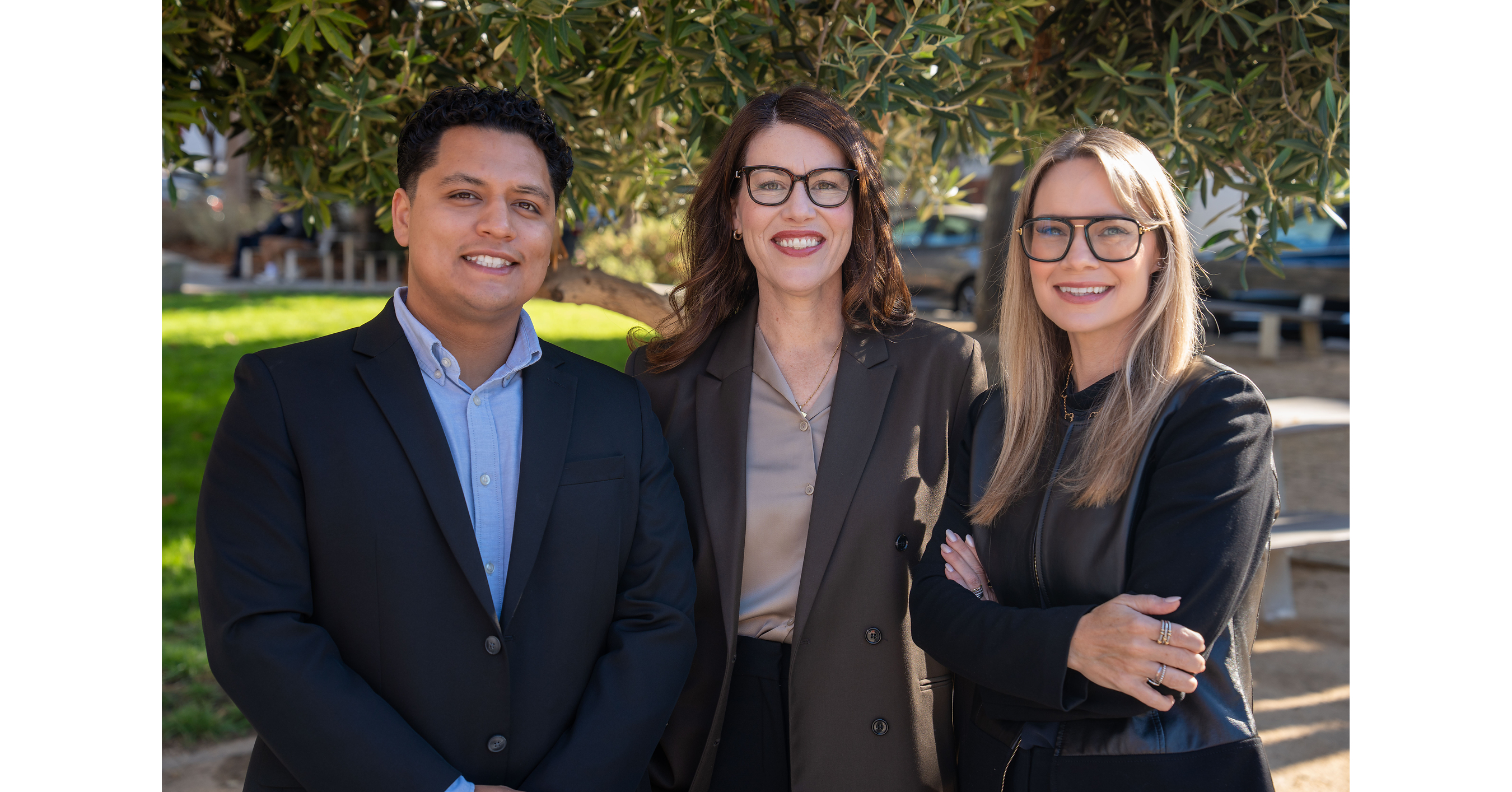
Kim Moore is Founder and General Partner. Before starting U&I, she spent more than a decade at Innovation Endeavors and Glynn Capital investing in enterprise infrastructure, with Chronosphere and Drata among her backed companies, and was Asana's 23rd employee earlier in her career. Kim Cooper is Founding Operating Partner, leading the firm's operator community and value-creation platform; she joins after roughly two decades at Google, per the firm's own account. Joaquin Guzman appears in U&I's team materials in an operations capacity; the firm's public materials don't give a detailed breakdown of his role relative to Moore and Cooper.
Early Portfolio
U&I has backed nine companies from Fund I. Two are named publicly: Pluto Security (AI coding and app-building platform security; $42 million raised across two rounds, seed led by TLV Partners) and ZeroDrift (real-time AI compliance visibility; backed by a16z speedrun). The remaining seven are in stealth, spanning autonomous vulnerability remediation, agentic digital forensics, identity management, security operations, AI agent testing and evaluation, and AI data infrastructure.
What This Means for Founders
Pre-seed and seed founders building AI-native security, engineering or IT infrastructure, especially anything that needs credible, fast validation from real enterprise buyers, are the clear target here. The pitch to those founders isn't just capital at a standard seed check size; it's the ability to get a product in front of dozens of qualified CISOs, CTOs or CIOs almost immediately, which can shortcut months of early enterprise sales cycles that typically slow this category down.
Founders outside the security/engineering/IT infrastructure intersection, or those building consumer or foundation-model products, are a weaker match for this fund's specific thesis and network advantage, even if they're otherwise AI-focused.
Fund Momentum Take
The most interesting thing about this close isn't the number, $32.237 million is a solid but unremarkable debut fund size, it's how specifically Moore has built the firm's sourcing and value-add around a network she appears to have been informally running for years before she ever raised a dollar. Debut funds built around a GP's personal network succeed or fail based on how real and how deep that network actually is once outside capital is attached to it, and the detail that a CISO committed to the fund before Moore had formally started it is a reasonably strong tell that this wasn't assembled for the fundraise.
The disclosure gaps here are normal for a debut fund at this stage, not a reason for particular suspicion, but they are gaps worth naming: no LPs are identified beyond "family members" and an unnamed insurance-company security executive, and seven of nine portfolio bets remain unnamed. That's consistent with how most funds this size handle a first close, and it means outside observers are mostly taking the network's value on the word of the two named portfolio companies and the firm's own account for now.
Our bet: the network-as-distribution model is the more durable advantage here relative to typical seed differentiation claims, precisely because it's hard to fake at the scale described (1,800 people, weekly closed-door sessions across four cities), but its staying power depends on U&I continuing to feed that community real value as the portfolio scales past nine companies toward the stated 40-to-45 target, since operator communities built on reciprocity tend to erode once the asks start outweighing the access.
Frequently Asked Questions
How big is U&I Ventures' debut fund?
$32.237 million, closed oversubscribed and announced October 29, 2026.
What does U&I Ventures invest in?
Pre-seed and seed-stage AI-native infrastructure at the intersection of security, engineering and IT, with initial checks from $250,000 to more than $800,000.
Who founded U&I Ventures?
Kim Moore, Founder and General Partner, previously of Innovation Endeavors and Glynn Capital and Asana's 23rd employee. Kim Cooper is Founding Operating Partner.
What is U&I's operator network?
A community of roughly 1,800 CISOs, CTOs and CIOs (about 650 security executives, 850 CTOs, and 300-plus CIOs) that meets in small groups in San Francisco, New York, Tel Aviv and London, used for both diligence before investing and go-to-market support afterward.
What companies has U&I Ventures backed?
Nine companies to date. Pluto Security and ZeroDrift are named publicly; seven more remain in stealth across categories including autonomous vulnerability remediation, agentic digital forensics, and AI agent testing.
Have a fund closing to announce? Submit your fund here.
Need help raising capital? Check out our Fundraising Advisory services.
Related funds in the index
Seed · AI/ML funds from the verified index
| Fund | Size | Stage | Location | Focus |
|---|---|---|---|---|
| BackingMinds Invest Fund III | €50M EUR | Seed | Sweden | Climate & Sustainability, AI/ML +1 |
| Inovia Capital Fund VI | $200M USD | Seed | Canada | AI/ML, Deep Tech +4 |
| 49 Palms Ventures Fund I | $100M USD | Seed | Global | AI/ML |
| Square Peg Fund 6 | $696M USD | Seed | Australia | AI/ML, FinTech +1 |
| USV | $900M USD | Seed | United States | AI/ML, Robotics & Automation +4 |