
SEVA Growth Closes $160M Fund II in Under a Month
TL;DR
SEVA Growth, a Brooklyn-based growth equity shop run by a two-person investment team, closed its sophomore fund at $160 million in under a month, well above its $125 million target and nearly double its $85 million debut vehicle from 2023. The fund backs minority, founder-friendly growth equity stakes in profitable or near-breakeven, founder-led software and tech-enabled services companies. It matters because it's a clean data point against the narrative that growth equity is dead money right now: a solo-GP-plus-one-principal shop with no placement agent just proved that disciplined, founder-first growth capital can still raise fast when the underlying companies are actually profitable.
Key Takeaways
Profitability as the entire underwriting filter. SEVA only targets companies that are already profitable or near break-even. In a market still digesting the hangover from growth-at-all-costs underwriting, that is a deliberately contrarian filter, and it's the kind of discipline that's easier to maintain in year one than year five once competition for deal flow intensifies.
A one-month close is a statement about LP appetite, not just GP hustle. Raising $160 million in under thirty days with no placement agent means existing LPs re-upped fast and new LPs came in on reputation and track record alone. That's a strong signal that SEVA's first-fund returns profile, even if unrealized, is resonating with a specific type of patient, mission-adjacent capital.
Founders-as-LPs is a flywheel worth watching. All five of SEVA I's portfolio-company founders reinvested into Fund II as limited partners. That's a small but telling data point: the people closest to the actual experience of taking SEVA's capital chose to put their own money behind the next fund.
Minority-stake growth equity is quietly becoming a crowded, differentiated lane. As traditional growth equity firms retreat to fewer, larger checks and pure VC stays anchored to unprofitable scale-at-all-costs bets, a gap has opened for smaller, high-touch minority-growth players willing to write $125 million funds instead of $1 billion ones. SEVA is one of the cleaner examples of a manager built specifically for that gap.
Fund Overview
Fund Name: SEVA II
Fund Size: $160 million (closed against a $125 million target)
Stage: Growth equity, minority stakes
Check Size: Not disclosed by the firm
Geography: United States
Focus: Profitable or near-breakeven, founder-led companies in internet, software, data, marketplace and technology-enabled services, with scalable models and high customer retention
Key LPs: University endowments, charitable foundations, cause-based and nonprofit-focused investment managers, family offices, and founder-LPs from all five SEVA I portfolio companies
Why This Fund Matters
The growth equity middle has been genuinely difficult capital to raise for the better part of two years. Larger platforms have pulled up-market chasing fewer, bigger checks into companies that can still command premium multiples, and a lot of smaller growth shops that built their pitch around "AI-adjacent" exposure during the 2023-2024 enthusiasm cycle are finding LPs considerably more skeptical the second time around. SEVA's one-month, oversubscribed close for Fund II cuts directly against that story, and the reason is worth sitting with: the firm's underwriting filter, profitable or near-breakeven, founder-led, high retention, never depended on a macro narrative in the first place.
That matters for how you should read this close. SEVA isn't raising on a thesis about where the market is going; it's raising on a track record of putting capital into companies that didn't need the capital to survive, only to accelerate. That's a meaningfully lower-risk underwriting posture than most of what gets called "growth equity" in 2026, where plenty of managers are really writing late-stage venture checks into companies still burning cash, just with growth-equity-style minority structures bolted on.
The founder-as-LP dynamic deserves more attention than it typically gets in fund coverage. When the operators who've actually received a firm's capital turn around and commit their own money to the next fund, that's a far more credible signal than any LP reference call, because founders have unusually clear visibility into how a GP behaves when a portfolio company hits a rough quarter, not just when things are going well. Five-for-five on that signal, assuming it holds as SEVA I's portfolio matures, is a genuinely strong data point for a firm only three years old.
There's a structural read here too. As mega-funds consolidate growth-stage dollars into fewer, larger checks, the $7-20 million minority check size that firms like SEVA specialize in is increasingly underserved, not because the companies needing that capital have disappeared, but because the economics of a $10 billion platform don't work for a $15 million check. Solo-GP and small-partnership shops willing to do the work at that check size, with real operational support rather than just capital, are positioned to own a lane that the biggest names in the industry have effectively vacated.
The Team
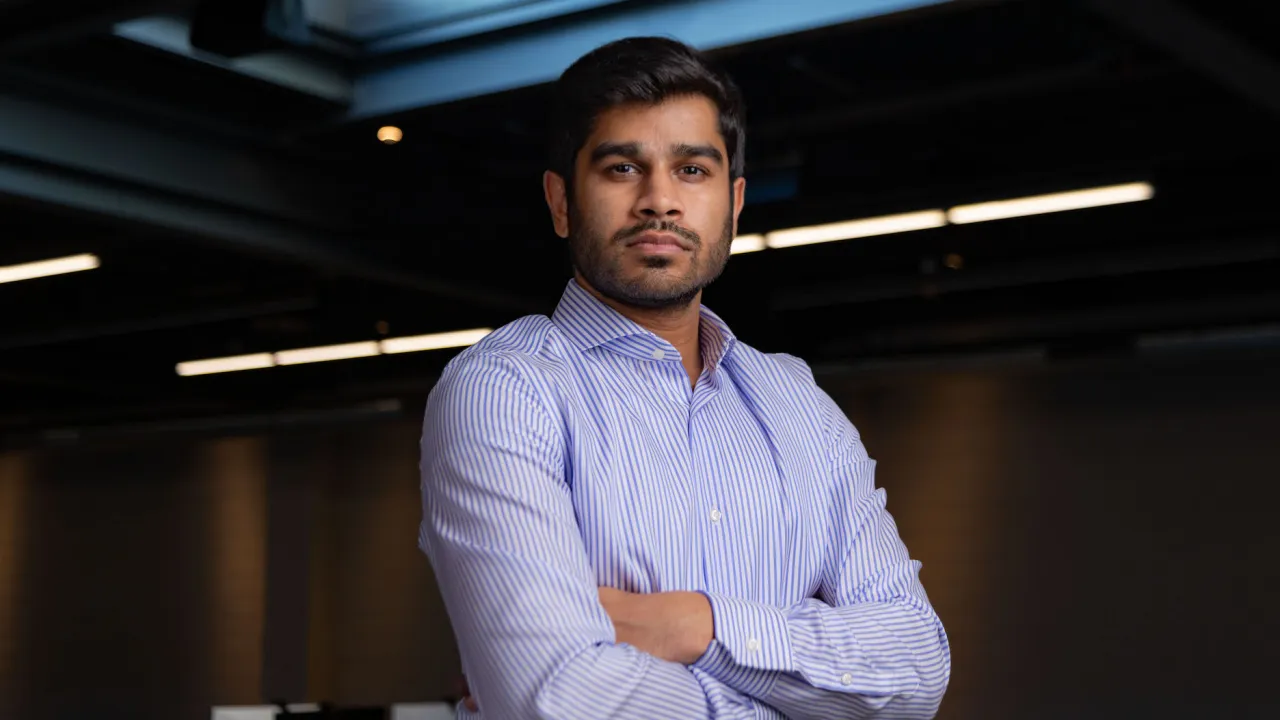
SEVA was founded in 2023 by Shalin Mehta, who serves as Founder and Managing Partner and sits on the board of every portfolio company, a hands-on structure consistent with the firm's small team and high-touch approach. Mehta previously spent time at Susquehanna Growth Equity and Spectrum Equity before starting the firm at 28. Roshan Joshi serves as principal. The firm runs without a placement agent or a dedicated investor-relations function for either fund, a notable operational choice for a shop that has now closed two oversubscribed vehicles in a row.
Early Portfolio
SEVA I's portfolio includes Chicory (commerce media), Teleskope Technologies, TitanFile (secure file-sharing for law firms, based in Toronto), Pronto, and Serif Health (healthcare pricing transparency and data), with two additional investments reportedly in the pipeline. The firm has publicly described several of these companies as growing between 40% and 100% annually on a profitable basis, though it hasn't disclosed specific revenue or valuation figures to substantiate that range.
What This Means for Founders
If you're running a founder-led software, data, or tech-enabled services business that's profitable or close to it and you want growth capital without giving up control, SEVA is explicitly built for that conversation, not for a hypergrowth story that still needs years of cash burn to prove itself. The firm's own description of its support, go-to-market planning, executive hiring, financial reporting, operations and exit planning, suggests it positions itself as an operational partner first and a capital source second, which is worth testing directly with its existing portfolio founders before you sign a term sheet.
For founders who aren't yet profitable, the broader lesson from this raise is about where the easiest growth capital is actually sitting right now: it's with businesses that can show a credible, near-term path to breakeven, not just a large addressable market. If your growth story depends on another eighteen months of burn before the unit economics make sense, expect this specific pool of capital to stay closed to you until that math changes.
Fund Momentum Take
We like this fund for a simple reason: it's a two-person team that raised, closed, and reinvested-founder-approved two funds in a row without needing a placement agent, a large brand name, or a hot narrative to do it. That's a harder trick to pull off than most LPs give credit for, and it suggests Mehta has built real repeatable trust with a specific LP base rather than riding a market cycle.
The risk is concentration of a different kind than Snowpoint's: a firm this small, with one named principal beyond the founder, has limited bench strength if deal flow accelerates or if Mehta's attention gets split across a growing number of board seats. Doubling fund size while the team barely grows is a real test of operating capacity, not just capital-raising skill, and it's the thing we'd push hardest on if we were an LP doing diligence on Fund III down the line. Our bet is that the founder-LP reinvestment signal is real and durable, but we'd want to see the team add at least one more senior investment professional before a Fund III conversation, simply to protect against the single-point-of-failure risk that comes with any solo-GP structure at scale.
Frequently Asked Questions
How much did SEVA Growth raise for its new fund?
SEVA closed its second fund, SEVA II, at $160 million, above its $125 million target, in under one month.
What does SEVA Growth invest in?
The firm makes minority growth equity investments in profitable or near-breakeven, founder-led companies across internet, software, data, marketplace and technology-enabled services.
Who runs SEVA Growth?
Shalin Mehta founded the firm in 2023 as Founder and Managing Partner. Roshan Joshi is principal.
How big was SEVA's first fund?
SEVA I closed in October 2023 at $85 million against a $50 million target, later topped up to $91 million by existing LPs in 2025.
What companies has SEVA Growth invested in?
Its publicly disclosed portfolio includes Chicory, Teleskope Technologies, TitanFile, Pronto and Serif Health.
Have a fund closing to announce? Submit your fund here.
Need help raising capital? Check out our Fundraising Advisory services.
Related funds in the index
Growth funds from the verified index
| Fund | Size | Stage | Location | Focus |
|---|---|---|---|---|
| SEVA Fund II | $160 million USD | Growth | United States | |
| Forbion Fund IV | €2.3 billion EUR | Growth | Netherlands | |
| Linse Ignition | $75M USD | Growth | United States | |
| Eastend Ventures Fund I | A$30M AUD | Growth | Australia | |
| Protego Ventures Fund I | $125 million USD | Growth | Israel |