
Seligman Ventures Doubles Capital to $1B for AI Infrastructure
TL;DR
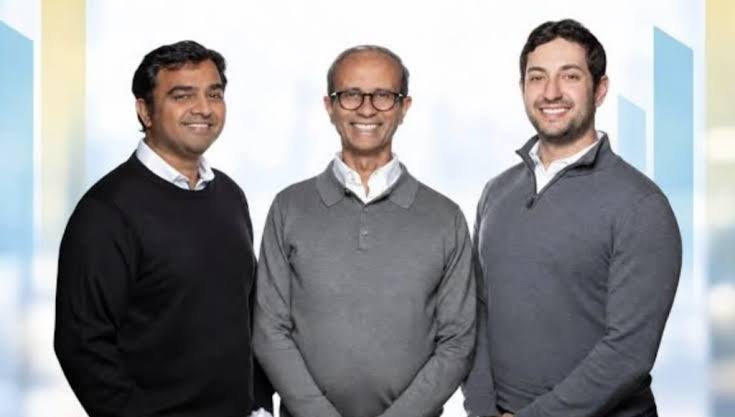
Seligman Investments, the Menlo Park-based technology investment firm led by Chief Investment Officer Paul Wick and part of Columbia Threadneedle Investments' alternatives platform, has doubled the deployable capital behind its venture arm, Seligman Ventures, from $500 million to $1 billion less than a year after launching it in February 2026. Led by Managing Partners Umesh Padval and Ashish Kakran, the vehicle backs early-stage through pre-IPO companies tackling AI infrastructure bottlenecks, compute, networking, power, thermal management, and AI software, and has already made more than 14 investments including SambaNova, Eliyan, and Cognichip. It matters because this isn't a traditional multi-LP fund raise, it's a single balance-sheet allocator effectively telling the market it sees enough underpriced opportunity in AI infrastructure to double down on its own crossover model in under twelve months.
Key Takeaways
There are no outside LPs here, and that's the whole story. Seligman Ventures isn't closing a fund from a diversified LP base, it's capitalized entirely by Seligman Investments' own balance sheet, which sits inside Columbia Threadneedle Investments (part of Ameriprise Financial), a platform managing roughly $48 billion across public and private markets. Doubling deployable capital is a discretionary allocation decision by one institution, not a fundraising outcome validated by a syndicate of LPs. That makes it a purer signal of what one large, information-rich allocator believes about AI infrastructure right now than a typical fund close would be.
Padval's own stated discipline just got tested by his own firm. In a February 2026 interview around the launch, Padval described his philosophy as staying in the "$400 million to $800 million range," explicitly citing the Benchmark model as inspiration for capital discipline. Seven months later, deployable capital is at $1 billion, above the top of that self-described range. That's either a sign the opportunity set genuinely justifies more capital, or an early data point that even disciplined operators find it hard to hold the line when the AI infrastructure market is moving this fast.
The crossover structure is the actual differentiator, not the check size. Pairing Padval and Kakran's early-stage sourcing with Paul Wick's late-stage and public-market vantage point (Seligman Investments' broader $48B platform) is designed to let the venture arm identify infrastructure bottlenecks before they show up as headline late-stage rounds. In a cycle where AI infrastructure valuations are moving up multiple turns between financing rounds, that information advantage may matter more than fund size.
The portfolio is a bet on the unsexy layers of the AI stack. SambaNova, Eliyan, Cognichip, EPIC Microsystems, these are compute, interconnect, and chip-adjacent bets, not another foundation-model or agent-wrapper investment. With six board seats and three observer positions across 14+ investments, Seligman Ventures has built real governance density into a portfolio that's explicitly positioned around the physical and infrastructural constraints on AI scaling, power, thermal, networking, rather than the application layer everyone else is crowding into.
Fund Overview
Fund Name: Seligman Ventures (venture arm of Seligman Investments)
Fund Size: $1 billion in deployable capital (doubled from an initial $500 million at February 2026 launch)
Stage: Early-stage through pre-IPO (crossover model)
Check Size: Not disclosed; spans early-stage venture checks through pre-IPO growth positions given the crossover mandate
Geography: Global, based in Menlo Park, California
Focus: AI infrastructure, compute, networking, connectivity, power and thermal management, cybersecurity, AI software infrastructure, and Physical AI
Key LPs: None external; capitalized entirely by parent Seligman Investments, part of Columbia Threadneedle Investments (Ameriprise Financial), which manages approximately $48 billion across public and private markets
Why This Fund Matters
The AI infrastructure capital cycle in 2026 has been defined by two competing forces: enormous, headline-grabbing mega-funds (Bain Capital Ventures' $1.6B AI vehicle, a16z's Machine Age Fund at $1.1B, Menlo's $3B Fund XVII) chasing the same marquee compute and model companies, and a growing recognition that the actual bottlenecks constraining AI scaling, power delivery, thermal management, interconnect, specialized silicon, are underinvested relative to the capital chasing foundation models and applications. Seligman Ventures is explicitly positioned in that second category, and its decision to double deployable capital in under a year is a bet that the infrastructure layer's capital gap is widening, not closing.
What makes this fund structurally unusual is the absence of a traditional fundraise. Most of the mega-fund announcements this year have involved multi-quarter LP roadshows, oversubscription narratives, and hard-cap negotiations. Seligman Ventures skipped all of that: its "LP" is its own $48 billion parent platform, which means the capital-allocation decision was made in a boardroom, not a fundraising cycle. That's a meaningfully different risk profile for the market to price. A traditional VC firm doubling its fund size is telling you LPs believe in the thesis. Seligman Investments doubling its own venture allocation is telling you Paul Wick and his public-and-private-markets team believe in the thesis, using the same information edge they'd use to make a public-market allocation call.
The crossover model itself deserves scrutiny as much as praise. The pitch, early-stage venture insight informs late-stage and public positioning, and vice versa, is not new (it's essentially the Tiger Global/Coatue playbook applied to a narrower vertical), but it has a mixed track record when public-market drawdowns hit venture-stage marks hard. Seligman's advantage is specificity: this isn't a generalist crossover fund chasing whatever's hot, it's narrowly focused on AI infrastructure, which gives the public-market team a much tighter, more legible set of comparables to inform the venture team's underwriting.
For founders and other GPs, the practical read is that there's now a $1 billion, single-decision-maker pool of capital actively looking for AI infrastructure bets across the full stage spectrum, from early-stage compute and interconnect startups through pre-IPO positions. That's a meaningfully different animal than a traditional fund with staged capital calls and LP-driven pacing constraints; deployment decisions here can move as fast as the firm's own conviction, not a capital-call calendar.
The Team
Umesh Padval is a Managing Partner leading Seligman Ventures' early-stage investing, and has publicly framed his approach to fund sizing around capital discipline, citing the Benchmark model's $400M-$800M range as his philosophical anchor even as the platform's deployable capital has now moved past that range. Ashish Kakran is the other Managing Partner on the early-stage side. Eddie Ackerman serves as CFO and Operating Partner. Paul Wick is Chief Investment Officer of the broader Seligman Investments platform and provides the late-stage and public-market perspective that anchors the firm's crossover thesis; he oversees Seligman Investments' roughly $48 billion in public and private technology and healthcare investments as part of Columbia Threadneedle Investments.
Early Portfolio
Seligman Ventures has made more than 14 investments since its February 2026 launch, with named portfolio companies including SambaNova, Lumilens, Eliyan, Upscale, Velaura AI, Cognichip, EPIC Microsystems, and Exaforce. The firm holds six board seats and three board-observer positions across the portfolio, indicating an active governance posture rather than a purely capital-providing role.
What This Means for Founders
If you're building in the AI infrastructure stack, compute, interconnect, specialized silicon, power and thermal systems for data centers, or AI-native cybersecurity and infrastructure software, Seligman Ventures is now one of the better-capitalized, most flexible checks in the market, capable of following a company from an early round through a pre-IPO position without needing a new fund vehicle or LP re-approval at each stage. The firm's structural tie to a $48 billion public-and-private platform also means unusually deep access to comparables, customer introductions among Seligman Investments' broader portfolio, and late-stage/public-market context that a standalone early-stage fund typically can't offer.
It's a less natural fit for founders outside the infrastructure and hardware-adjacent thesis, application-layer AI companies, consumer AI, or agent-orchestration startups sit outside the stated mandate, and founders in those categories will get a faster and more informed "no" than a genuine evaluation. Infrastructure-focused founders should also come prepared for real technical diligence: with a CIO-level, public-markets-trained team in the room, the underwriting bar on unit economics and physical constraints (power draw, thermal budgets, interconnect bandwidth) is likely to be higher than a typical early-stage generalist check.
Fund Momentum Take
This is one of the more interesting capital-allocation stories of the year precisely because it isn't a fundraise. A single, sophisticated institution with a $48 billion public-and-private vantage point looked at its own seven-month-old venture experiment and decided to double it, without needing to convince a single outside LP. That's either the purest form of conviction in AI infrastructure as a category, or a reminder that balance-sheet capital can chase momentum just as easily as LP capital can, just with fewer checks and balances along the way.
The risk worth naming plainly: single-LP, balance-sheet-funded vehicles don't face the same discipline that a diversified LP base imposes on traditional funds. There's no LPAC, no re-up cycle forcing a public accounting of returns before more capital gets committed, and no external investment committee outside the firm's own walls. If Columbia Threadneedle's broader alternatives business hits a rough patch, or if AI infrastructure valuations correct sharply, deployable capital can just as easily get pulled back as it was doubled, with far less friction than a traditional fund winding down.
Our bet: the underlying thesis, that AI's physical and infrastructural bottlenecks are underinvested relative to the application layer, is directionally right and likely to keep attracting capital through 2027. Whether Seligman Ventures specifically compounds that thesis into standout returns will depend less on the $1 billion headline number and more on whether Padval and Kakran's early-stage picks (SambaNova and Cognichip in particular) can validate the crossover model's core promise: catching infrastructure winners before the mega-funds bid up the price.
Frequently Asked Questions
How much capital does Seligman Ventures now have to deploy?
Seligman Investments has doubled Seligman Ventures' deployable capital from $500 million to $1 billion, less than a year after the vehicle's February 2026 launch.
Who are Seligman Ventures' limited partners?
There are no external LPs disclosed. The vehicle is capitalized by its parent, Seligman Investments, part of Columbia Threadneedle Investments (Ameriprise Financial), which manages roughly $48 billion across public and private markets.
What stage and sectors does Seligman Ventures invest in?
It invests from early-stage through pre-IPO in AI infrastructure: compute, networking, power and thermal management, cybersecurity, AI software infrastructure, and Physical AI.
Who leads Seligman Ventures?
Managing Partners Umesh Padval and Ashish Kakran lead early-stage investing, with Eddie Ackerman as CFO and Operating Partner, and Seligman Investments CIO Paul Wick providing the late-stage and public-market perspective behind the firm's crossover model.
What has Seligman Ventures invested in so far?
More than 14 companies since February 2026, including SambaNova, Lumilens, Eliyan, Upscale, Velaura AI, Cognichip, EPIC Microsystems, and Exaforce, with six board seats and three observer seats across the portfolio.
Have a fund closing to announce? Submit your fund here.
Need help raising capital? Check out our Fundraising Advisory services.
Related funds in the index
AI/ML funds from the verified index
| Fund | Size | Stage | Location | Focus |
|---|---|---|---|---|
| AIP Seed | $40M USD | Pre Seed | Poland | AI/ML, FinTech +3 |
| Nomi Capital Defense Fund I | $50M USD | Seed | United States | Defense, Space +3 |
| Worldbuild Fund I | $30M USD | Pre Seed | United States | Data Infrastructure, AI/ML +3 |
| Inflexor Ventures Fund III | $48M USD | Seed | India | Deep Tech, Semiconductors +3 |
| Haystack Fund VIII | $85M USD | Pre Seed | United States | Consumer & Commerce, Cloud & DevOps +3 |