
RunwayVC Reaches €40M First Close for Fund II
TL;DR
Norwegian industrial-tech investor RunwayVC has reached a €40 million first close on Fund II, backed by returning cornerstone Aker alongside Halliburton, Aker BP, Aker Solutions, Norway's largest pension fund KLP, state-owned Investinor, and a group of Norwegian industrial families. The fund writes pre-seed to Series A checks (NOK 5-10M initial, roughly €0.5-2M) into industrial AI, robotics, automation, and autonomous systems companies, and it operates alongside RunwayFBU, the firm's own industrial-tech hub and community at Aker Tech House in Fornebu. It matters because it's a rare model of a VC fund with genuine strategic-industrial LPs (an oil services giant, an energy major, a pension fund) rather than pure financial capital, giving portfolio companies direct access to real operating environments most seed-stage industrial startups can't get anywhere else.
Key Takeaways
The LP base is the actual product here, not just the capital. Halliburton and Aker BP aren't financial LPs writing a check and walking away, they're strategic partners that can hand a portfolio company an actual offshore rig, refinery, or industrial site to test technology in. For pre-seed industrial and robotics startups, that kind of access is often the single hardest thing to source, and it's structurally difficult for a generalist fund without industrial LPs to replicate.
Aker's continued cornerstone role signals genuine conviction, not just optionality. Aker was the sole LP in Fund I; its return as cornerstone for Fund II, now alongside a broader syndicate including a state pension fund, suggests Fund I performance and the RunwayFBU hub model are generating enough proof points that Aker wants more exposure rather than diversifying away. That's a meaningfully different signal than a corporate LP writing a first-time token check into a new fund.
KLP's presence as Norway's largest pension fund is notable diversification beyond industrial-strategic capital. Institutional pension money entering a sub-scale, sector-focused industrial tech fund is a sign that Nordic pension allocators are getting comfortable with venture as an asset class beyond the usual generalist funds, which is a slow-moving but real trend worth tracking across Scandinavia's pension system.
The RunwayFBU hub is the differentiation moat, and it's also the concentration risk. Bundling a fund with a physical community and mentor network at Aker Tech House gives RunwayVC genuine deal flow and diligence advantages in Norwegian industrial tech specifically. The flip side is that the model is geographically and thesis-concentrated by design; it doesn't generalize the way a sector-agnostic fund would, which is a feature for LPs who want that exact exposure and a limiter for anyone hoping the fund broadens scope later.
Fund Overview
Fund Name: RunwayVC Fund II
Fund Size: €40 million first close (target not publicly disclosed); €75 million total AUM across Fund I and Fund II combined
Stage: Pre-seed to Series A
Check Size: Initial checks of NOK 5-10 million (roughly €0.5-2 million)
Geography: Norway and the Nordics primarily, with selective investments in broader Europe and the US
Focus: Industrial AI and software, robotics, automation, and autonomous systems
Key LPs: Aker (cornerstone), Halliburton, Aker BP, Aker Solutions, KLP, Investinor, Norwegian industrial families
Why This Fund Matters
Industrial tech and robotics have quietly become one of the more contested seed-stage categories globally, but most of the capital chasing the space is either generalist funds bolting on an "industrial AI" thesis for the AI boom or specialist funds without operational access to the industries they're funding for. RunwayVC's model, built on a genuine cornerstone relationship with Aker (a Norwegian industrial conglomerate spanning energy, maritime, and industrials) and now widened to include Halliburton and Aker BP directly, is structurally different: the LPs are also potential first customers and testing grounds.
Norway's position here is worth understanding in context. The country has deep industrial and energy-sector expertise built over decades of North Sea oil and gas operations, an increasingly urgent need to redeploy that expertise and capital toward decarbonization and industrial automation, and a sovereign wealth fund ecosystem that's historically been conservative about direct venture exposure. A fund like RunwayVC gives Norwegian industrial capital (Aker, Halliburton's local operations, Aker BP, Aker Solutions) a vehicle to get venture-stage exposure to the technologies that will eventually run their own operations, without each corporate having to build its own corporate venture arm from scratch.
Fund I's results, 24 companies since 2022 with 23 follow-on investments and 2 exits already logged, are a reasonable proof point for a young, thesis-concentrated fund. The follow-on rate in particular (23 follow-ons across 24 portfolio companies) suggests the fund isn't spraying capital thin and hoping; it's concentrating reserves behind winners, which is the discipline LPs in a sector fund specifically want to see before committing more capital to Fund II.
The risk to watch is thesis concentration meeting a commodity cycle. Industrial tech and robotics funding is sensitive to capex cycles in energy and heavy industry, and a fund this tied to Norwegian industrial LPs is exposed if those LPs pull back capital commitments during a down cycle in oil, gas, or shipping. The diversification into KLP and Investinor as more traditional institutional and state capital is a partial hedge against that concentration, but it doesn't eliminate it.
The Team
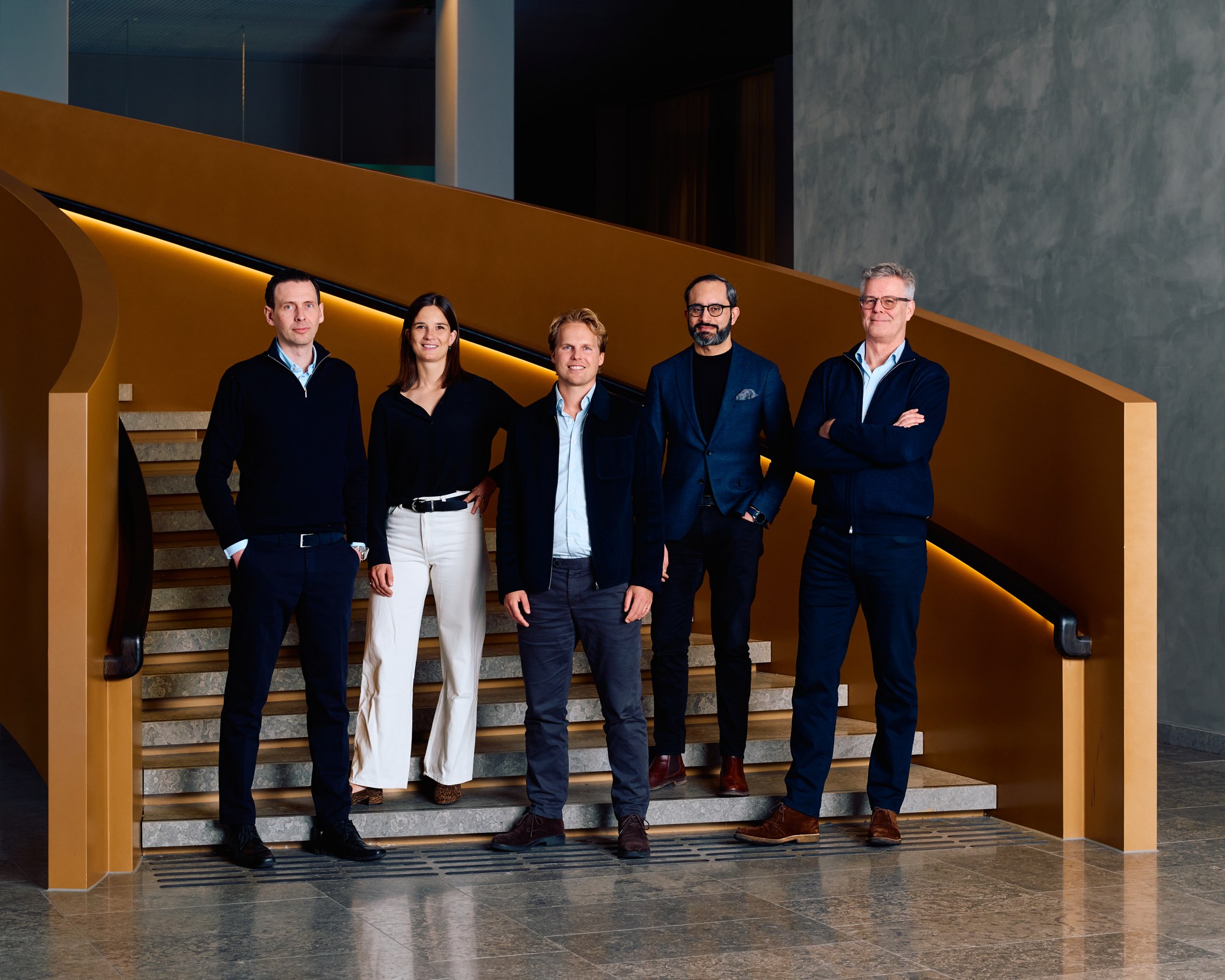
Tor Bækkelund is Managing Partner and Co-Founder, and is the public face of the fund's announcements and thesis. Sagar Chandna is Senior Partner and CTO, bringing technical diligence capability that matters for a fund evaluating deep industrial and robotics technology rather than pure software. Peder Hjermann is Associate Partner, Hanna Selvaag Wangsmo is Investment Director, and Anders W. Botten is CFO. The firm's own team page does not list any venture partners or advisors separate from this core team as of Fund II's first close.
Early Portfolio
Fund II's disclosed investments include Minerva Humanoids, which builds teleoperated humanoid robots for hazardous industrial work, and Hive, which develops autonomous retrofit systems for existing industrial machinery. Fund I's portfolio includes WSense, an underwater communication infrastructure company, and Muybridge, a 3D spatial sports broadcasting technology company. Across both funds, RunwayVC lists more than 25 portfolio companies on its site, concentrated in industrial AI, robotics, and automation.
What This Means for Founders
If you're building industrial AI, robotics, automation, or autonomous systems technology and need not just capital but a real place to test it, RunwayVC's combination of fund capital and the RunwayFBU physical hub at Aker Tech House is a genuinely differentiated pitch versus a generalist seed fund. The strategic LP base means warm introductions to actual industrial operators (Aker, Halliburton, Aker BP, Aker Solutions) are plausible in a way they aren't for most seed funds claiming "corporate access" as a value-add line item.
The tradeoff founders should weigh is fit: this is not a fund for software-only or consumer startups, and the thesis concentration means you're likely to get faster, more informed diligence if your technology genuinely intersects industrial operations, but a pass if it doesn't fit the strategic-LP-relevance test even when the underlying business is otherwise fundable.
Fund Momentum Take
The LP roster here is the story, and it's a genuinely well-constructed one. Corporate and industrial LPs in venture funds are common, but the combination of Aker as a repeat cornerstone, Halliburton and Aker BP as direct strategics, and KLP as institutional diversification is a more balanced structure than the typical single-corporate-LP vehicle that lives or dies with one company's strategic priorities. That balance is what should make Fund II more durable than a typical CVC-adjacent fund.
We'd flag two things worth watching. First, the undisclosed total target for Fund II makes it hard to assess how far along the raise actually is, unlike Galileo Ventures' explicit $15M-of-$30M framing elsewhere in this vintage; a €40M first close against an unstated target could mean anywhere from "mostly done" to "less than half of a much larger ambition." Second, the follow-on discipline shown in Fund I (23 follow-ons across 24 companies) is excellent capital efficiency, but it also means Fund II's reserve strategy needs to hold up at a larger check size and a broader geography (Europe, US) without diluting the industrial-access advantage that makes the model work in the first place.
Our bet: RunwayVC's structural LP advantage is real and hard to replicate, and it should let the firm keep winning industrial-tech deal flow in the Nordics that generalist funds simply can't source as credibly, provided the fund doesn't overextend geographically faster than its physical-hub model can follow.
Frequently Asked Questions
How much has RunwayVC raised for Fund II?
The firm has announced a first close of €40 million; the total target for Fund II has not been publicly disclosed. Combined with Fund I, RunwayVC's total AUM is €75 million.
Who are RunwayVC's General Partners?
Tor Bækkelund is Managing Partner and Co-Founder, and Sagar Chandna is Senior Partner and CTO. The broader team includes Peder Hjermann (Associate Partner), Hanna Selvaag Wangsmo (Investment Director), and Anders W. Botten (CFO).
What stage and sectors does RunwayVC invest in?
Pre-seed to Series A, focused on industrial AI and software, robotics, automation, and autonomous systems, primarily in Norway and the Nordics with selective investments across Europe and the US.
Who are RunwayVC's key LPs?
Aker is the cornerstone investor, joined by Halliburton, Aker BP, Aker Solutions, Norwegian pension fund KLP, state-owned Investinor, and Norwegian industrial families.
What is RunwayFBU and how does it relate to the fund?
RunwayFBU is RunwayVC's industrial-tech hub and community at Aker Tech House in Fornebu, Norway, housing 60+ industrial tech companies and 70+ mentors. It gives portfolio companies workspace, mentorship, and access to real industrial operating environments alongside fund capital.
Have a fund closing to announce? Submit your fund here.
Need help raising capital? Check out our Fundraising Advisory services.
Related funds in the index
Robotics & Automation funds from the verified index
| Fund | Size | Stage | Location | Focus |
|---|---|---|---|---|
| Monte Carlo Capital Fund II | $15M USD | Pre Seed | Global | Deep Tech, AI/ML +2 |
| USV | $900M USD | Seed | United States | AI/ML, Robotics & Automation +4 |
| NVM Venture – Lazio compartment | €23.6M EUR | Pre Seed | Italy | Manufacturing, EnergyTech +6 |
| Headline EU Fund VIII | $400M USD | Seed | United Kingdom | AI/ML, Deep Tech +4 |
| WEH Ventures Fund III | ₹250 crore target INR | Pre Seed | India | Manufacturing, AgriTech +4 |