
Permanent Capital Ventures Unveils $200M Fund II for AI
TL;DR
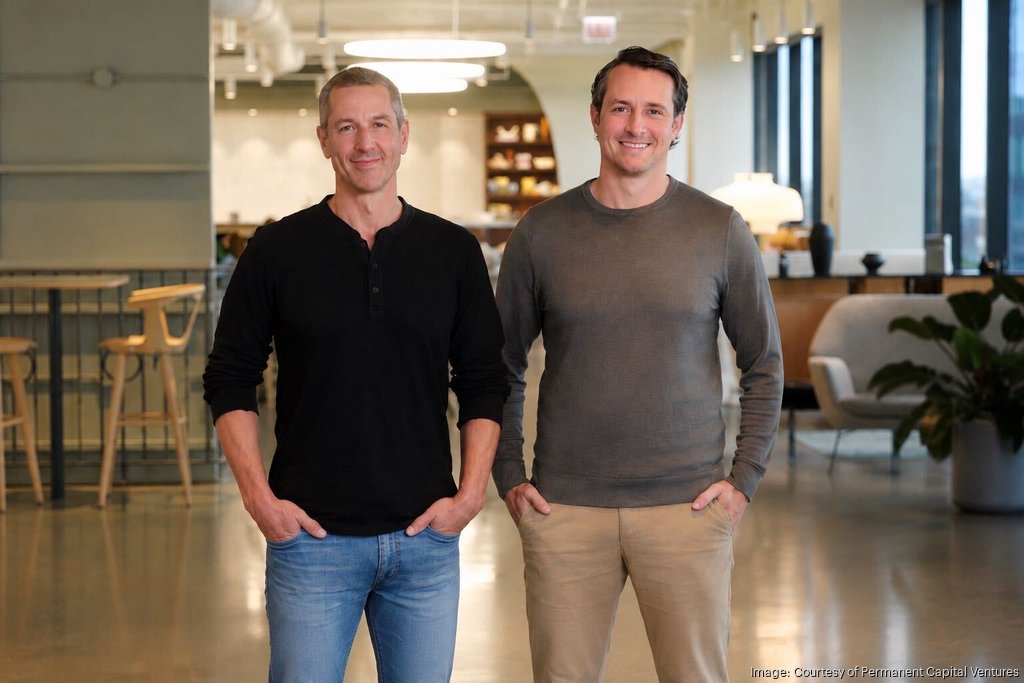
Chicago-based Permanent Capital Ventures (PCV) has introduced itself publicly and confirmed it is now investing out of PCV Fund II, a $200 million vehicle, with total capital raised since the firm's early-2024 inception exceeding $350 million. Co-founded by former LinkedIn sales executive Mike Gamson and former project44 Chief Growth Officer Jason Duboe, PCV writes Series A checks into applied AI companies run by technical founders who already have product-market fit but need help building enterprise go-to-market motion, particularly in legacy industries. It matters less because of the headline number, which is solid but not category-defining, and more because of who's writing the checks: a team built almost entirely around operators who scaled go-to-market functions at LinkedIn, project44, Valor Equity, and Emergence Capital, positioned squarely against the current thesis that distribution, not just model quality, is becoming the defensible moat in applied AI.
Key Takeaways
This is a go-to-market fund wearing an AI-fund label. PCV's stated thesis, that "distribution is now an even more powerful moat" in an AI-native era, is really a bet that technical founders with working products are the easy part of the equation now, and that enterprise sales, channel, and revenue-operations expertise is the scarce resource. That's a meaningfully different underwriting lens than funds chasing model or product differentiation.
The team is unusually operator-heavy for a Series A fund. Beyond the two co-founders, Brian Frank ran Revenue Operations for a 1,300-person team at LinkedIn before becoming COO at Cameo; Jessie Abrams and Wenz Xing both cut their teeth at operationally focused investors (Valor Equity Partners and Emergence Capital, respectively). A fund this concentrated in go-to-market operating experience is a real bet that founders need a builder-investor, not just a check.
"Two investments per partner per year" is a deliberately low-volume model. Against a $200 million fund, that pace implies meaningfully sized checks and real time commitment per portfolio company rather than a spray-and-pray Series A strategy, more consistent with a fund planning to take board seats and stay operationally involved than one optimizing for logo count.
The raise has real institutional backing, not just operator LPs. SEC Form D filings and fund-tracking data show Fund I's limited partners include the Illinois State Treasurer's office alongside the Aphorism Foundation, meaning PCV has already cleared the bar of winning a public-fund allocator, not just high-net-worth operator checks. That's a meaningfully higher institutional credibility signal for a firm only two years into its existence than most debut-adjacent managers can claim.
Fund Overview
Fund Name: PCV Fund II
Fund Size: $200 million (total capital raised across the firm since its early-2024 inception exceeds $350 million, per the firm; a February 2025 SEC Form D amendment for the firm's first fund vehicle showed roughly $120 million raised at that point, ahead of the current $350 million-plus total)
Stage: Series A
Check Size: Not publicly disclosed
Geography: Firm headquartered in Chicago; team members hired across five continents
Focus: Applied AI companies led by technical founders with existing product-market fit, particularly those targeting legacy industries and needing enterprise go-to-market expertise
Key LPs: Not fully disclosed by the firm; SEC Form D filings and fund-tracking data identify the Illinois State Treasurer's office and the Aphorism Foundation among Fund I's limited partners
Why This Fund Matters
The applied AI investing landscape has gotten crowded at every stage, but the Series A gap PCV is targeting is a real one: plenty of technical teams now reach product-market fit faster than ever, thanks to foundation models doing more of the heavy lifting, but very few of those teams have in-house experience turning early traction into a repeatable enterprise sales motion. That's historically been the highest-attrition transition in enterprise software, well before AI made it into every pitch deck, and it's the exact gap PCV's team is built to fill.
What differentiates PCV from a generic "applied AI, Series A" positioning is the specificity of its operator bench. Gamson's LinkedIn tenure and Duboe's project44 run are both stories of scaling go-to-market functions inside real enterprise businesses, not just investing in them from the outside. Pairing that with Brian Frank's LinkedIn revenue-operations background gives the firm a genuinely unusual concentration of hands-on GTM-scaling experience relative to typical Series A generalist funds, most of which lean on advisory networks rather than partner-level operating expertise for this specific problem.
The firm's low-volume, high-touch model (roughly two investments per partner annually) is a deliberate contrarian bet against the increasingly common Series A strategy of writing more, smaller checks to maximize shots on goal. At $200 million with that cadence, PCV is signaling it wants meaningful ownership and real board-level involvement in each company, a model that only works if the operating value-add is genuinely differentiated rather than a value-add claim every fund makes in its own materials.
The presence of a public-sector LP like the Illinois State Treasurer's office is also worth flagging on its own terms. Public treasuries and pension-adjacent allocators generally apply more conservative, more heavily diligenced underwriting than family offices or operator angels, so their presence on Fund I's cap table is a real, third-party-verified data point on the firm's institutional credibility, independent of anything PCV says about itself.
The Team
Mike Gamson, Co-Founder and Managing Partner, spent 11 years at LinkedIn in senior leadership roles including SVP of Global Solutions, helping scale the company's sales organization through its IPO and subsequent acquisition by Microsoft, according to the firm. He later served as CEO of Evozyne, an AI biotech company focused on novel protein design.
Jason Duboe, Co-Founder and Managing Partner, spent seven years as an institutional investor, beginning his career at Summit Partners focused on infrastructure and application software venture investments, before joining logistics software company project44 as Chief Growth Officer, where he helped scale the company's annual recurring revenue substantially.
The broader team includes Jessie Abrams (Principal, previously at operationally focused investor Valor Equity Partners), Wenz Xing (Principal, previously an Associate at Emergence Capital investing in Series A and B enterprise software), Brian Frank (Partner, who led a 1,300-person Revenue Operations team at LinkedIn before serving as COO at Cameo and founding Farm-Hand.AI), and Ivaldo Basso (Chief Operating Officer, previously CFO of GCM Grosvenor, an alternative investment firm managing roughly $70 billion in assets).
Early Portfolio
PCV's disclosed portfolio includes Recur (led by CEO Charlie Serota), TidalWave (led by CEO Diane Yu), Outmarket (led by CEO Vishal Sankhla), and Lyric (led by CEO Ganesh Ramakrishna).
What This Means for Founders
Technical founders at the Series A stage who already have product-market fit but are struggling specifically with building an enterprise sales function, particularly in legacy or traditionally offline industries being disrupted by applied AI, are the direct fit for this fund. Founders should expect PCV's partners to engage deeply and specifically on go-to-market strategy and revenue operations rather than product or technical direction, given where the team's own operating experience concentrates.
Given the firm's stated low-volume model of roughly two investments per partner per year, founders should also expect a longer, more relationship-driven diligence process than a high-velocity Series A fund, and should weigh that against how much hands-on GTM support they actually want from a lead investor versus a more hands-off check.
Fund Momentum Take
We think the thesis here is sound and increasingly common sense: as foundation models commoditize more of the technical differentiation in applied AI, go-to-market execution becomes the scarcer skill, and a fund staffed by people who've actually built enterprise sales orgs rather than just observed them is a legitimate edge. The team's pedigree, LinkedIn, project44, Valor, Emergence, is genuinely well-matched to the stated thesis in a way that's less common than firms claim.
This one is corroborated beyond the firm's own materials: both Crain's Chicago Business and the Chicago Business Journal covered the raise independently the same week, alongside the SEC filings and fund-tracking data confirming Illinois State Treasurer and Aphorism Foundation as Fund I LPs. We weren't able to pull full text from either outlet's paywalled coverage, so we can't independently confirm every figure or quote beyond what PCV's own announcement states, and we'd still flag that a February 2025 SEC filing showed roughly $120 million raised for Fund I at that point in time, meaningfully below the firm's own claimed $350 million-plus total raised to date — a gap likely explained by additional closes and Fund II capital raised since that filing, but one we can't fully reconcile from public filings alone.
Our bet: with a public-fund LP already on the cap table and real Chicago business-press attention out of the gate, PCV is positioned to raise a considerably larger Fund III if even one or two portfolio companies show visibly accelerated enterprise revenue growth attributable to its involvement, and we'd expect broader national trade-press coverage to follow as that track record builds.
Frequently Asked Questions
What is Permanent Capital Ventures' investment thesis?
PCV invests in Series A applied AI companies led by technical founders who already have product-market fit but need help building enterprise go-to-market operations, particularly in legacy industries.
How large is PCV Fund II?
PCV Fund II is a $200 million vehicle. The firm says it has raised more than $350 million in total since its early-2024 inception.
Who founded Permanent Capital Ventures?
The firm was co-founded by Mike Gamson, an 11-year LinkedIn executive and former CEO of Evozyne, and Jason Duboe, a former Summit Partners investor and Chief Growth Officer at project44.
What is PCV's investment pace and check strategy?
The firm has described a low-volume approach of roughly two investments per partner per year, prioritizing deep operational involvement over a high volume of checks.
What companies has PCV invested in?
Disclosed portfolio companies include Recur, TidalWave, Outmarket, and Lyric.
Who are Permanent Capital Ventures' limited partners?
The firm has not fully disclosed its LP base, but SEC Form D filings and fund-tracking data identify the Illinois State Treasurer's office and the Aphorism Foundation among Fund I's limited partners.
Have a fund closing to announce? Submit your fund here.
Need help raising capital? Check out our Fundraising Advisory services.
Related funds in the index
Series A · AI/ML funds from the verified index
| Fund | Size | Stage | Location | Focus |
|---|---|---|---|---|
| Endeavor Catalyst Fund V | $320M USD | Series A | Spain | Cloud & DevOps, AI/ML +1 |
| White Star Capital Fund IV | $250M USD | Series A | Global | Cybersecurity, FinTech +2 |
| Enable Ventures Fund I | $50.31 million USD | Series A | United States | AI/ML |
| Permanent Capital Ventures Fund II | $200 million USD | Series A | United States | AI/ML |
| MassMutual Ventures Climate Technology Fund II | $150 million USD | Series A | United States | Climate & Sustainability, Built Environment +2 |