
Einride Founders Launch Navisalma, Target €450M Deep Tech Fund
TL;DR
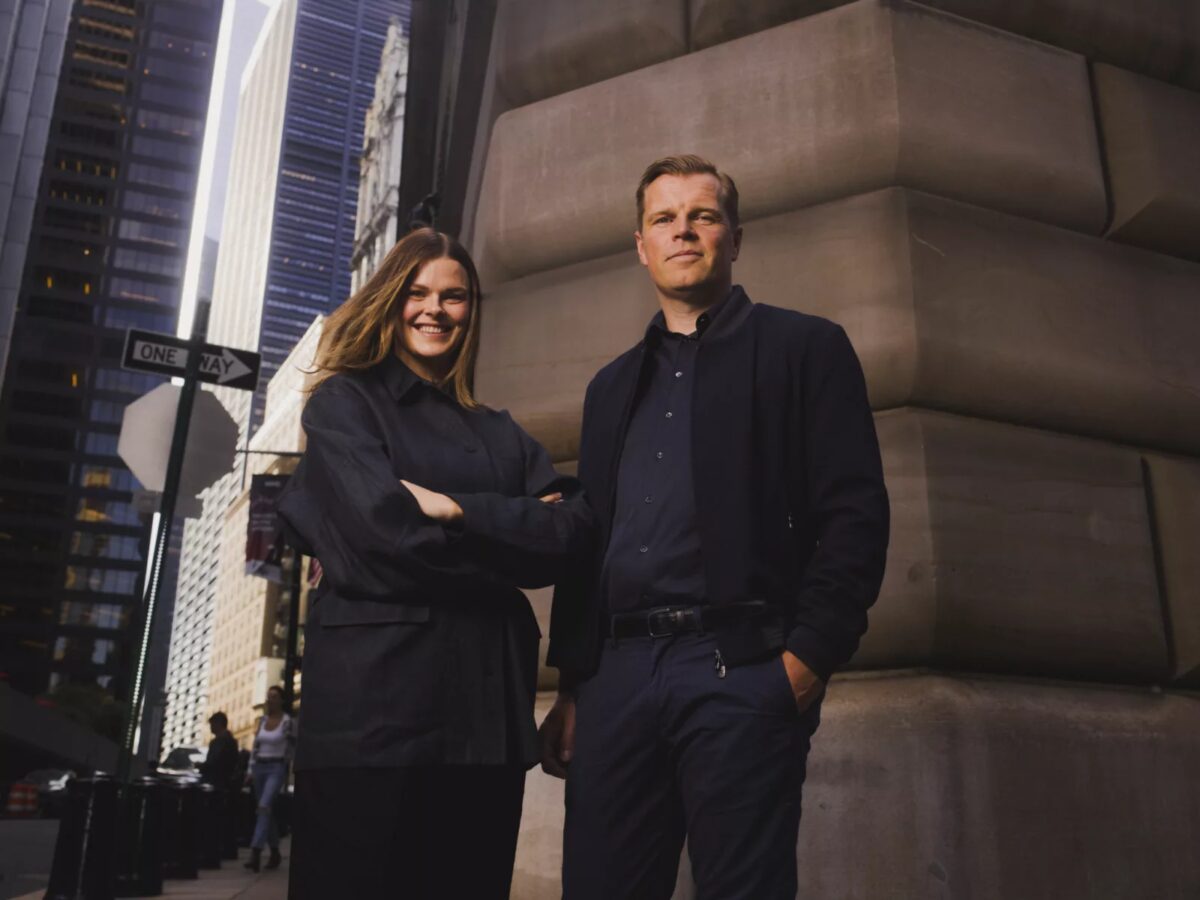
Robert Falck and Linnéa Kornehed Falck, the married co-founders of Swedish autonomous-freight company Einride, have launched Navisalma, a new European venture firm aiming to deploy €450 million into deep tech over the next three years. The firm has already raised roughly €40 million toward an initial operating and seed-investing tranche, and has brought on Robert Westerdahl, a former McKinsey partner, as a third co-founder. It matters because Navisalma is explicitly not a check-writing-only fund: the pitch is that the Falcks will apply the same operational muscle that took Einride from a whiteboard idea to billions of dollars in signed freight contracts to a portfolio of ten prospective deep tech "unicorns" over the next decade, at a moment when European venture is starved for GPs who have actually built and scaled a hardware-adjacent company themselves.
Key Takeaways
Operator-led deep tech funds are becoming their own category in Europe. Navisalma joins a small but growing cohort of European vehicles run by founders-turned-investors who back their checks with in-house engineering, manufacturing, and go-to-market support rather than passive board seats. For deep tech specifically, where the gap between a working prototype and a bankable commercial product is often the difference between success and failure, that kind of hands-on support is arguably more valuable than the capital itself.
The blended VC/PE structure is the real story, not the headline number. Reporting describes Navisalma as combining venture-style seed investing with private-equity-style "company building," which in practice appears to mean the firm plans to take a much more active operational role in its portfolio than a typical seed fund, without the leverage or majority-control mechanics of a classic buyout shop. That distinction matters for founders deciding whether they want a capital partner or a co-builder.
€450M is a big number for a firm with no fund track record yet. Ambition and Einride's brand recognition can open doors with LPs, but a €450 million three-year deployment target from a first-time institutional fund is aggressive by any European standard. Whether Navisalma raises that full amount, or scales back to match actual LP appetite, will be the clearest signal of how much credit the market is willing to extend purely on founder pedigree.
Europe's "we build things" thesis keeps gaining adherents. Navisalma's framing, that Europe is strong at invention but weak at commercializing it, echoes a thesis increasingly common among European deep tech investors. The firm is betting that industrial DNA plus AI-era tooling can close that gap faster than it has historically.
Fund Overview
Fund Name: Navisalma
Fund Size: Publicly reported target of €450 million to be deployed over three years, with an initial raise of roughly €40 million (reported as approximately 400 million SEK) largely completed to fund initial operations and seed-stage investments
Stage: Seed and early-stage, paired with ongoing operational "company building" support
Check Size: Not publicly disclosed
Geography: Europe, with a reported Nordic center of gravity
Focus: Deep tech with long R&D and commercialization cycles, including robotics, industrial AI, and energy systems/climate infrastructure
Key LPs: Not disclosed in current reporting
Why This Fund Matters
European deep tech has a well-documented "valley of death" problem: strong academic and engineering talent produces plenty of promising prototypes, but far too few of those prototypes make it to commercial scale before the capital or the founding team runs out of runway. Generalist seed funds are often poorly equipped to bridge that gap because the skills required, manufacturing sequencing, regulatory navigation, pilot-customer development, are closer to operating experience than investing experience.
That is precisely the gap Navisalma is positioning itself to fill. Robert Falck spent over a decade building Einride from an idea into a company with billions of dollars in signed freight contracts and real deployed autonomous trucking infrastructure, which means he has personally lived through the exact commercialization bottlenecks that kill most deep tech startups: pilot-to-scale manufacturing, safety and regulatory certification, and translating technical superiority into a sellable product. Linnéa Kornehed Falck brings complementary operating experience from the same build-out. Adding Robert Westerdahl's McKinsey background suggests an intent to formalize that operating playbook into something repeatable across a portfolio, rather than relying purely on founder instinct.
The timing also lines up with a broader capital allocation shift. LPs who spent the last two years chasing software-only, capital-light AI bets are increasingly asking where the next decade of differentiated, defensible technology actually gets built, and a non-trivial slice of the answer is hardware-adjacent deep tech that is hard to replicate with a weekend of prompting. A firm that can credibly say "we've done this before, with our own money and reputation on the line" has a real edge in that conversation, assuming the fundraising execution matches the ambition.
The risk, and it is a real one, is that operator-led funds frequently struggle to generalize a single company's playbook across a diversified portfolio. What worked for Einride's specific mix of hardware, software, and freight-market dynamics will not map cleanly onto every deep tech vertical Navisalma backs. The firm's ultimate performance will depend on whether its operational value-add is genuinely portable or whether it is really an Einride-shaped lens applied to companies that need something different.
The Team
Robert Falck co-founded and led Einride, the Swedish autonomous and electric freight company, steering it from a concept-stage startup to a business with billions of dollars in signed contracts and commercial deployments. Linnéa Kornehed Falck co-founded Einride alongside him and shares operating history in scaling the company's commercial and organizational functions. Robert Westerdahl joins as a third co-founder after a career at McKinsey, where he is reported to have advised on industrial and technology strategy; his role appears oriented toward building out Navisalma's investment and operating infrastructure. Public reporting has not yet detailed a broader partner bench beyond these three, which is typical for a firm at this early a stage but worth watching as the fund scales toward its stated target.
Early Portfolio
Navisalma has publicly disclosed one investment so far: Abundry, a Swedish startup applying AI to optimize energy system performance. Given the firm's stated three-year deployment horizon and the scale of its fundraising ambitions, expect the disclosed portfolio to expand quickly, and expect early deals to skew toward energy, robotics, and industrial AI given the founders' stated thesis.
What This Means for Founders
Deep tech founders in Europe working on genuinely hard engineering problems, energy systems, robotics, advanced manufacturing, where the bottleneck is as much operational execution as it is capital, are the clearest fit here. Founders who want a passive check and board seat, or who are further along and mainly need growth capital rather than build-out support, are probably not the target profile; Navisalma's pitch is explicitly about hands-on company building, which means founders should expect a high-engagement relationship, for better or worse depending on how much operational involvement they actually want from an investor.
The practical advice for founders considering a pitch: come prepared to discuss not just the technology but the commercialization roadmap in detail, since that is reportedly where the Falcks intend to add the most value. A team that has already thought hard about manufacturing partners, pilot customers, and regulatory pathway will likely get a more productive conversation than one pitching pure technical differentiation alone.
Fund Momentum Take
We like the thesis more than we're willing to bet on the number. Operator-led, operationally-intensive deep tech investing is a real and underserved model in Europe, and the Falcks have as legitimate a claim to credibility in that model as almost anyone coming out of a single company. The €450 million target, however, is the kind of number that gets attached to a launch story before LP capital has actually been committed at that scale, and we would not be surprised if the eventual fund size, or at least the pace of deployment, comes in more conservative than the headline.
The bigger open question is repeatability. Einride's success involved a specific combination of timing, market structure, and founder execution that will not automatically transfer to every deep tech company Navisalma backs. If the firm can codify a genuinely portable operating playbook, distinct from "do what we did at Einride", it could become one of the more differentiated deep tech investors in Europe. If it can't, it risks becoming a high-conviction, low-diversification vehicle that performs well on its best bets and struggles everywhere else.
Our bet: Navisalma raises a meaningful fund, likely below the full €450 million target within the initial three-year window, and becomes a genuinely useful partner for a handful of portfolio companies where the Einride playbook actually applies. Founders outside that narrow lane should evaluate the operational fit carefully before optimizing for the brand name on the cap table.
Frequently Asked Questions
What is Navisalma?
A new European venture firm founded by Einride co-founders Robert Falck and Linnéa Kornehed Falck, along with former McKinsey partner Robert Westerdahl, targeting €450 million for deep tech investments over three years.
How much has Navisalma actually raised so far?
Public reporting indicates roughly €40 million has been raised toward an initial operating and seed-investing tranche; the full €450 million is a stated three-year target, not confirmed committed capital.
What sectors does Navisalma invest in?
Deep tech broadly, with reported emphasis on robotics, industrial AI, and energy systems and climate infrastructure.
How is Navisalma different from a typical VC fund?
Reporting describes it as blending venture-style investing with private-equity-style operational "company building," meaning the firm intends to take a more hands-on role in scaling portfolio companies than a typical seed fund.
Has Navisalma made any investments yet?
Yes, one publicly disclosed investment in Abundry, a Swedish AI-driven energy optimization startup.
Have a fund closing to announce? Submit your fund here.
Need help raising capital? Check out our Fundraising Advisory services.
Related funds in the index
Deep Tech funds from the verified index
| Fund | Size | Stage | Location | Focus |
|---|---|---|---|---|
| Monte Carlo Capital Fund II | $15M USD | Pre Seed | Global | Deep Tech, AI/ML +2 |
| Endeavor Catalyst Fund V | $320M USD | Series A | Spain | Cloud & DevOps, AI/ML +1 |
| Linse Ignition | $75M USD | Seed | United States | Deep Tech, Defense +4 |
| NVM Venture – Lazio compartment | €23.6M EUR | Pre Seed | Italy | Manufacturing, EnergyTech +6 |
| Graduate Ventures Seed Fund II | €125 million target EUR | Seed | Netherlands | AI/ML, Deep Tech +2 |