
Nauta Capital Hits €60M First Close on Sixth Fund
TL;DR
Nauta Capital has hit a €60 million first close on its sixth flagship fund, marking two decades since the firm raised its first institutional vehicle in 2006. The London- and Barcelona-based B2B software and deep tech investor is targeting €150 million to €200 million by the time it finishes raising in the second half of 2027, which would push total assets under management toward €750 million. The anchor commitment comes once again from the British Business Bank, now on its fourth consecutive Nauta fund, alongside returning LPs SETT, Merifin Capital, and Institut Català de Finances. With three-quarters of first-close capital coming from existing investors, this is less a new fund launch than a twenty-year relationship renewing itself at scale.
Key Takeaways
A fourth consecutive commitment from the British Business Bank is the strongest LP signal in this announcement, stronger than the headline number. Development banks and public LPs don't typically re-up blindly, they re-underwrite performance and team stability every cycle. Four straight Nauta funds backed by the same public institution, through multiple European market cycles including the 2022-2023 venture downturn, says more about durable manager quality than any amount of first-close marketing copy could.
Three-quarters returning LPs at first close is an unusually high retention rate for a sixth fund. By fund six, plenty of venture firms have seen meaningful LP churn, institutions rotate strategies, family offices change allocators, mandates expire. Nauta holding onto the bulk of its existing base this deep into its life as a firm suggests the twenty-plus years of exit history, nearly €3 billion by its own account, is actually translating into LP loyalty rather than just a nice line in a pitch deck.
Splitting the mandate between core B2B software and a dedicated deep tech sleeve (Nauta Labs) is a hedge against Europe's generalist-fund crowding problem. European seed and Series A software investing has gotten more competitive and more commoditized over the past three years, with dozens of funds chasing the same capital-efficient B2B deals. Carving out high-performance computing, AI infrastructure, cybersecurity, industrial automation, and energy frontier technology as a parallel thesis under one roof gives Nauta a differentiated deal flow source that most pure-software European funds don't have built in.
Universal Quantum's $100 million Series A in the existing portfolio is doing real work to validate the deep tech side of the thesis before the ink is even dry on this fund. A quantum computing portfolio company raising a nine-figure Series A is the kind of proof point that makes the Nauta Labs sleeve look like more than a marketing add-on bolted onto a B2B software franchise, it's evidence the firm can actually source and support genuinely technical, capital-intensive companies alongside its core SaaS bets.
Fund Overview
Fund Name: Nauta Fund VI, Vintage 2026
Fund Size: €60 million first close; targeting €150 million to €200 million at final close (expected H2 2027)
Stage: Pre-seed to Series A
Check Size: First tickets of €250,000 to €4 million
Geography: Pan-European, with offices in London and Barcelona; first-close LPs drawn from the UK, Continental Europe, Latin America, and the Middle East
Focus: Capital-efficient B2B software (travel, finance, retail, HR) plus deep tech, including high-performance computing, AI infrastructure, cybersecurity, industrial automation, digital health infrastructure, and energy frontier technology, via the Nauta Labs initiative
Key LPs: British Business Bank (anchor, fourth consecutive Nauta fund), SETT, Merifin Capital, Institut Català de Finances
Why This Fund Matters
European venture has spent much of the past two years dealing with a fundraising environment where even strong-performing managers have struggled to hit first closes quickly, LPs have gotten more selective, re-up cycles have slowed, and a meaningful number of emerging managers have quietly stopped raising altogether. Against that backdrop, a twenty-year-old firm closing €60 million with three-quarters of it coming from existing LPs is a useful proof point that institutional capital hasn't disappeared from European early-stage venture, it's just consolidating around managers with a long enough track record to de-risk the re-up decision.
The British Business Bank's fourth consecutive commitment is arguably the more structurally important story here than the fund itself. The Bank's venture programs exist specifically to crowd in private capital and build a durable UK and European manager base, and a fourth cycle of backing the same firm is the Bank effectively vouching for Nauta's governance and returns to every other LP in the market. That's a meaningfully different signal than a first-time anchor commitment, and other European funds currently in market should take note of how much weight a repeat development-bank LP can carry in a tough fundraising year.
The dual B2B software and deep tech mandate also reflects a broader shift happening across European early-stage investing right now. Pure horizontal SaaS theses have gotten crowded and margin-compressed as AI-native tooling lowers the cost of building software products, pushing differentiated capital toward harder-to-replicate technical bets, quantum, advanced compute, industrial automation, where the barriers to entry are higher and the competitive set of investors is thinner. Nauta building that capability in-house rather than spinning up a separate fund entity is a more capital-efficient way to capture that shift than most peers are attempting.
The sector mix inside Nauta Labs specifically, AI infrastructure, cybersecurity, and energy frontier technology, lines up closely with where European sovereign and strategic capital priorities currently sit, data sovereignty, compute capacity, and energy security. A fund that can credibly underwrite those categories alongside its software book is positioned to pick up strategic and governmental interest well beyond what a typical B2B-only fund could access, a meaningful structural advantage heading into a final close that's still roughly a year and a half away.
The Team
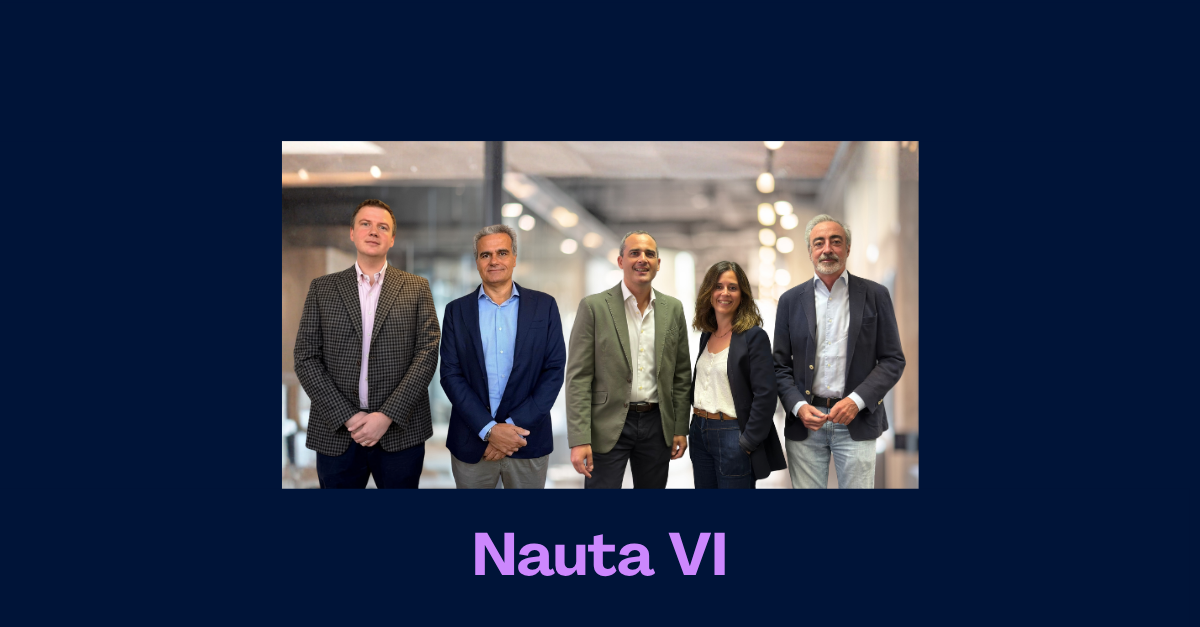
Nauta's General Partners today are Carles Ferrer Roqueta, based in London, and Jordi Viñas, based in Barcelona. The firm's broader partner bench includes Anna Daviau and Borja Breña as Partners in Barcelona, with Conor Scanlan recently joining as Associate Partner in London and Daniel Sanchez serving as Venture Partner in Barcelona. Ferrer Roqueta has publicly tied the firm's longevity to a culture of discipline and adaptability across venture cycles, a framing that lines up with Nauta reaching a sixth fund and a fourth consecutive British Business Bank commitment at a time when many peer firms founded in the same era have either shut down or been absorbed into larger platforms.
Early Portfolio
Nauta's active portfolio includes Universal Quantum, which recently closed a $100 million Series A and represents the clearest proof point yet for the firm's deep tech thesis, alongside Lodgify in short-term rental management software, Unravel in AI-powered travel discovery, Acai Travel in AI customer support for the travel sector, and Netbird, an open-source cybersecurity company that raised a $10 million Series A. The firm's historical exit list includes Brandwatch, Holded, and Connectbase, contributing to the roughly €3 billion in exit value Nauta attributes to its track record over more than 25 exits.
What This Means for Founders
Founders building capital-efficient B2B software in travel, finance, retail, or HR, or deep tech companies in high-performance computing, AI infrastructure, cybersecurity, industrial automation, digital health infrastructure, or energy technology, sit squarely in Nauta's stated mandate, with first checks ranging from €250,000 up to €4 million across pre-seed through Series A. The dual-sleeve structure means a founder building something more technically ambitious, quantum, advanced compute, industrial hardware, doesn't need to find a separate deep tech specialist fund to get a credible lead investor; Nauta is explicitly building the internal expertise to underwrite both categories from one platform.
Given that three-quarters of this fund's first-close capital came from repeat LPs rather than new institutional relationships, founders should also read this as a firm with unusually stable capital behind it over the life of a portfolio company, a meaningful consideration for anyone choosing a lead investor for a multi-year, capital-intensive build.
Fund Momentum Take
The headline number here undersells the story. A €60 million first close sounds modest next to the megafund closes dominating US venture headlines, but a twenty-year-old European firm retaining three-quarters of its LP base and a fourth consecutive development-bank commitment through a genuinely difficult fundraising cycle is a stronger signal of manager quality than most funds twice this size could produce right now. LPs aren't just betting on Nauta's next fund, they're betting on two decades of evidence that the firm survives cycles other managers don't.
The open question is whether the deep tech sleeve scales into a real second engine for the firm or stays a smaller satellite program layered onto the core software franchise. Universal Quantum's Series A is a genuinely strong early signal, but one portfolio company doesn't make a thesis, Nauta will need two or three more deep tech outcomes at that scale before Nauta Labs reads as a structural advantage rather than a smart hedge. Our bet: the British Business Bank's repeated backing suggests this firm has earned the benefit of the doubt, and a €150-200 million final close by late 2027 looks achievable even in today's LP environment.
Frequently Asked Questions
How much has Nauta Capital raised for its sixth fund?
Nauta hit a €60 million first close for Fund VI and is targeting €150 million to €200 million at final close, expected in the second half of 2027.
Who are the main LPs in Nauta's new fund?
The British Business Bank anchored the first close for the fourth consecutive Nauta fund, alongside returning investors SETT, Merifin Capital, and Institut Català de Finances.
What does Nauta Capital invest in?
Nauta backs capital-efficient B2B software companies in sectors like travel, finance, retail, and HR, plus deep tech companies in high-performance computing, AI infrastructure, cybersecurity, industrial automation, digital health infrastructure, and energy technology through its Nauta Labs initiative.
What stage and check size does Nauta invest at?
Nauta invests from pre-seed through Series A, with first checks ranging from €250,000 to €4 million.
Who leads Nauta Capital today?
Nauta's General Partners are Carles Ferrer Roqueta in London and Jordi Viñas in Barcelona, supported by Partners Anna Daviau and Borja Breña in Barcelona.
Have a fund closing to announce? Submit your fund here.
Need help raising capital? Check out our Fundraising Advisory services.
Related funds in the index
Deep Tech funds from the verified index
| Fund | Size | Stage | Location | Focus |
|---|---|---|---|---|
| Nauta Fund VI, Vintage 2026 | €60M EUR | Pre Seed | United Kingdom | Enterprise Software, SaaS +6 |
| Antares Ventures Fund I | $50M USD | Seed | Singapore | Deep Tech, EnergyTech +2 |
| Monte Carlo Capital Fund II | $15M USD | Pre Seed | Global | Deep Tech, AI/ML +2 |
| Endeavor Catalyst Fund V | $320M USD | Series A | Spain | Cloud & DevOps, AI/ML +1 |
| Linse Ignition | $75M USD | Seed | United States | Deep Tech, Defense +4 |