
Menlo Ventures Raises $3B Across Two Funds to Go All-In on AI
TL;DR
Menlo Ventures has raised $3 billion in fresh capital, the largest fundraise in the firm's 50-year history, and is splitting it across two vehicles: Menlo Ventures XVII for seed and Series A, and Menlo Inflection IV for Series B and growth. The firm is explicitly going all-in on AI, an aggressive posture earned by a 2023 bet on Anthropic that, after roughly $1 billion invested across rounds, is now reportedly worth about $14 billion. This is the clearest example yet of a mainstream Sand Hill Road firm converting a single concentrated AI position into the balance-sheet credibility to raise a mega-fund and back AI companies from formation through hypergrowth.
Key Takeaways
A 50-year-old firm just reinvented itself around one thesis. Menlo was founded in 1976 and has cycled through enterprise, consumer, fintech, and security eras. The decision to brand this raise as "all in on AI" and to structure both flagship funds around the AI stack is a deliberate identity reset, not a marketing flourish. Few incumbents of this vintage have repositioned this completely.
The Anthropic position is the engine, not a footnote. Menlo's reported ~$14 billion paper stake in Anthropic gives it two things money usually can't buy: distributable returns that make LPs eager to re-up, and proximity to the model layer that makes the best AI founders take its calls. The $3 billion raise is, in effect, the Anthropic windfall being recycled into the next cohort.
Two funds means Menlo wants to own the whole lifecycle. By pairing an early-stage fund (XVII) with a dedicated growth vehicle (Inflection IV), Menlo is signaling it intends to lead at seed and still have the capital to defend pro-rata through Series B and beyond, where AI rounds have become brutally expensive. This is the barbell strategy the largest multistage firms have used to box out single-stage competitors.
The Anthology Fund turned Menlo into an AI scout network. The $100 million seed program launched with Anthropic in 2024 has now backed 60-plus companies with three exits already (Fintool to Microsoft, Graphite to Cursor, Astrix Security to Cisco). That gives Menlo an early-warning radar on AI company formation that most growth investors simply don't have.
Fund Overview
Fund Name: Menlo Ventures XVII (early stage) and Menlo Inflection IV (growth)
Fund Size: $3 billion combined (the firm has not publicly broken out the split between the two funds)
Stage: Seed and Series A via Fund XVII; Series B and beyond via Inflection IV
Check Size: Not disclosed; spans early formation checks to growth-round leads
Geography: Primarily U.S., with a global AI lens
Focus: The full AI stack, from infrastructure and frontier models to AI-native applications across enterprise, healthcare, and consumer
Key LPs: Not disclosed
Why This Fund Matters
The headline number is large, but the more important story is what it represents structurally. For most of the last decade, the debate in venture was whether seed-focused boutiques or sprawling multistage platforms would win the AI cycle. Menlo is making the case that a mid-sized, technically deep firm can do both, provided it has a returns engine powerful enough to fund the ambition. The Anthropic position is that engine. It is rare for a single investment to so completely reshape a firm's strategic options, and Menlo is being unusually candid that this raise is downstream of that bet.
There is also a timing signal here. Raising $3 billion in a market where LPs remain selective and distributions across the asset class have been thin tells you that capital is concentrating sharply toward managers with proven AI exposure. The first half of 2026 has broken venture fundraising records, but that headline masks enormous dispersion: a handful of AI-adjacent firms are absorbing most of the new commitments while the long tail struggles to close. Menlo is firmly in the first group, and this raise widens the gap.
The two-fund architecture is the part founders should study most closely. By running Inflection IV alongside Fund XVII, Menlo is buying the right to keep writing checks as its winners scale, rather than getting diluted or forced out by later-stage crossover capital. In an environment where the best AI companies raise enormous Series B and C rounds at valuations that would have been late-stage a few years ago, the firms that can follow their own seed bets all the way up will compound far better than those that hand their breakouts off to growth specialists.
Finally, the bet carries obvious concentration risk, and that is worth naming plainly. A reported $14 billion stake that dominates the firm's mark-to-market is a spectacular asset on the way up and a serious governance question if AI valuations compress or if Anthropic's competitive position erodes. Menlo's challenge over the life of these funds is to convert paper gains into realized, distributed returns while diversifying the next portfolio enough that the firm is not simply a leveraged bet on one model company.
The Team
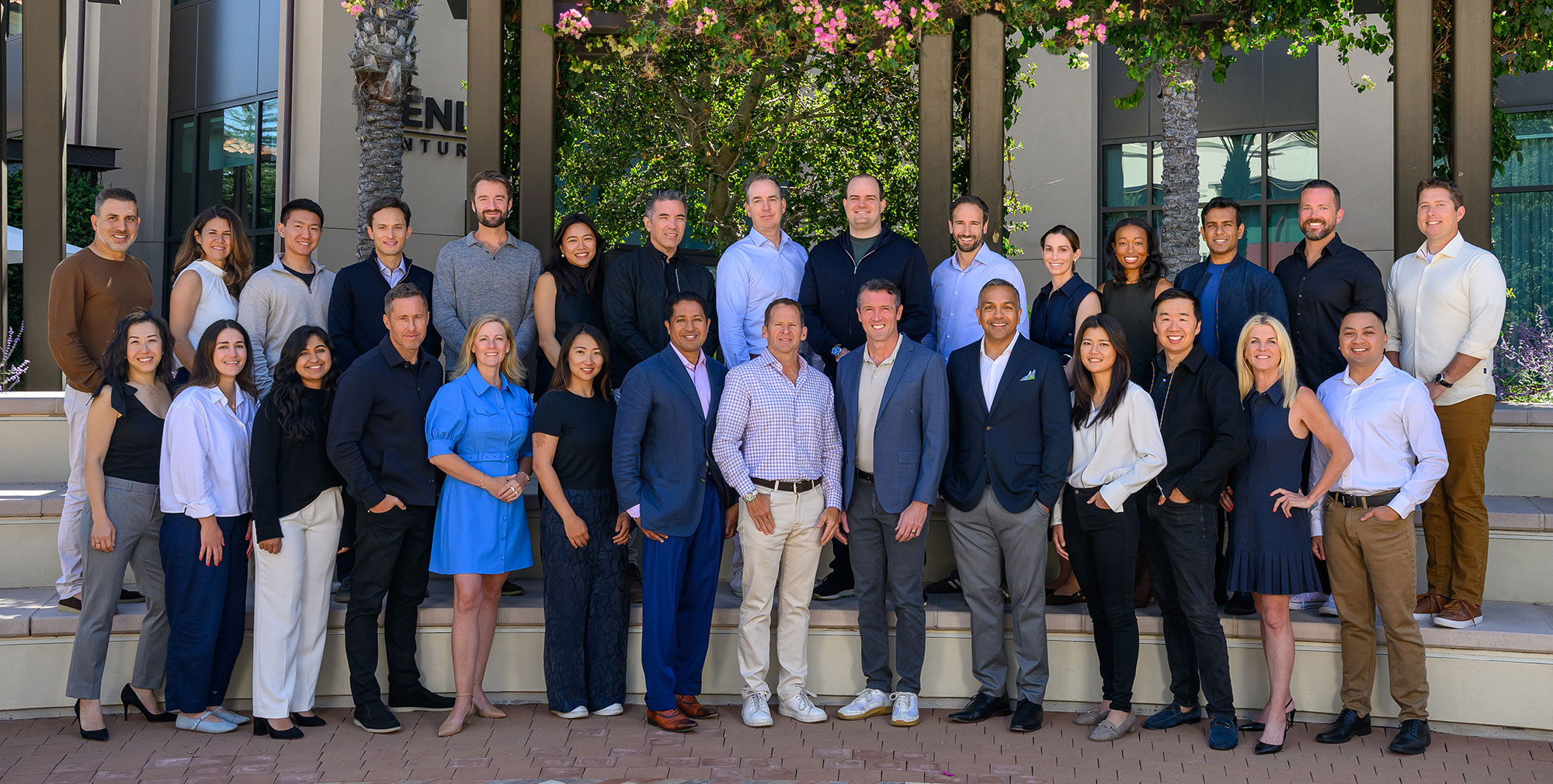
Menlo has spent the last several years deliberately importing operating and technical depth, and the partner bench now reflects an AI-first orientation. Matt Murphy led the firm's first Anthropic investment in 2023 and anchors its work across AI-native software and infrastructure. Shawn Carolan, a 24-year veteran of the firm, invests across consumer, fintech, and deep tech. The technical bench is unusually strong for a generalist firm: Tim Tully was CTO of Splunk; Matt Kraning co-founded and was CTO of Expanse before its acquisition by Palo Alto Networks and holds a Ph.D. in machine learning from Stanford; Deedy Das was a founding engineer and product leader at Glean; and Joff Redfern was CPO of Atlassian and earlier led LinkedIn's pivot to mobile.
That core is rounded out by partners with sector fluency in the markets AI is reshaping: Amy Wu Martin (consumer, formerly a CFO and executive at Warner Discovery), JP Sanday (AI software and digital health), Venky Ganesan and Rama Sekhar (cybersecurity and AI infrastructure), Steve Sloane (AI software, supply chain, and automation), Croom Beatty (fintech and healthcare), and Greg Yap and Johnny Hu (bio and healthcare AI). H. DuBose Montgomery, who founded the firm in 1976, is today a partner emeritus rather than an active investor, and the firm's current investing is run by the partner group above rather than its founder.
Early Portfolio
Menlo's AI portfolio already spans the stack the new funds target. At the infrastructure and frontier layer it includes Anthropic, Axiom, Chai Discovery, Gimlet, Goodfire, Neon, OpenRouter, and Skild AI. On the application side it has backed Eve, Higgsfield, Legora, Lovable, Manifest OS, OpenEvidence, Semgrep, Suno, and Wispr Flow. Separately, the Menlo Anthology Fund, the seed program launched with Anthropic in 2024, has backed more than 60 companies and produced three exits to date: Fintool (acquired by Microsoft), Graphite (acquired by Cursor), and Astrix Security (Cisco announced its intent to acquire in May 2026).
What This Means for Founders
If you are building anywhere on the AI stack and want a lead investor who can credibly carry you from seed to growth, Menlo just became materially more attractive. The dedicated Inflection IV vehicle means a seed check from Fund XVII is not a one-and-done relationship; the firm is structured to keep leading your rounds rather than tapping out. The technical partner bench also means founders should expect real architectural pressure-testing and recruiting help, not just a wire and a board seat. For frontier-infrastructure and AI-native enterprise teams in particular, the proximity to Anthropic and to a dense AI portfolio is a tangible recruiting and go-to-market advantage.
The flip side: a firm going this publicly all-in on AI will be a hard sell for founders outside that lane, and its concentration around the Anthropic ecosystem could create real or perceived conflicts as portfolios densify around the same model providers and infrastructure categories. Founders should ask directly how Menlo thinks about backing competitors within a category, and how much partner attention an early-stage company can realistically command at a firm now deploying billions. The Anthology Fund is the most accessible front door for the earliest teams.
Fund Momentum Take
This is the most consequential single-firm fundraise of the AI cycle so far, not because $3 billion is unprecedented, but because of how cleanly it demonstrates the new flywheel: one concentrated, high-conviction position generates the marks and the network that fund the next decade of bets. Menlo executed the hard part, the 2023 conviction call on Anthropic when the LLM race looked decided, and is now collecting the strategic dividend. We think the two-fund, full-lifecycle structure is the correct response to an AI market where the cost of staying in your winners has exploded.
Our reservation is concentration. A firm whose fortunes are this tied to a single model company is making a second bet every day it does not diversify or realize gains, and AI valuations have shown they can move violently in both directions. The quality of these funds will ultimately be judged less on the Anthropic mark and more on whether Menlo can turn its scout network and technical bench into a second and third generation of independent winners that are not derivative of one position.
Our bet: Menlo will be one of the handful of firms that emerges from this cycle with both elite returns and durable franchise value, precisely because it paired a generational hit with the discipline to build infrastructure (the Anthology network, the operating partners, the growth fund) around it rather than simply riding the mark. The risk is real, but this is what conviction investing looks like when it works.
Frequently Asked Questions
How big is Menlo Ventures' new fund, and what is it called?
Menlo raised $3 billion in total across two funds: Menlo Ventures XVII for seed and Series A, and Menlo Inflection IV for Series B and growth. It is the largest raise in the firm's history. Menlo has not publicly disclosed how the $3 billion is split between the two vehicles.
What stages and sectors will the funds invest in?
Fund XVII targets seed and Series A; Inflection IV targets Series B and beyond. Both are focused on the AI stack, spanning infrastructure and frontier models through AI-native applications in enterprise, healthcare, and consumer.
How is this connected to Anthropic?
Menlo first invested in Anthropic in 2023, led its Series D in 2024 with what it describes as the largest check in firm history, and has invested in every round since. Bloomberg has reported Menlo invested roughly $1 billion in total and that its stake is now worth about $14 billion, which underpins the firm's ability to raise at this scale.
What is the Menlo Anthology Fund?
It is a separate seed program Menlo launched with Anthropic in July 2024 to back early-stage teams building at the AI frontier. It has backed more than 60 companies and has had three exits so far: Fintool (to Microsoft), Graphite (to Cursor), and Astrix Security (Cisco announced intent to acquire in May 2026).
Who leads AI investing at Menlo?
Matt Murphy led the firm's first Anthropic investment and anchors AI-native software and infrastructure. The broader AI bench includes Tim Tully (ex-Splunk CTO), Matt Kraning (ex-Expanse CTO), Deedy Das (ex-Glean), Joff Redfern (ex-Atlassian CPO), and longtime partner Shawn Carolan, among others.
Have a fund closing to announce? Submit your fund here.
Need help raising capital? Check out our Fundraising Advisory services.
Related funds in the index
Growth · AI/ML funds from the verified index
| Fund | Size | Stage | Location | Focus |
|---|---|---|---|---|
| E2D European Defence & Dual-Use Fund | €500M EUR | Growth | Germany | Defense, Space +3 |
| Anti Fund Growth I | $100M USD | Growth | United States | AI/ML, Defense +3 |
| Benchmark Growth Fund I | $1.25B USD | Growth | United States | AI/ML, Enterprise Software +2 |
| BAI Capital USD Fund | $800M USD | Growth | China | AI/ML, Enterprise Software +2 |
| Scaleup Europe Fund (EQT) | €5B EUR | Growth | Sweden | AI/ML, Deep Tech +5 |