
Key1 Capital Hits $320M First Close for Fund II
TL;DR
Key1 Capital, the Herzliya-based growth fund founded by three former Goldman Sachs bankers, has raised $320 million in a first close for its second fund. That's already close to the full $300 million its debut fund raised back in 2021-22, and roughly 95% of the money came from investors re-upping from that first fund. The new vehicle keeps writing the same $20-30 million checks into Series C, D and E rounds, now split between Israeli and European growth-stage companies working on AI infrastructure, mission-critical software and defense technology.
Key Takeaways
The debut fund barely had to sell itself twice. A near-total re-up rate on a first close is a strong signal that Key1's first fund actually returned something real to its LPs, or at least convinced them the thesis is working. Founders pitching this fund should assume the GPs already have conviction and are moving capital, not testing the market.
The stage gap here is real and narrow. Key1's own pitch is that almost none of Israel's roughly 210 active VC funds focus specifically on late-growth, pre-IPO-adjacent rounds the way it does. That's the firm's own framing and worth treating as marketing rather than verified fact, but the underlying gap, too much seed and Series A capital, too little for a company raising its third or fourth round at scale, is a real and recurring complaint from Israeli founders.
All three founders are bankers, not operators. Each spent more than a decade at Goldman Sachs running deal teams, not building or scaling a company of their own. That shows up in what Key1 is good at: structuring, pricing and syndicate-building. It also shows up in what founders shouldn't expect from them, which is hands-on product or go-to-market help.
Defense is now explicitly part of the thesis. Two of Key1's named venture partners are retired Israeli Air Force generals, and the firm runs a dedicated defense-tech effort internally. For a fund of this size and stage, that's a meaningful bet on where late-growth capital in Israel is heading next, not a side note.
Fund Overview
Fund Name: Not disclosed (Key1 Capital's second fund; the firm has not published a formal name or final target)
First Close: $320 million
Previous Fund: $300 million (closed 2021-22)
Stage: Late-growth, Series C/D/E
Check Size: $20-30 million
Geography: Israel and Europe
Focus: AI infrastructure, mission-critical software, defense technology
Key LPs: Not individually named; described as institutional investors, family offices and tech entrepreneurs, with about 95% of first-close capital coming from Fund I investors re-upping
Why This Fund Matters
Israeli venture capital has a well-documented stage problem: plenty of seed and Series A capital, a reasonable amount of growth-equity interest from international funds once a company is obviously working, and comparatively little dedicated local capital for the awkward middle, companies raising a third, fourth or fifth round that are too big for most domestic funds and not yet the kind of marquee name that pulls a Tiger or an Insight Partners term sheet on its own. Key1 built its first fund around exactly that gap in 2021-22, and the fact that its second fund is already past $300 million in commitments, with nearly all of that from returning backers, suggests the firm found real demand there rather than inventing a thesis to justify raising a bigger fund.
The timing also lines up with a broader shift in Israeli growth capital toward AI infrastructure and defense. Both sectors have pulled in enormous amounts of global capital over the past two years, and Israel has specific, defensible advantages in each: a deep bench of engineers who came out of elite military intelligence units, and a defense-industrial base that already supplies NATO-aligned militaries. A fund stocked with former Goldman bankers and staffed with retired generals as venture partners is a fairly literal expression of where Israeli late-stage capital thinks the next five years of deal flow sits.
What's less clear is how differentiated Key1's actual underwriting is once a deal gets to the table. Writing $20-30 million checks into Series C-E rounds is a crowded strategy globally; plenty of US and European growth funds are happy to lead or follow into strong Israeli companies at that stage, and they often bring more operating depth and a bigger international network than a three-partner shop can. Key1's edge has to be speed, local relationships and the ability to move first on Israeli deals before the larger international funds show up, more than a unique ability to pick winners that others can't see.
The near-total re-up rate matters more than the $320 million headline. LPs don't recommit at 95% into a fund that underperformed or felt directionless; something about Fund I's returns or deal access was good enough that the same backers wanted more exposure before Key1 even had to go out and market a second close. That's a better signal of real performance than anything in a press release.
The Team
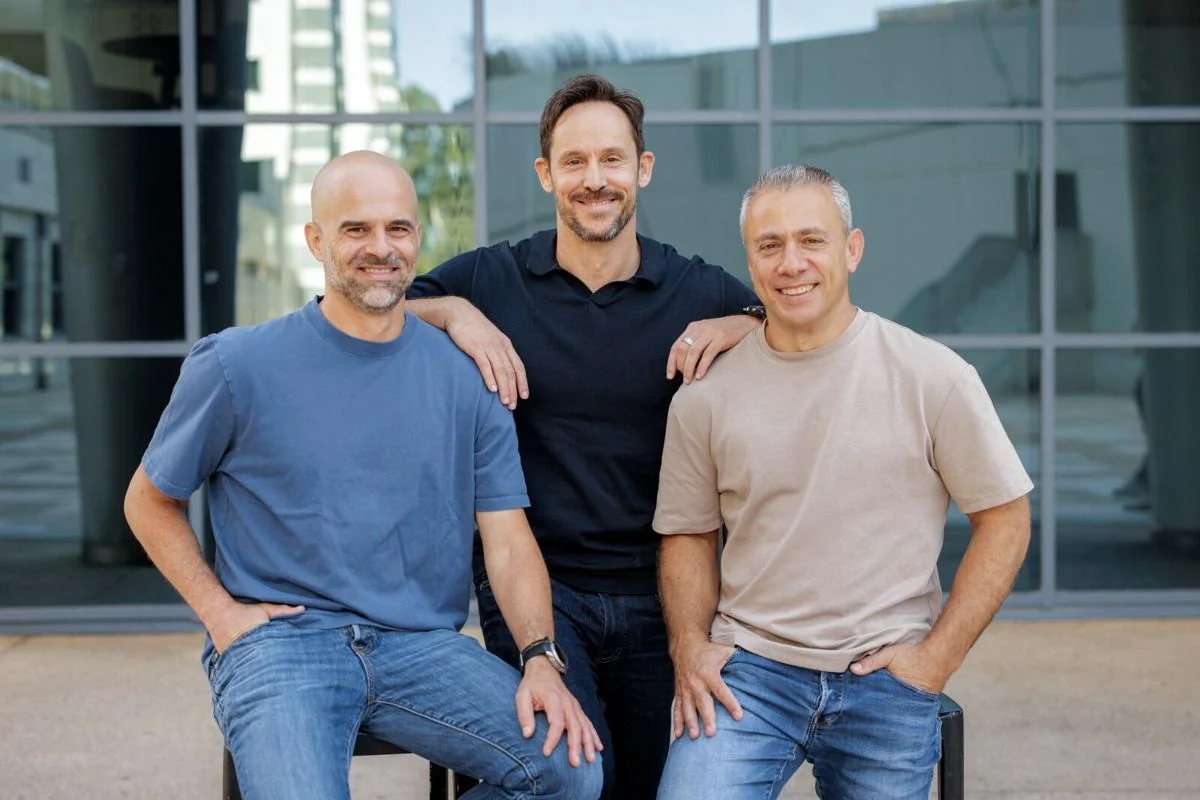
Key1 was founded by three partners who built their careers together at Goldman Sachs rather than meeting through the usual VC or startup circuit. Sarel Eldor joined Goldman's Finance Group in New York in 2001, moved to Tel Aviv in 2007 to open the firm's Israel office, and later became CEO of Goldman Sachs Israel before running Goldman's Growth Markets team out of London starting in 2017. Amit Pilowsky spent 17 years at Goldman across London and Tel Aviv, including a stint heading the bank's EMEA Consumer and Retail group, and served as a Major in the Israeli Air Force before that. Danny Akerman spent a decade at Goldman's Tel Aviv office leading TMT investment banking advisory and later the broader investment banking practice there, with earlier stops at JPMorgan and Credit Suisse in New York; before finance, he competed as a gymnast on Israel's national team.
Below the three managing partners, Key1 has built out a conventional growth-fund bench: a CFO who came from EY, a principal with BCG and JPMorgan experience, and a handful of senior hires from firms like Rothschild & Co. and Brookfield. More distinctive are the firm's venture partners, a group of six that includes two retired Israeli Air Force generals tied to Key1's defense-technology push. That combination, banking discipline on the investment side and military-industrial relationships on the sourcing side, is as close as this fund gets to a stated competitive moat.
Early Portfolio
Fund I's clearest results so far are two exits. SuperPlay, a mobile gaming studio, sold to Playtika in a deal reported at roughly $686-700 million depending on the source. DustPhotonics, an optical interconnect company for AI data centers, sold to Credo Technology for $770 million earlier this year. On the active side, Key1 points to WEKA, a data-platform company for AI workloads that reached unicorn status after a $140 million Series E priced at a $1.6 billion valuation, along with FundGuard, CHEQ and Holidu. Key1 also reports a 20.6% net IRR as of mid-2026, a figure it discloses itself rather than one confirmed by an outside administrator, and one that's still early given Fund I is only a few years old.
What This Means for Founders
If a company is raising a Series C, D or E out of Israel or Europe and needs $20-30 million as part of a larger round, Key1 is now one of a genuinely small number of local funds built specifically for that check at that stage, and it's sitting on fresh capital with a mandate to deploy it. That's a useful name to have on a target-investor list, particularly for AI infrastructure, enterprise software selling into regulated or mission-critical buyers, or defense-adjacent technology, where the firm's venture partner network can open doors that a generalist growth fund can't.
Founders should go in expecting a disciplined, numbers-first process shaped by three partners' banking instincts rather than three partners' startup-building instincts. That tends to mean rigorous diligence on unit economics, growth efficiency and the structure of the round itself, and less in the way of hands-on product or go-to-market support after the check clears. For a company that already has its operating house in order and just needs capital and a credible lead or co-investor at scale, that trade-off is usually a good one.
Fund Momentum Take
The $320 million figure matters less than what it implies about the first fund. A 95% re-up rate on a first close is rare enough to count as a performance signal on its own, and it suggests Key1's original bet on an underserved late-growth stage in Israel paid off rather than merely sounded good on paper. Funds built by former bankers often struggle to earn founder trust because the pitch can read as financial engineering instead of sector conviction. The exits on SuperPlay and DustPhotonics, plus an unrealized position in WEKA, give Key1 actual proof points, not just three strong resumes.
The open question is whether a three-partner team, however well-connected, can keep sourcing enough high-quality late-growth deals in a market as small as Israel's to deploy a fund potentially larger than $320 million without drifting into deals that are more available than they are good. The defense-tech tilt, leaning on two retired generals as venture partners, is a smart way to build a sourcing edge that larger, less locally rooted growth funds can't easily replicate. Whether that edge translates into returns depends entirely on deal quality the firm hasn't shown publicly yet, since this fund is still in its first close and hasn't announced a single investment.
Frequently Asked Questions
What stage does Key1 Capital invest at?
Late-growth, typically Series C, D or E rounds, writing checks of roughly $20-30 million into companies in Israel and Europe.
How big is Key1's second fund going to be?
Unknown. The firm has disclosed a $320 million first close but hasn't published a final target or a formal fund name, so treat any larger number as speculation until Key1 confirms one.
Who founded Key1 Capital?
Sarel Eldor, Amit Pilowsky and Danny Akerman, three partners who spent a combined four-plus decades at Goldman Sachs before launching the firm's first fund in 2021-22.
What has Key1's first fund actually returned?
Two confirmed exits, SuperPlay (sold to Playtika for roughly $686-700 million) and DustPhotonics (sold to Credo Technology for $770 million), plus a self-reported 20.6% net IRR as of mid-2026 that hasn't been independently verified.
Is Key1 a defense-tech fund?
Not exclusively, but defense technology is now an explicit part of its thesis alongside AI infrastructure and mission-critical software, reinforced by two retired Israeli Air Force generals on its venture-partner bench.
Have a fund closing to announce? Submit your fund here.
Need help raising capital? Check out our Fundraising Advisory services.
Related funds in the index
Growth · Deep Tech funds from the verified index
| Fund | Size | Stage | Location | Focus |
|---|---|---|---|---|
| Radical Breakouts Fund | $1B USD | Growth | Canada | AI/ML, Robotics & Automation +1 |
| QuantumLight Fund II | €432M EUR | Growth | United Kingdom | AI/ML, FinTech +3 |
| Banner VC Fund I | $225M USD | Growth | United States | Defense, Space +1 |
| 137 Ventures | $700M USD | Growth | United States | AI/ML, Defense +1 |
| Balerion Space Ventures Fund II | $200M USD | Growth | United States | Space, Defense +5 |