
Galileo Ventures Hits $15M First Close on $30M Fund II
TL;DR
Sydney/Melbourne pre-seed firm Galileo Ventures has hit a $15 million first close on its $30 million Fund II, with Victorian government vehicle Innovation Victoria anchoring as cornerstone investor alongside Artesian Capital, US venture investor Brad Feld, former WhatsApp engineering director Michael Donahue, and NZ startup advisor Andy Hamilton. The fund will write first checks of roughly A$200K-$500K (scaling to A$1M) into 30-ish AI-native, robotics, and deep-tech companies, with 40% of the capital earmarked for Victoria-based founders. It matters because it's a rare data point on pre-seed institutional capital actually getting formed in Australia's notoriously top-heavy VC stack, backed by a GP team with a genuine top-decile Fund I track record to point to rather than a pitch deck.
Key Takeaways
Fund II is being built on a real Fund I result, not vibes. Galileo's debut vehicle put more than 26 checks to work and pulled in $200M+ of co-investment alongside it, landing in top-decile territory with exits including Relevance AI (Series B) and Andromeda Robotics (Series A). That's the kind of proof point that lets a sub-scale pre-seed manager raise a second, larger fund in a market where LPs have gotten far pickier about backing anyone without realized or marked-up outcomes.
A state-backed cornerstone LP is doing real work here. Innovation Victoria isn't a passive check-writer; its presence signals that Victoria's government sees pre-seed fund managers as a distribution channel for its own economic-development mandate, which is why 40% of Fund II is earmarked for Victorian founders. That's a geography-tied LP condition worth watching, because it shapes sourcing incentives whether or not the GPs would admit it changes deal selection at the margin.
The Brad Feld angle is a credibility signal Australian pre-seed funds rarely get. An early Fitbit backer and Foundry Group co-founder writing a personal check into an Australian pre-seed vehicle is unusual distribution for a firm this size, and it's the kind of LP-base diversity (LP names spanning Australia, the US, and New Zealand) that helps a fund punch above its balance sheet when it comes to founder introductions and follow-on syndicate assembly.
Only 50% raised against target is the honest state of play, and that's fine at pre-seed scale. A $15M first close on a $30M target isn't a full raise, and funds this size routinely take 12-18 months to reach a final close while deploying steadily out of the first tranche. The risk to watch is whether the back half of the raise slows if the macro fundraising environment for pre-seed-focused funds (as opposed to AI mega-funds) stays as constrained as it's been through 2026.
Fund Overview
Fund Name: Galileo Ventures Fund II
Fund Size: $30 million target (publicly reported; first close of $15 million, roughly 50% of target)
Stage: Pre-seed and seed
Check Size: First checks typically A$200K-$500K, scaling up to A$1M
Geography: Australia (Sydney and Melbourne), with a US presence in San Francisco and New York; 40% of Fund II capital earmarked for Victoria-based founders
Focus: AI-native teams, enterprise software, robotics, and deep tech that's genuinely hard to build
Key LPs: Innovation Victoria (cornerstone), Artesian Capital, Brad Feld, Michael Donahue, Andy Hamilton, Nicola Kaldor (Lorne Capital)
Why This Fund Matters
Australia's venture stack has a well-documented pre-seed gap. Angels and unstructured syndicates have historically filled the space between "founder's own savings" and the first institutional Series A-adjacent round, with genuinely dedicated pre-seed funds thin on the ground compared to the US or even Southeast Asia. Galileo's own GPs have made this critique explicit, framing the local pre-seed stack as "top-heavy" and handed off to angels who lack the structured follow-on capacity a proper fund vehicle brings. A second, larger fund from a manager with a credible Fund I is a direct rebuttal to that gap, not just another entrant.
The timing lines up with a broader 2026 pattern: AI-native pre-seed rounds are getting priced and structured differently than pre-2023 pre-seed, with founders needing capital before they have anything resembling traditional pre-seed traction because compute and talent costs front-load faster. Galileo's framing that "the AI boom has changed what counts as a fundable pre-seed company" is the operating thesis behind the fund, and it tracks with what's happening in every other geography where pre-seed managers are re-underwriting what "too early" means.
The ESVCLP structure (Early Stage Venture Capital Limited Partnership) Galileo is using is Australia's tax-advantaged vehicle for early-stage funds, offering LPs capital gains tax exemption plus a 10% carry-forward tax offset. That's a meaningful structural lever for attracting local high-net-worth and family office capital, and it's part of why a fund this size can credibly target a mixed LP base of institutions, family offices, and operators rather than needing a single anchor to carry the whole raise.
The risk worth naming plainly: pre-seed funds at this AUM level are structurally dependent on follow-on capital showing up from larger funds to mark up their portfolio and generate the DPI that justifies a Fund III. Galileo's $200M+ of Fund I co-investment attraction is the strongest evidence they can do that reliably, but it's also evidence that has to keep repeating itself every vintage for the model to keep working.
The Team
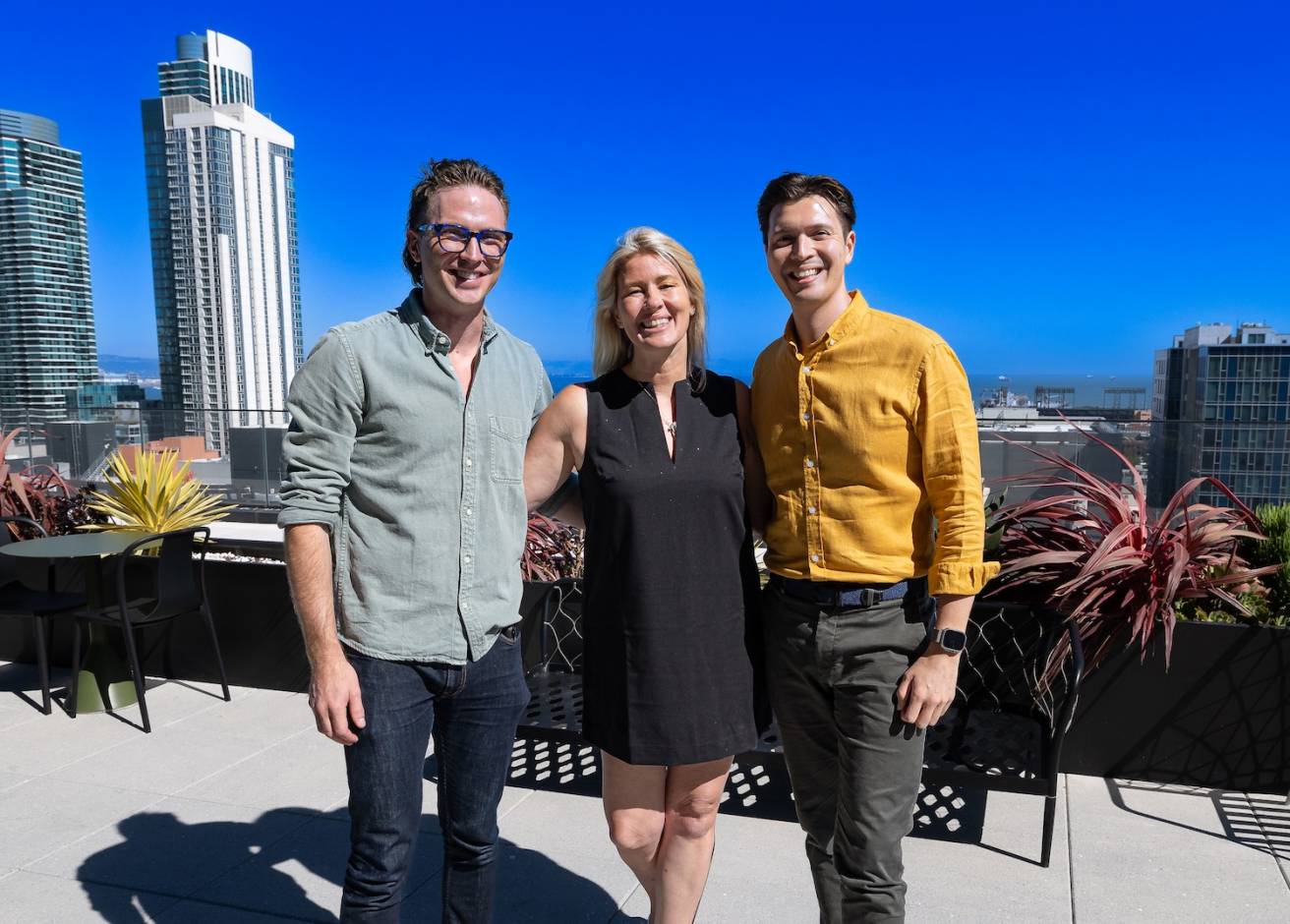
James Alexander is Managing Partner, splitting time between Sydney and San Francisco, and is the public face of the firm's fund announcements. Hugh Stephens is General Partner based in Melbourne and has been the most vocal on the thesis that Australian pre-seed has been under-institutionalized. Julia French is Partner, also splitting time between Sydney and San Francisco, and has spoken publicly about founder authenticity as a selection filter rather than pattern-matching to prior successful founder archetypes. All three are listed as the firm's decision-making partners; the firm's own site does not list any additional venture partners or advisors alongside them as of this fund's announcement.
Early Portfolio
Fund II's first disclosed check went to Fluent BCI, a brain-computer interface startup building AI-driven speech-to-text translation for people with speech impairments. Fund I's portfolio includes Andromeda Robotics, an aged-care companion robotics company that has since raised a $23M Series A, and Relevance AI, an AI agents platform that reached a Series B before Galileo's stake matured into an exit. Other Fund I portfolio companies span ticketing (Tixel), construction cost management (Varicon), carbon project management (CarbonHQ), AI agent deployment (TrueState), electric aviation propulsion (Kite Magnetics), legal AI (Isaacus), and insurance/construction digital twins (SyncTech).
What This Means for Founders
If you're an Australian or New Zealand founder building something AI-native, robotics, or genuinely technical at the pre-seed stage, Galileo is now one of the few local funds explicitly positioned to be your first institutional check with real follow-on reserves behind it rather than a one-and-done pre-seed grant. The Victoria earmark is worth knowing about if you're based there or considering relocating a chunk of your team, since it functionally improves your odds of a first meeting turning into a term sheet.
The value-add pitch here isn't generic "we'll open doors" language, it's a specific claim to have pulled in $200M+ of co-investment alongside a 26-company Fund I portfolio, which is a credible signal the firm can actually syndicate your next round rather than just writing the first check and disappearing. Founders should still do the normal diligence on any pre-seed fund at this stage of its raise: ask directly how much of the $30M target is committed versus verbally soft-circled, and what the deployment pace looks like against the remaining $15M gap.
Fund Momentum Take
We like the honesty of a $15M first close disclosed as exactly that, half of target, rather than rounding up to "the $30M fund" in every headline. It's a small thing, but it's the kind of transparency that tends to correlate with GPs who'll also be straight with founders about term sheet realities. The Innovation Victoria cornerstone is the more interesting structural bet: government-backed cornerstone LPs in early-stage funds are a growing pattern across Australia, the UK, and parts of Europe, and they work well when the mandate stays loose enough not to distort deal selection, and poorly when it doesn't.
Our risk read is squarely on raise completion and deployment discipline. Getting from $15M to $30M in a pre-seed-specific fund, as opposed to a multi-stage AI mega-fund, is a genuinely harder LP conversation in 2026's environment, where a lot of institutional capital has been chasing scale and AI infrastructure exposure rather than sub-$1M check pre-seed vehicles. If Galileo closes the remaining half within the next 12 months without diluting the Victoria/AU-New Zealand LP mix, that's a real vote of confidence in the model. If the raise stalls at $15-20M and the firm starts deploying below target reserves per company, that's the pattern worth watching for in Fund III conversations down the line.
Our bet: the Fund I track record and the Innovation Victoria relationship are strong enough that this closes at or near target within the stated timeline, and Galileo becomes one of the more durable pre-seed brands in the ANZ market over the next fund cycle.
Frequently Asked Questions
How much has Galileo Ventures raised for Fund II so far?
The firm has announced a first close of $15 million against a $30 million target, roughly 50% of the fund.
Who are Galileo Ventures' General Partners?
James Alexander (Managing Partner), Hugh Stephens (General Partner), and Julia French (Partner) are the firm's three decision-making partners.
What stage and sectors does Galileo Ventures invest in?
Pre-seed and seed-stage companies, with a focus on AI-native teams, enterprise software, robotics, and deep tech.
Who are the cornerstone and notable LPs in Fund II?
Innovation Victoria is the cornerstone investor, joined by Artesian Capital, US venture investor Brad Feld, former WhatsApp engineering director Michael Donahue, New Zealand advisor Andy Hamilton, and Nicola Kaldor of Lorne Capital.
What has Galileo Ventures invested in so far?
Fund II's first disclosed check is Fluent BCI. Fund I's portfolio includes Andromeda Robotics, Relevance AI, Tixel, Varicon, CarbonHQ, TrueState, Kite Magnetics, Isaacus, and SyncTech.
Have a fund closing to announce? Submit your fund here.
Need help raising capital? Check out our Fundraising Advisory services.
Related funds in the index
Pre Seed · AI/ML funds from the verified index
| Fund | Size | Stage | Location | Focus |
|---|---|---|---|---|
| Oraseya Capital Fund | AED 1B AED | Pre Seed | United Arab Emirates | Digital Health, FinTech +2 |
| Monte Carlo Capital Fund II | $15M USD | Pre Seed | Global | Deep Tech, AI/ML +2 |
| PSV Tech Fund II | €56M EUR | Pre Seed | Sweden | AI/ML, Digital Infrastructure +1 |
| NVM Venture – Lazio compartment | €23.6M EUR | Pre Seed | Italy | Manufacturing, EnergyTech +6 |
| DIG Ventures Fund III | €106M EUR | Pre Seed | United Kingdom | Data Infrastructure, Cloud & DevOps +3 |