
Don't Quit Ventures: $10M Solo Fund, 3 Unicorns, 2.5x MOIC
TL;DR
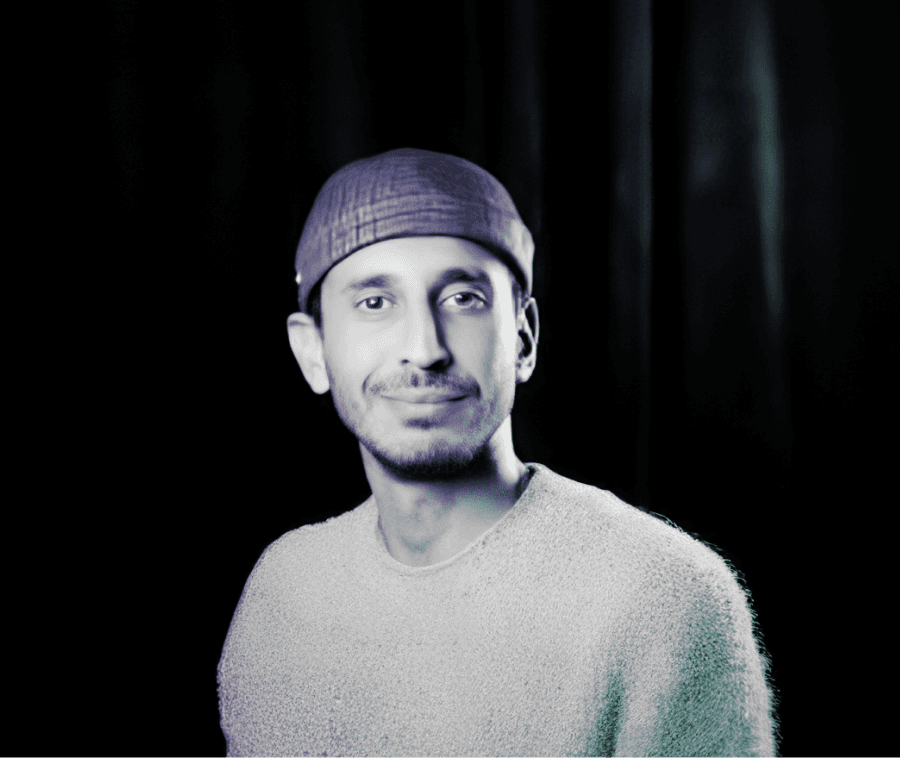
Don't Quit Ventures, the solo-GP fund run by Noa Khamallah, has closed a second close of its $10 million Fund I, Fortune reported exclusively. The numbers are unusually strong for a fund this size: 2.5x MOIC marked, cash already returned to LPs at 1.5x on a partial exit just 14 months after first close, and three of its 17 bets — including stakes in Mira Murati's Thinking Machines Lab, Yann LeCun's AMI Labs, and Replit — now valued above $1 billion. That's roughly one unicorn in five, against an industry rate closer to one in seventy. The bigger story is what Khamallah's path says about who gets access to venture capital: a former convict and self-described "street kid" who cold-emailed his way to backers including Yann LeCun and rapper Fetty Wap.
Key Takeaways
A $10 million fund is outperforming funds 10-100x its size, and that's not an accident of scale. Per Carta's Q4 2025 data cited by Fortune, funds under $10 million are currently beating funds over $100 million on both cash-on-cash returns and paper markups, and iCapital research shows sub-$275 million funds returning 36% versus 24% for larger vehicles. A single 10x outcome barely moves a $1 billion fund's needle; inside a $10 million fund, it changes everything — which is exactly the dynamic DQV's numbers reflect.
Access came from cold outreach, not the traditional LP network. Khamallah has said he cold-emailed Yann LeCun directly, subject line "former convict, street kid, turned IPO, turned VC," and got a reply within hours: "You are a statistical anomaly. Welcome in." He used the same tactic to reach rapper Fetty Wap, who became a backer alongside former NFL player Penny Hart. That's a meaningfully different sourcing and fundraising model than the warm-intro machinery most solo GPs rely on.
First-time and micro funds are getting structurally squeezed even as the smaller ones outperform. Only 101 first-time funds launched in 2025, per Fortune, the fewest in 14 years, while the ten largest funds now capture roughly a third of all capital raised industry-wide, more than double their share five years ago. DQV's performance is a direct counter-data-point to the "bigger is safer" logic driving that concentration.
The anchor LP's diligence process is itself a signal. Michael Ströck's Allocator One, which anchored DQV's first close, reviews more than 800 emerging manager funds a year and backs fewer than 1%. Ströck has also gone on record dismissing the standard objection to solo-GP funds — key-person risk — as statistically overstated relative to the more common failure mode of multi-partner splits.
Fund Overview
Fund Name: Don't Quit Ventures (DQV), Fund I — second close
Fund Size: $10 million
Stage: Early-stage / seed, generalist with a tilt toward AI and consumer-adjacent bets
Structure: Solo General Partner (Noa Khamallah)
Performance (as of this close): 2.5x MOIC marked; one position partially exited at 1.5x cash-on-cash, 14 months after first close
Portfolio: 17 investments, including 3 valued above $1 billion (Mira Murati's Thinking Machines Lab, Yann LeCun's AMI Labs, and Replit among disclosed positions)
Key LPs: Allocator One (anchor, first close), plus a network including former NFL player Penny Hart, rapper Fetty Wap, and other operator and athlete backers named in the firm's own announcement
Why This Fund Matters
The venture industry's current structural drift is toward concentration: fewer first-time managers getting funded, and the biggest funds capturing a growing share of total dollars raised. Fortune's own numbers make the trend explicit — 101 debut funds in 2025, the fewest in 14 years, against a backdrop where the ten largest funds now take in about a third of all capital raised industry-wide. DQV is a direct, data-backed counterargument to the idea that bigger is inherently safer or better for LPs: a sub-$10 million fund posting a 2.5x mark and a realized 1.5x partial exit within 14 months of first close is a return profile most $500 million-plus vehicles aren't producing right now.
The mechanics behind that performance are not mysterious — they're arithmetic. A single unicorn-track investment barely dents a billion-dollar fund's overall return; the same investment inside a $10 million vehicle can define the entire fund. That's the same "power law concentrated in a small fund" dynamic that's driven outperformance at other micro and solo-GP vehicles this cycle, and Carta's and iCapital's data referenced in Fortune's reporting suggest it's a broad pattern, not an isolated case.
What's more unusual about DQV is the sourcing model behind it. Khamallah's path into venture didn't run through a traditional LP or founder network — he cold-emailed Yann LeCun and rapper Fetty Wap directly, leaning on an unconventional personal story (time in prison, a childhood without basic amenities, a later exit at Charge Enterprises) as the pitch rather than a pedigree. That approach produced backers most emerging managers would need years of warm introductions to reach, and it's a data point for the broader argument that access to elite deal flow and LP capital is less gatekept by credentialism than the industry's structure often implies — provided the underlying track record backs it up.
The Team
Noa Khamallah is DQV's sole General Partner. Born in France to Algerian immigrant parents and raised in the suburbs of Lille, he dropped out of school and served prison time before his career in tech. He later helped scale Lime's micro-mobility expansion across 11 countries and 15 cities in eight months, co-founded GetCharged Inc. ("Charge"), and led its European operations before the company was acquired for $17.5 million and became Charge Enterprises, which listed on the Nasdaq. He founded Don't Quit Ventures after turning down a GP role at a larger, unnamed billion-dollar fund when he couldn't get a straight answer about what exits would actually move the needle for LPs at that scale.
Early Portfolio
DQV has made 17 investments to date. Three are now valued above $1 billion, and per Fortune's reporting, the fund's cap table includes a stake in Mira Murati's Thinking Machines Lab, along with disclosed positions in Yann LeCun's AMI Labs and in Replit. The fund has already generated a partial realized exit — selling part of its stake in one portfolio company at 1.5x cost, 14 months after its first close.
What This Means for Founders
For founders outside the traditional Sand Hill Road or YC-adjacent pipeline — particularly those with unconventional backgrounds themselves — DQV's own story is effectively the pitch: Khamallah built his fund by betting on relationship-driven, commercially sharp founders he could reach directly, not by working exclusively through warm-introduction networks. Founders who connect with that model, or who value an investor with direct operating scars from building and exiting a company himself, are the clearest fit.
The tradeoff is scale: a $10 million fund cannot write large checks or lead big rounds, and its value-add is concentrated in one person's time, network, and judgment rather than a platform team. Founders should also weigh Khamallah's own celebrity- and athlete-adjacent LP base as a potential source of distribution and brand value beyond the check itself — Penny Hart and Fetty Wap's involvement point to a network that extends into sports and entertainment, not just traditional tech circles.
Fund Momentum Take
The numbers here are genuinely rare — a 2.5x mark and a realized 1.5x partial exit inside 14 months, on a $10 million fund, with a 1-in-5 unicorn hit rate against an industry baseline near 1-in-70. Whether that continues at Fund I's current size or reverts once the fund's early winners have fully played out is the real question, and it's one Fortune's own reporting flags directly: smaller funds swing harder between huge wins and total losses, and if Khamallah raises a materially larger Fund II, the concentration math that's driving these returns gets harder to replicate.
We'd also push back gently on reading this purely as an underdog story. Khamallah didn't just get lucky with cold emails — he had a real operating and exit track record (Lime's international scaling, the Charge Enterprises exit) before he ever wrote an angel check, which is precisely the kind of "operator turned VC" credibility he argues most traditional VCs lack. The unconventional sourcing method worked because there was substance behind the pitch, not instead of it.
Our bet: DQV's current numbers make Fund II a when, not an if, and the interesting test will be sizing discipline — whether Khamallah keeps the fund small enough to preserve the concentration dynamics that produced this track record, or scales toward the larger-fund gravity that swallows most successful emerging managers eventually. Given his own stated reason for starting DQV — walking away from a billion-dollar GP seat because the exit math for LPs didn't add up — there's at least a credible case he stays disciplined on size longer than most.
Frequently Asked Questions
What is Don't Quit Ventures?
Don't Quit Ventures (DQV) is a $10 million solo-GP venture fund run by Noa Khamallah, which just announced the second close of its Fund I. It has made 17 early-stage investments, three of which are now valued above $1 billion.
Who is Noa Khamallah?
Khamallah is DQV's sole General Partner. He grew up in Lille, France, dropped out of school and served time in prison, later helped scale Lime's international micro-mobility expansion, and co-founded GetCharged Inc. ("Charge"), which was acquired for $17.5 million and became Nasdaq-listed Charge Enterprises.
How has the fund performed?
Per Fortune's reporting, DQV is marked at 2.5x MOIC, and has already returned cash to LPs through a partial exit at 1.5x cost just 14 months after its first close — a fast and unusually strong liquidity event for a fund this size.
What companies has DQV backed?
The fund's disclosed positions include stakes in Mira Murati's Thinking Machines Lab, Yann LeCun's AMI Labs, and Replit, among 17 total investments, three of which are now valued above $1 billion.
Who are DQV's LPs?
Allocator One, led by Michael Ströck, anchored the fund's first close. Other backers named publicly include former NFL player Penny Hart and rapper Fetty Wap, alongside a wider network of operators and friends of the fund.
Have a fund closing to announce? Submit your fund here.
Need help raising capital? Check out our Fundraising Advisory services.
Related funds in the index
Active funds from the verified index
| Fund | Size | Stage | Location | Focus |
|---|---|---|---|---|
| Anorak Ventures Fund III, | $35M USD | Seed | United States | |
| venture vehicle Fund II | Targeting $400 million USD | Pre Seed | United States | |
| DIG Ventures Fund III | $106M USD | Pre Seed | United Kingdom | |
| Headline EU Fund VIII | $400M USD | Series A | United Kingdom | |
| Eastend Ventures Fund I | A$30M AUD | Growth | United States |