
CRSilva Ventures Launches First Forest-Sector VC Fund
TL;DR
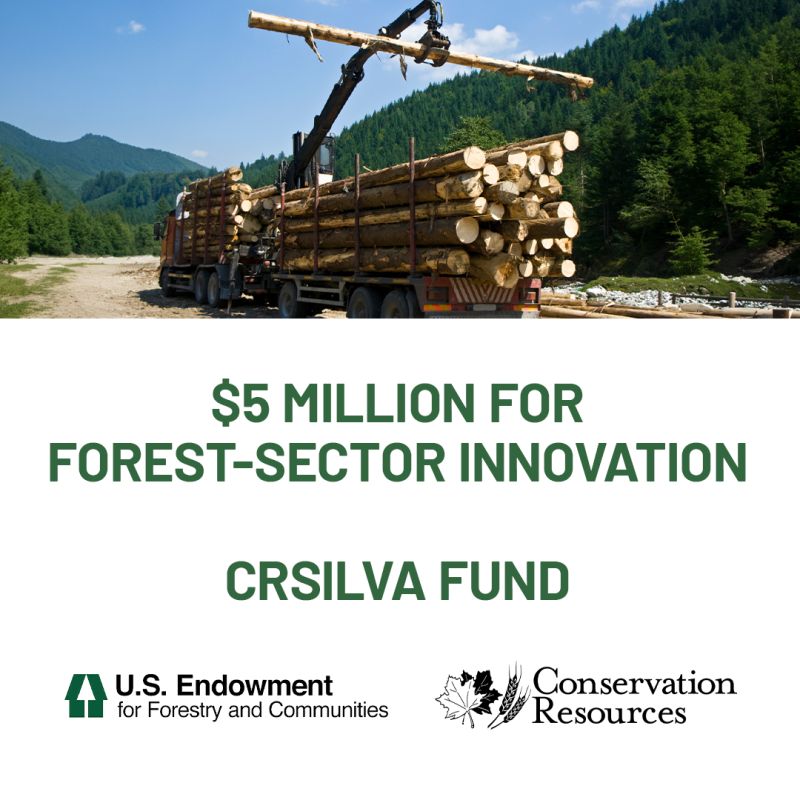
Conservation Resources, a 20-year-old alternative investment firm best known for timberland and farmland funds, has formally launched CRSilva Ventures, a new early-stage venture capital strategy dedicated to the forest sector. The fund has landed its first disclosed check: a $5 million anchor commitment from the U.S. Endowment for Forestry and Communities. CRSilva is led by founder and managing partner Paul Young and already has six companies in its portfolio, spanning wildfire-resilience software, autonomous forestry machinery, and low-carbon building materials. Total fund size and close timeline haven't been disclosed, but the thesis is one of the more fully-formed takes on climate-and-materials investing we've seen from a firm with real balance-sheet history in the sector it's now underwriting.
Key Takeaways
A natural-capital investor is building its own venture arm rather than buying into someone else's. Conservation Resources has put more than $1.3 billion into timberland and farmland since 2004. Spinning up CRSilva instead of writing LP checks into existing climate-tech funds signals the firm thinks its operating knowledge of forest land, mills, and rural supply chains is itself a sourcing and diligence edge that generalist VCs can't easily replicate.
The anchor LP is also the thesis validator. The U.S. Endowment for Forestry and Communities isn't a passive allocator here; it's a nonprofit built specifically around rural forest economies, and its participation functions as a credibility stamp on the sector bet as much as a funding source. That matters for a strategy this early and this narrow, where most institutional LPs have no existing framework for evaluating "forest ecosystem" as an investable category.
The portfolio already looks like a thesis, not a grab-bag. Six companies in in categories from wildfire robotics to modular timber construction to AI-driven forestry machinery suggests CRSilva was deploying capital, likely informally through Conservation Resources' existing network, well before this formal fund structure and LP announcement. That's a more credible debut than a fund with a logo and no portfolio.
Undisclosed fund size is normal at this stage, not a red flag. Plenty of first-close and strategy-launch announcements lead with an anchor LP before a target or final number is public. What's worth watching is whether CRSilva discloses a target once it's actively marketing to the institutional investors and family offices that typically follow an anchor commitment like this one.
Fund Overview
Fund Name: CRSilva Ventures, LP
Fund Size: Not disclosed; the only confirmed capital is a $5M anchor commitment from the U.S. Endowment for Forestry and Communities
Stage: Pre-seed, seed, and early-stage
Check Size: Not disclosed
Geography: Not explicitly stated; parent firm Conservation Resources' forestry and farmland investing has historically concentrated in the U.S.
Focus: Technology and company-building around forest ecosystems, including software and AI, ecosystem resilience, biology, advanced materials, construction, and manufacturing
Key LPs: U.S. Endowment for Forestry and Communities (anchor, $5M); no other LPs have been named
Why This Fund Matters
Forest-sector venture capital is a thin category. Most climate-tech funds treat forests as a carbon-credit line item or a supply-chain sustainability checkbox rather than a standalone investable ecosystem. CRSilva's framing is more ambitious: it treats forest ecosystems as a stack of biological, material, carbon, water, and data systems that can each support new technology layers, from AI and robotics to genomics and advanced manufacturing. That's closer to how a generalist deep-tech investor frames a platform thesis than how a typical ESG-adjacent fund talks about trees.
The timing has an obvious macro backdrop. Pulpwood markets across the U.S. have been shrinking for years as paper demand declines, leaving landowners, mills, and rural communities exposed. That decline is exactly the kind of structural dislocation that tends to produce venture-backable opportunities, new uses for existing biomass, new ways to manage fire-prone and underutilized forestland, new building materials that substitute for carbon-intensive ones. CRSilva is underwriting the bet that someone needs to build the software and hardware layer on top of that transition, and that whoever gets there first in a sector this under-capitalized has a real moat.
What makes this more than a thesis deck is the operating base it's built on. Conservation Resources isn't a fund manager parachuting into forestry because it's a hot climate category; it's a firm that has spent two decades buying, managing, and operating timberland and farmland directly. That gives CRSilva something most first-time climate-tech GPs don't have: a standing network of landowners, foresters, and rural operators who are also the natural pilot customers and reference accounts for the startups in its portfolio.
The risk, as with any thesis this specific, is market size. Forest-ecosystem tech is not a trillion-dollar TAM story, and CRSilva will need its portfolio companies to either expand into adjacent categories (construction materials, industrial robotics, climate data) or dominate genuinely large sub-markets within forestry itself. The six companies already in the portfolio suggest the firm is betting on the former: packaging, construction, and autonomous machinery are all markets that extend well beyond "forestry" as a narrow vertical.
The Team
Paul Young founded and leads CRSilva as managing partner. Before this, he built and ran an institutional investment firm, where he raised and managed capital, designed investment strategies, and worked directly with portfolio management teams, experience that maps fairly directly onto standing up a new institutional fund strategy from scratch. Dag Rutherford joins as principal, bringing operating and investment experience across forest products, natural resources, and institutional portfolio management, exactly the domain fluency a forest-focused fund needs on its investment committee. Zach Sargent rounds out the named team as principal, leading sourcing, market analysis, financial modeling, and transaction execution. No venture partners or advisors have been named publicly as of this announcement, and the firm hasn't disclosed whether additional investment staff sit underneath this three-person team.
Early Portfolio
CRSilva's own site lists six companies already in its portfolio, organized cleanly around its stated focus areas: Tanbark (molded fiber packaging as a substitute for single-use plastics), WholeTrees (structural round-timber systems for low-carbon buildings), Kodama.ai (AI-enabled remote and autonomous heavy machinery for forestry operations), Module (a modular housing platform built on sustainably sourced wood), Vibrant Planet (data-driven software for wildfire planning and ecosystem resilience), and BurnBot (robotic fuels-management technology aimed at wildfire mitigation). None of these are described as new investments tied to this announcement; the portfolio reads as the body of work CRSilva is using to introduce the strategy, not a list of deals made with the Endowment's capital specifically.
What This Means for Founders
If you're building in wildfire tech, forest-products materials science, forestry robotics and automation, or software that makes forest-ecosystem data usable, CRSilva is now a named, funded destination with a thesis specific enough that a good pitch won't need much translation. The firm's value-add is less about writing the biggest check in the round and more about the operating relationships Conservation Resources has built over 20 years of owning and managing forestland directly, those are warm introductions and pilot deployments that a generalist seed fund simply can't offer in this vertical.
The flip side is worth being honest about: this is a small, newly disclosed fund with an undisclosed total size and a three-person named team. Founders should go in expecting a highly domain-specific diligence process and should ask directly about check size, reserve strategy for follow-on rounds, and how much additional institutional capital CRSilva expects to close before treating it as a lead investor for a priced round.
Fund Momentum Take
We like the sequencing here more than the headline number. A lot of thesis-driven climate funds launch with a splashy target size and a thin portfolio to back it up; CRSilva has done the opposite, building out six portfolio companies across a genuinely coherent set of sub-theses before formalizing the fund and landing its first named institutional dollar. That ordering is a better predictor of staying power than a big first-close press release with no deals behind it.
The open question is capital. A $5 million anchor from a mission-aligned nonprofit endowment is a strong validation signal, but it is not a fund. CRSilva will need to convert that anchor into real institutional and family-office commitments to do more than a handful of deals a year, and the firm hasn't given the market a target number or a close date to hold it to. We'd also flag that "no venture partners disclosed" on a three-person team is fine at this stage but becomes a real constraint if deal flow in this niche picks up faster than the team can diligence it.
Our bet: this is a fund worth watching precisely because the thesis is narrow enough to be defensible. Forest-ecosystem tech won't produce the deal volume of a generalist seed fund, but a firm with Conservation Resources' operating history behind it has a real shot at being the house of record for this specific niche, provided it can scale the balance sheet to match the ambition of the pitch.
Frequently Asked Questions
What is CRSilva Ventures?
CRSilva Ventures is a new early-stage venture capital strategy from Conservation Resources that invests in technology and company-building tied to forest ecosystems, covering areas like wildfire resilience, forest-products materials, forestry automation, and ecosystem data.
How big is the fund?
The total fund size hasn't been disclosed. The only confirmed capital is a $5 million anchor commitment from the U.S. Endowment for Forestry and Communities.
Who runs CRSilva?
Paul Young is founder and managing partner. Dag Rutherford and Zach Sargent are named principals, with backgrounds in forest products and natural resources investing and in sourcing and transaction execution, respectively.
What stage does CRSilva invest at?
Pre-seed, seed, and early-stage companies.
What companies has CRSilva already backed?
Its publicly listed portfolio includes Tanbark, WholeTrees, Kodama.ai, Module, Vibrant Planet, and BurnBot, spanning packaging materials, timber construction systems, forestry automation, modular housing, and wildfire-resilience software and robotics.
Have a fund closing to announce? Submit your fund here.
Need help raising capital? Check out our Fundraising Advisory services.
Related funds in the index
Seed · Climate & Sustainability funds from the verified index
| Fund | Size | Stage | Location | Focus |
|---|---|---|---|---|
| BackingMinds Invest Fund III | €50M EUR | Seed | Sweden | Climate & Sustainability, AI/ML +1 |
| Graduate Ventures Seed Fund II | €125 million target EUR | Seed | Netherlands | AI/ML, Deep Tech +2 |
| Zero Infinity Partners Fund II | $156M USD | Seed | United States | InfrastructureTech, EnergyTech +6 |
| Pulse Fund I | $63M USD | Seed | United States | Climate & Sustainability, EnergyTech +4 |
| Vesna Deep Tech Venture Fund | EUR 49M EUR | Seed | Croatia | Deep Tech, Climate & Sustainability |