
Calibration Launches: Canva Backer's New Operator VC Bet
TL;DR
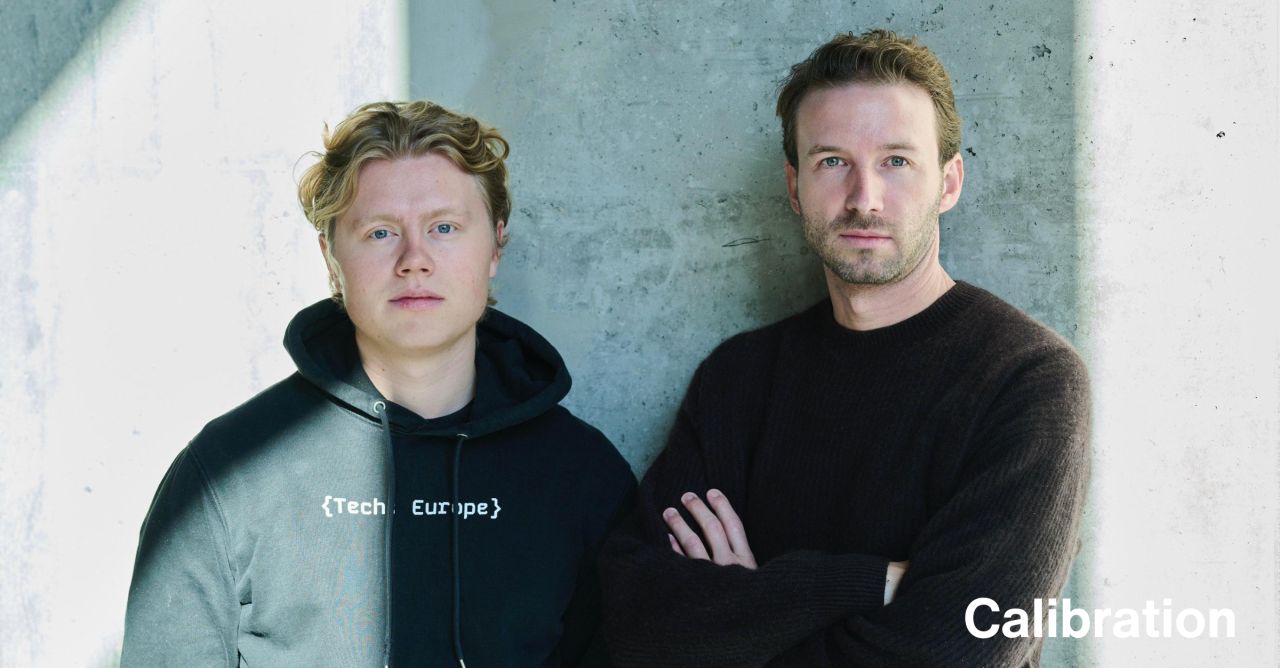
Bela Wiertz, the founder of the Berlin-based builder community {Tech: Europe}, has launched Calibration together with co-founder Levin Bunz, a former General Partner at Heartcore Capital and an early-career dealmaker at Global Founders Capital (GFC). Calibration calls itself an "operator VC," built on the thesis that in a fragmented European ecosystem, the scarcest resource isn't capital but visibility, specifically, founders' visibility into which exceptional engineers exist and want to move, and engineers' visibility into which early-stage companies are actually worth joining. Neither fund size nor a formal LP base has been disclosed, and as of this writing the launch has not been picked up by independent trade press beyond the founders' own LinkedIn announcement and firm website. What makes the story worth tracking isn't the fund itself yet, it's the two-sided distribution engine behind it and Bunz's underlying track record, which includes an early position in Canva.
Key Takeaways
This is a content-and-community-to-capital play, a model more common in the US than in Europe. Wiertz spent the last year building {Tech: Europe}, hackathons, a conference business (Applied AI Conf), a Berlin builder space (The Sandbox), and recruiting infrastructure, before layering a fund on top. That sequencing, audience and talent pipeline first, checkbook second, mirrors how operator-led funds have emerged in the US (content creators and community builders turning influence into deal flow) but remains rare among European GPs, who have mostly built funds first and media arms later, if at all.
Levin Bunz's track record is the part of this story that should get more attention than the launch post itself. As a GFC dealmaker from 2014 to 2018, he led or sourced the firm's investment in Canva, now valued at roughly $42 billion, among more than 50 transactions he says returned over 10x MOIC for that vintage. At Heartcore Capital (2019 to October 2024), he backed FINN.com from seed through Series C; FINN became a unicorn on the back of a roughly €100 million Series D round, and he also backed Formel Skin (which exited to Manual) and NinetyNine (which exited to JPMorgan). Few new European fund launches come with a GP who has two separate unicorn-or-exit outcomes already banked before fund one closes.
Wiertz brings sourcing proof points of his own, mostly as an angel rather than through an institutional vehicle. His personal angel book includes Peec AI, an AI search-visibility analytics startup that raised roughly $21 million across two rounds within five months of each other in 2026, and telli, a Y Combinator-alum AI voice-agent company that closed a $15 million seed round in July 2026. Both are among the more talked-about German AI startups of the year, which is a reasonable signal for his ability to spot founders early, even if it says less about his discipline as a fund manager, which is untested.
The biggest open question is whether "talent access" is a durable moat or a sourcing advantage that erodes once it's monetized. {Tech: Europe}'s value to founders and engineers today rests partly on it not obviously being a sales funnel for a venture fund. Once Calibration's LPs expect returns, the incentive to steer the best engineers toward Calibration's own portfolio companies, rather than toward whichever company is the best fit, creates a conflict the firm will have to manage transparently to keep the community's trust.
Fund Overview
Fund Name: Calibration (legal entity referenced as Calibration Capital)
Fund Size: Undisclosed; no target or closed amount has been publicly stated by the firm
Stage: Not formally specified; public materials describe backing "ambitious founders" without naming a round stage, consistent with the founders' own angel-stage history
Check Size: Not disclosed
Geography: Europe, sourced through {Tech: Europe}'s community across a claimed 38 countries
Focus: Operator VC model built around connecting ambitious founders with elite technical talent; no sector restriction stated
Key LPs: Not disclosed
Why This Fund Matters
European venture has no shortage of capital relative to a decade ago, but it still suffers from a genuine distribution problem: outstanding engineers in Warsaw, Lisbon, or Stockholm have no reliable way to learn which three-person startup in Berlin or London is worth betting their career on, and founders outside the handful of cities with dense investor networks struggle to get in front of people worth hiring before competitors do. Calibration's bet is that owning both sides of that matching problem, via hackathons, a conference, a jobs board, and a community spanning dozens of countries, generates proprietary deal flow and proprietary hiring signal that a traditional cold-outbound VC simply can't replicate.
That bet has precedent, just not much of it in Europe yet. In the US, funds built on top of media, communities, or operator networks (rather than the other way around) have become a recognizable category, largely because building genuine audience trust is slow and hard to fake, which makes it a real moat once established. Wiertz spent 2025 building exactly that kind of trust-first infrastructure before Calibration existed as a fund, which suggests the firm is following a deliberate sequencing rather than retrofitting a community narrative onto a conventional fund.
The pairing with Bunz is what elevates this from "promising community play" to "worth tracking now." A content-and-talent operator with no institutional investing scar tissue is a common and often underwhelming archetype; a content-and-talent operator paired with a GP who has already sourced a $42 billion outcome and sat on a unicorn's board through its Series D is a meaningfully different proposition. Bunz's presence also signals something about fundraising: LPs underwriting a brand-new, thesis-light "operator VC" usually want at least one partner with a legible, provable track record in the room, and he supplies that.
The honest counterweight: none of this has been independently verified by outside reporting, no fund size has been disclosed, and the firm's own site blends the founders' pre-Calibration personal portfolio (Canva, FINN, Anyfin, HeyJobs, among others) with its stated current portfolio in a way that makes it hard to tell, from the outside, what Calibration itself has actually invested in versus what its partners invested in before the firm existed. That ambiguity is normal for a fund in its first weeks of public life, but it's worth watching whether the firm clarifies it as it matures.
The Team
Bela Wiertz, Co-Founder & General Partner. Wiertz founded {Tech: Europe} in 2025 to build what he describes as Europe's independent ecosystem infrastructure, hackathons, a conference (Applied AI Conf, launched 2026), and a Berlin builder space called The Sandbox (2025). Before that, per his own LinkedIn profile, he spent 2021 to 2024 as part of a small, undisclosed ("stealth") team investing early in European developer-infrastructure companies, and worked briefly in 2024 as a builder and investor at First Momentum Ventures, covering dev/infra deal sourcing. Since 2025 he has angel-invested in Peec AI, Lyceum, telli, Zauber, ZML, Uma, Codewords, and The Company Company, among others.
Levin Bunz, Co-Founder & General Partner. Bunz was a General Partner at Heartcore Capital from January 2019 to October 2024, investing at pre-seed and seed and backing FINN.com (seed through Series C), Voyfai, Kive AI, Qlub, Quesma, Formel Skin, and Luca.edu, among others; Formel Skin exited to Manual and NinetyNine exited to JPMorgan during his tenure. Before Heartcore, he spent roughly five years at Global Founders Capital, Rocket Internet's venture arm, rising from Principal (2014) to Partner (2017 to 2018), where he says he led or sourced the firm's investment in Canva (now valued at roughly $42 billion) along with stakes in HeyJobs, Anyfin, and Voya (acquired by Volkswagen), across more than 50 transactions he describes as returning over 10x MOIC for that vintage. He also sat on the board of Nium, a global payments platform valued above $1 billion, from 2016 to 2018. Bunz holds an MSc in Finance and Entrepreneurship from WHU - Otto Beisheim School of Management.
Early Portfolio
Calibration's own site lists a portfolio spanning Atira, Attio, BEO Energy, Canva, Codewords, Conduct, Construct Labs, FINN, Lio, Lyceum, Peec AI, telli, VEED, Voyfai, Zauber, and ZML. Several of these (Canva, FINN, Voyfai) predate Calibration's existence and trace back to Bunz's time at GFC and Heartcore rather than to the new firm, while others (Peec AI, telli, Lyceum, Zauber, ZML, Codewords) appear to be Wiertz's personal angel checks from 2025 onward. The firm's site does not distinguish which, if any, of these positions were made by the Calibration vehicle itself versus by its partners individually before the firm launched, so readers should treat this as a combined track record rather than Calibration's own deployed capital.
What This Means for Founders
If you're a technical founder in Europe trying to recruit your first exceptional engineers, Calibration's actual pitch is arguably more interesting than its capital: access to {Tech: Europe}'s hackathon and conference pipeline, which the firm claims reaches a community across 38 countries, is a genuine distribution advantage for hiring that most seed-stage checks don't come with. For engineers deciding which early-stage company to join, the firm positions itself as a filter that has already done diligence on both sides of the match, which is a real value proposition if it holds up at scale.
The caveat founders should apply here is the same one that applies to any brand-new fund: a thesis this early is unproven as a repeatable investment process, whatever the individual partners' prior track records. Calibration is worth a conversation if you need technical hiring help as much as capital, and worth underwriting carefully, on terms and actual check size, like any other first-time fund.
Fund Momentum Take
We think this is one of the more structurally interesting launches we've covered this year, not because of the numbers (there aren't any public ones yet) but because of the model. European venture has talked about "value-add beyond capital" for years, usually meaning intros and PR support bolted onto a standard fund. Calibration is testing a sharper version of that idea: build the talent and community infrastructure first, as its own standalone business with its own revenue and reputation, and let the fund monetize the relationships that infrastructure naturally produces. If {Tech: Europe}'s hackathons and conference keep growing independent of Calibration's fund performance, that's a sign the model is working as designed rather than functioning as a disguised top-of-funnel for the fund.
The risk, flagged above but worth repeating as our genuine concern rather than a boilerplate caveat, is conflict of interest at scale. A hackathon organizer who is also a VC has an obvious incentive to steer the most promising engineers toward companies the fund has money in, and the entire value of {Tech: Europe} to the ecosystem depends on that not happening, or at least being handled with real transparency. We'd want to see Calibration publish some version of a Chinese wall between the media/community business and the fund's economics before treating the model as proven rather than merely promising.
Our bet: Bunz's presence means Calibration raises a first institutional fund within the next six to twelve months, most likely in the $20 to $50 million range typical of debut European vehicles with this profile, and that the firm leans hard into publicizing deals where its talent-matching thesis visibly worked, since that's the cheapest way to prove the model without yet having return data. Worth a follow-up once fund size and structure are public.
Frequently Asked Questions
What is Calibration?
Calibration is a newly launched, Berlin-based "operator VC" co-founded by Bela Wiertz and Levin Bunz. It invests in European founders while also helping them recruit technical talent through Wiertz's existing {Tech: Europe} community, hackathons, and conference business.
How big is Calibration's fund?
The firm has not disclosed a fund size, target, or LP base as of this writing. Its launch was announced via the founders' own LinkedIn posts and firm website, without a figure attached.
Who are Calibration's General Partners?
Bela Wiertz, founder of the {Tech: Europe} community, and Levin Bunz, a former General Partner at Heartcore Capital (2019-2024) and earlier a dealmaker at Global Founders Capital (2014-2018), where he was involved in GFC's investment in Canva.
What is {Tech: Europe}, and how does it relate to Calibration?
{Tech: Europe} is Wiertz's separate venture, launched in 2025, running hackathons, a technical conference, a Berlin builder space, and community programming across a claimed 38 countries. It functions as Calibration's deal-sourcing and talent-matching pipeline, though the two are structured as distinct entities.
Has any independent press covered Calibration's launch?
Not as of this writing. Coverage so far is limited to the founders' own LinkedIn announcement and Calibration's website; we found no independent trade-press reporting on the launch at the time of writing.
Have a fund closing to announce? Submit your fund here.
Need help raising capital? Check out our Fundraising Advisory services.
Related funds in the index
Active funds from the verified index
| Fund | Size | Stage | Location | Focus |
|---|---|---|---|---|
| Calibration | Undisclosed | Seed | Germany | |
| Oraseya Capital Fund | AED 1B AED | Pre Seed | United Arab Emirates | Digital Health, FinTech +2 |
| Monte Carlo Capital Fund II | $15M USD | Pre Seed | Global | Deep Tech, AI/ML +2 |
| Spectrum Equity Fund XI | $2.5B USD | Growth | United Kingdom | Data Infrastructure, AI/ML +1 |
| Square Peg Fund 6 | $696M USD | Seed | Australia | AI/ML, FinTech +1 |