
Begin Capital Launches $100M Deep Tech Fund II
TL;DR
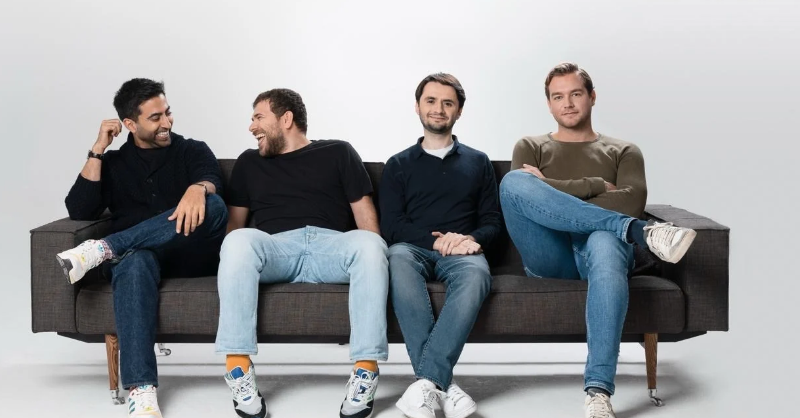
London's Begin Capital has opened its second fund: a $100 million vehicle dedicated to deep tech, built around AI infrastructure, hardware and silicon, and physical AI. It's a sharper pivot than it might look at first glance, since Fund I ran as a generalist early-stage fund before growing into a deep-tech identity over its life. Fund II has already made nine investments, and three of the firm's own Fund I founders, from Runware, Codesphere, and Dwelly, have joined as venture partners, putting people who've built in these categories directly on the sourcing and diligence side of the table.
Key Takeaways
The venture-partner model here is unusually concrete. Flaviu Radulescu, Elias Schneider, and Dan Lifshits aren't advisors lending their names, they're the founders of three of Begin's strongest Fund I outcomes, and they're joining as Fund II is actively deploying, not after the fact. That gives the fund real-time access to founder networks in exactly the categories it's underwriting.
Fund I's growth tells the more interesting story. The fund reportedly grew from $20 million to $72 million over its life, a more than 3x step-up that suggests Begin found enough winners early to pull in follow-on capital well past its original size, well before this new $100 million fund existed.
The sector bet is concentrated, not diversified. AI infrastructure, hardware and silicon, and physical AI are three categories that increasingly overlap but each carry different capital intensity and different time-to-exit profiles. A generalist fund succeeding mostly in software (Runware, Fundraise Up, Native Teams) now has to prove its diligence translates to businesses with real hardware and manufacturing risk.
Reserve capacity is the real test for a $100M deep-tech fund. Begin's stated strategy is small first checks followed by building ownership in the winners before other investors can. Deep-tech and hardware rounds tend to be larger and more capital-intensive than software follow-ons, which puts real pressure on how much of this $100 million is actually available for follow-on versus new entries.
Fund Overview
Fund Name: Begin Capital Fund II (branded publicly as "Season 2")
Fund Size: $100 million
Stage: Pre-seed to Series A
Check Size: $500,000 to $8 million
Geography: Global mandate, with a stated focus on European tech talent and a growing presence in the US
Focus: AI infrastructure, hardware and silicon, and physical AI
Key LPs: Not disclosed; several Fund I portfolio founders have invested as LPs alongside the firm's existing backers
Why This Fund Matters
Begin Capital's first fund, launched in 2020 as a generalist early-stage vehicle, is the kind of fund most European seed investors would recognize: broad mandate, opportunistic sector exposure, and a bet on picking the right founders over picking the right category. Twenty-eight investments later, including Runware, Fundraise Up, Native Teams, Codesphere, and Dwelly, that fund reportedly grew from $20 million to $72 million, which is a meaningful marker of LP conviction for a firm that started as a two-person shop in London.
Fund II is a deliberate narrowing of that playbook rather than a continuation of it. Pre-seed-to-Series-A generalist investing and concentrated deep-tech investing require different muscles: different technical diligence, different relationships with specialized angels and corporate partners, and usually a longer runway before a company's trajectory becomes legible. Begin's answer to that gap is putting three of its own portfolio founders directly into the venture partner seats, which is a more direct solution than most emerging managers have access to when they pivot into a harder technical category.
The firm is also widening its footprint beyond Europe. General Partner Joël Van Dijk has framed Begin's sourcing as spanning the US Pacific Northwest through Southeastern Europe, positioning American deal flow as a growing, deliberate part of the fund rather than an occasional opportunistic check. For a deep-tech thesis built around AI infrastructure and physical AI, that matters: a meaningful share of the technical talent and research spinouts in those categories sits on the US West Coast, and a European fund that can credibly compete there has a materially larger pool of founders to choose from.
The timing lines up with a broader capital shift. European deep tech pulled in a record $20.3 billion in 2025, according to a widely cited 2026 industry report on European deep tech funding, though that same report flags a persistent gap in late-stage funding for the category. Begin is positioning itself at the earliest end of that pipeline, which means its job is partly to build the companies that larger, later-stage funds like AP Ventures, which recently closed a $300 million Fund III for industrial and energy tech, will eventually need to back.
What makes this a real bet rather than a branding exercise is the check structure: $500,000 to $8 million is wide enough to write both a true pre-seed check and a meaningful Series A lead, which only works if the fund has disciplined reserve allocation. Nine investments in, with Begin saying it wants to build ownership in winners ahead of other investors, the fund's actual behavior over its next dozen deals will say more about its deep-tech conviction than this launch does.
The Team
Alex Menn and Ruslan Sarkisyan co-founded Begin Capital in 2019, after Menn spent twelve years in private equity, including work on 45 M&A deals totaling roughly $3.5 billion across European funds, before moving into angel investing. Sarkisyan brings a similar decade-plus background as an investor, angel, and startup founder before co-founding the firm. Joël Van Dijk, a General Partner at the firm, and Saagar Bhavsar round out the investment team named alongside Menn and Sarkisyan for Fund II; Bhavsar is listed elsewhere as a Principal at Begin Capital.
The three new venture partners all come directly from Begin's own portfolio. Flaviu Radulescu co-founded Runware with Ioana Hreninciuc; Elias Schneider co-founded and leads Codesphere, which he started in 2020; and Dan Lifshits co-founded Dwelly alongside Ilia Drozdov and Dmitry Khanukov. All three remain active operators at their respective companies rather than full-time investors, which is typical for a venture-partner arrangement of this kind.
Early Portfolio
Fund II has made nine investments to date: All3 (AI-driven design paired with on-site robotic construction), SurrealDB (a multi-model database built for AI agents), Areg.AI, Crewline (an autonomy kit for heavy construction vehicles), xmemory (structured memory infrastructure for AI agents), DesignVerse, Zencoder, Tomorrow Things, and one company still in stealth.
Fund I's standout outcomes, several of which Begin has continued to back through follow-on rounds, include Runware, which raised a $13 million seed round in September 2025 and a $50 million Series A in December 2025 led by Dawn Capital, with Begin participating in both; Dwelly, which closed £69 million in February and a $170 million Series B in July led by EQT Growth and General Catalyst, again with Begin following on; and Codesphere, which raised an $18 million Series A in May 2024 led by Creandum, with Begin as an existing investor rather than a new entrant to that round.
What This Means for Founders
If you're building in AI infrastructure, silicon or hardware, or physical AI and sit anywhere from pre-seed through Series A, Begin is now explicitly positioned to lead a first check and follow with real capital rather than taking a passive position. The venture-partner structure is worth leaning on directly: Radulescu, Schneider, and Lifshits have each built exactly the kind of company Begin is now underwriting, so a warm conversation with any of them is a more useful proof point than a generic pitch to the investment team.
For founders earlier in their build, the check range matters: $500,000 is genuinely pre-seed-sized, which means Begin isn't only chasing companies with existing traction. The firm's stated edge, moving fast and deciding quickly, is also a real signal about process, worth testing directly against your own timeline if you're fundraising now.
Fund Momentum Take
The part of this raise we find most convincing isn't the $100 million figure, it's that Begin built its venture-partner bench entirely from its own cap tables rather than recruiting names from outside. That's a harder thing to fake than a sector pivot in a press release, and it suggests the firm's Fund I relationships were strong enough that its best founders wanted back in on the investing side.
The open question we'd flag for anyone doing diligence on this fund as an LP or a co-investor is the unbenchmarked "top 1% of its vintage globally" claim. It's a strong statement, and Fund I's growth from $20 million to $72 million is a real, verifiable data point in its favor, but without a named benchmark or disclosed fund-level returns, it's a claim worth asking Begin to substantiate directly rather than taking at face value.
Our honest read on the sector bet: deep tech, hardware, and physical AI are more capital-intensive and slower to inflect than the software-heavy Fund I portfolio that built Begin's reputation. The firm's $500K-to-$8M check range and pre-seed-to-Series-A stage focus are the right size for proving out early technical risk, but the real test comes two or three years out, when these companies need the larger, more patient capital that deep tech typically requires to reach commercial scale.
Frequently Asked Questions
What is Begin Capital's Fund II?
It's a $100 million fund, the firm's second, dedicated to deep tech: AI infrastructure, hardware and silicon, and physical AI. Begin also brands it publicly as "Season 2."
How is this different from Begin Capital's first fund?
Fund I, launched in 2020, was a generalist early-stage fund that reportedly grew from $20 million to $72 million across 28 investments spanning software, fintech, and other sectors. Fund II narrows that mandate specifically to deep tech.
Who are Begin Capital's venture partners?
Three Fund I portfolio founders joined as venture partners: Flaviu Radulescu (Runware), Elias Schneider (Codesphere), and Dan Lifshits (Dwelly). All three remain active at their own companies.
What stage and check sizes does Fund II invest at?
Pre-seed through Series A, with checks ranging from $500,000 to $8 million.
Is the "top 1% of its vintage" claim independently verified?
No. Begin has stated this publicly, but hasn't disclosed the benchmark or data behind it, and Fund I's exact size and full return figures haven't been made public either.
Have a fund closing to announce? Submit your fund here.
Need help raising capital? Check out our Fundraising Advisory services.
Related funds in the index
Deep Tech funds from the verified index
| Fund | Size | Stage | Location | Focus |
|---|---|---|---|---|
| Inspired Capital Fund IV | $450 million USD | Pre Seed | United States | AI/ML, Deep Tech +4 |
| Turbine Capital Fund I | SEK 608 million EUR | Pre Seed | Sweden | Deep Tech |
| Inovia Capital Fund VI | $200M USD | Seed | Canada | AI/ML, Deep Tech +4 |
| Nauta Fund VI, Vintage 2026 | €60M EUR | Pre Seed | United Kingdom | Enterprise Software, SaaS +6 |
| Antares Ventures Fund I | $50M USD | Seed | Singapore | Deep Tech, EnergyTech +2 |