
BAG Ventures Closes $11.3M Debut Fund for Enterprise AI
TL;DR
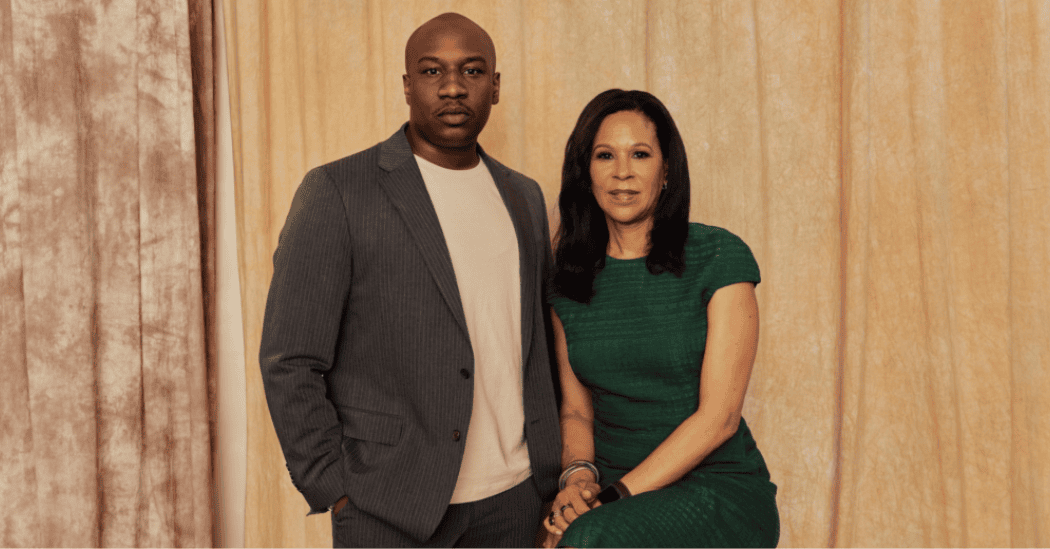
BAG Ventures, co-founded by former CapitalG partner Jackson Georges Jr. and 18-year Google veteran Bonita Stewart, has closed its debut Fund I at $11.3 million. The fund is anchored by Google and backed by 150 limited partners, most of them working operators rather than institutional allocators, including named backers Loop Capital, John Rogers, Jeff Dean, and Ken Chenault. It has already deployed into ten portfolio companies plus two SPV co-investments, writing pre-seed and seed checks into enterprise AI infrastructure, security, and vertical software. The fund grew directly out of BAG Collective, the 450-plus member operator angel community Georges founded, and its entire pitch is that the LP base doubles as the deal-sourcing, diligence, and customer-introduction engine.
Key Takeaways
The LP base is the product, not just the capital. 85% of Fund I's 150 LPs hold senior leadership titles and more than a quarter bring deep technical or engineering backgrounds from companies like Google, Amazon, NVIDIA, Snowflake, General Motors, and Vanguard. That is an unusually operator-heavy cap table for a fund this size, and it is a deliberate design choice rather than a side effect of how the round came together.
Small fund, disproportionately notable backers. At $11.3 million, this is a modest debut vehicle by dollar terms, but being anchored by Google and carrying named individual backers like Jeff Dean, Ken Chenault, and John Rogers signals a level of institutional and high-net-worth validation that funds several times this size often do not get on a first close.
The origin story is a two-year co-investing track record, not a cold start. Georges and Stewart did not meet and raise a fund together; they co-invested across 16 deals from 2021 to 2023 first, including two exits (Syrup Tech to Anaplan, LastMile AI to Meta), before formalizing BAG Ventures. That is a meaningfully longer proof-of-concept period than most first-time fund managers get to point to.
The thesis is narrow and explicitly anti-wrapper. BAG is not making a generalist AI bet. The three stated pillars, Scale (AI infrastructure and compute), Secure (AI-native security and governance), and Deliver (vertical service-as-software), are aimed squarely at enterprise deployment risk rather than model capability, with check sizes reportedly in the $100,000 to $500,000 range at pre-seed and seed.
Fund Overview
Fund Name: BAG Ventures Fund I
Fund Size: $11.3 million
Stage: Pre-seed to seed
Check Size: Reported at approximately $100,000 to $500,000
Geography: United States, enterprise-focused
Focus: B2B software for enterprise AI, organized around three pillars, Scale (AI data infrastructure, compute, physical/edge AI), Secure (AI-native security, agentic governance), and Deliver (vertical service-as-software)
Key LPs: Anchored by Google; 150 total LPs including Loop Capital, John Rogers, Jeff Dean, and Ken Chenault, alongside operators from Amazon, NVIDIA, Snowflake, General Motors, and Vanguard
Why This Fund Matters
The operator-fund model is not new, but BAG Ventures is a clean test case for whether it can work at meaningful scale rather than as a boutique angel vehicle. BAG Collective, the community Georges built before the fund, already had more than 450 tech operators co-investing together; Fund I is effectively an attempt to formalize a subset of that network's capital into a single vehicle with institutional backing, while keeping the informal network's reach available to every portfolio company. That structure, a small dedicated fund sitting inside a much larger community of potential angels, co-investors, and warm introductions, is a pattern worth watching as more solo GPs and small partnerships try to compete with larger funds on access rather than check size.
The enterprise AI thesis itself is also a useful marker of where seed-stage conviction is heading in late 2026. Model-layer and wrapper companies have gotten harder to underwrite as differentiation compresses; BAG's stated focus on companies that survive procurement cycles, internal politics, and actual deployment rather than a good demo reflects a broader shift among enterprise-focused seed investors toward backing distribution and integration advantages over raw model performance.
Google's anchor position is worth a beat of its own. Both founders are Google alumni, Stewart spent 18 years there and became the first Black woman to hold the VP title in the company's history, and Georges came up through Google's Large Customer Sales organization before CapitalG. An anchor commitment from a strategic of that scale into a first-time, sub-$15 million fund is not typical, and it suggests Google sees value in maintaining a relationship with the BAG Collective network beyond a one-off LP check.
For LPs evaluating the operator-fund category more broadly, the two realized exits from Georges and Stewart's pre-fund co-investing period, Syrup Tech to Anaplan and LastMile AI to Meta, are the closest thing to a track record a debut fund can offer, even though those deals predate Fund I itself and were not made through the vehicle being announced here.
The Team
Jackson Georges Jr. is Co-Founder and Managing Partner. He previously worked in sales at Google before becoming a partner at CapitalG, Alphabet's independent growth fund, where he ran one of the industry's go-to-market advisory boards and worked with growth-stage companies including Duolingo, Robinhood, Lyft, and CrowdStrike. He is a Black Enterprise 40 Under 40 honoree and founded BAG Collective, the 450-plus member operator investing community that preceded the fund.
Bonita C. Stewart is Co-Founder and Managing Partner. She spent 18 years at Google, where she built the company's automotive advertising vertical into a business spanning 42 brands, later led large customer sales across the auto, travel, finance, and media verticals, and spearheaded Google's Americas Global Partnerships. Named Vice President in 2012, she was the first Black woman to hold that title in Google's history. She also served as Board Partner for Gradient, Google's AI-focused seed fund, and led the Howard West computer science initiative at her alma mater, Howard University.
The fund's advisory board includes Darian Shirazi (Gradient), David Krane (GV), Laela Sturdy (CapitalG), and Robin Washington (Salesforce), giving the firm direct lines into three of the most active corporate and growth-stage AI investors alongside a public-company operating executive.
Early Portfolio
Fund I has made ten investments to date: Nomadic AI (agentic reasoning platform), SXD, Superface, BizTrip AI, Galvant, Kuddo Health, Papr.ai, Defendermate, Cactus Compute (a Y Combinator S25 company), and Lanai. The firm has also participated in two SPV co-investments, in Sophia Space and Cohere. The portfolio spans enterprise AI infrastructure, cybersecurity, vertical applications, and agentic workflows, consistent with the fund's stated thesis pillars.
What This Means for Founders
Pre-seed and seed enterprise AI founders who fit the profile BAG describes, technically strong but also fluent in procurement cycles and internal enterprise politics, get access to a cap table of 150 operators plus the wider 600-person BAG Collective network on top of a check. The firm frames its value add explicitly around warm customer introductions and technical diligence from venture partners who pressure-test architecture claims before a term sheet goes out, rather than positioning capital itself as the differentiator.
Founders should also weigh the trade-off of a debut, sub-$15 million fund: less reserve capacity for follow-on rounds compared to a larger seed fund, but potentially faster, more personal decision-making and a GP team with direct enterprise sales and partnerships experience rather than a generalist growth background.
Fund Momentum Take
We like the discipline here more than the dollar figure. An $11.3 million fund is not going to move a portfolio company's fate on capital alone, and BAG isn't pretending otherwise, the entire pitch is built around network density rather than check size. What makes it credible rather than aspirational is the two-year, 16-deal co-investing track record before the fund existed, including two real exits. That is a materially stronger proof point than most first-time managers can offer, and it is the reason Google, Jeff Dean, and Ken Chenault were willing to anchor a vehicle this small.
Our main question is durability of the network effect as the fund scales. Operator networks tend to be most valuable when they are dense and personally accountable; BAG Collective already has 450-plus members, and folding a formal fund on top of that community works well at this size. Whether the same warm-introduction, hands-on-diligence model holds up if Fund II is materially larger, and whether 150 individual LPs stay as engaged as the pitch requires once the fund has been live for a few years, are the two things worth watching before assuming this model scales past a single vehicle.
The enterprise AI thesis itself, infrastructure, security and governance, and vertical service-as-software, is sound and increasingly crowded, but BAG's actual edge is distribution into enterprise buyers through its LP base, not thesis originality. For founders evaluating this fund against a generalist seed shop of similar size, the decision should come down to how much of BAG's stated network access they can actually convert into pipeline, not the size of the check.
Frequently Asked Questions
How much did BAG Ventures raise for Fund I?
BAG Ventures closed Fund I at $11.3 million, backed by 150 limited partners.
Who founded BAG Ventures?
Jackson Georges Jr., a former CapitalG partner and Google sales veteran, and Bonita C. Stewart, an 18-year Google executive and the first Black woman to hold the VP title at Google, co-founded the firm and serve as Co-Founder and Managing Partner.
What stage and sectors does BAG Ventures invest in?
The fund invests from pre-seed to seed in B2B enterprise AI software, organized around three pillars: AI infrastructure and compute (Scale), AI-native security and governance (Secure), and vertical service-as-software (Deliver).
Who are BAG Ventures' notable backers?
The fund is anchored by Google, with named backers including Loop Capital, John Rogers, Jeff Dean, and Ken Chenault, alongside 150 total LPs, 85% of whom hold senior leadership titles.
What has BAG Ventures invested in so far?
Fund I has made ten investments, including Nomadic AI, SXD, Superface, BizTrip AI, Galvant, Kuddo Health, Papr.ai, Defendermate, Cactus Compute, and Lanai, plus SPV co-investments in Sophia Space and Cohere.
Have a fund closing to announce? Submit your fund here.
Need help raising capital? Check out our Fundraising Advisory services.
Related funds in the index
Pre Seed · AI/ML funds from the verified index
| Fund | Size | Stage | Location | Focus |
|---|---|---|---|---|
| AIP Seed | $40M USD | Pre Seed | Poland | AI/ML, FinTech +3 |
| Worldbuild Fund I | $30M USD | Pre Seed | United States | Data Infrastructure, AI/ML +3 |
| Haystack Fund VIII | $85M USD | Pre Seed | United States | Consumer & Commerce, Cloud & DevOps +3 |
| Z_One | €55M EUR | Pre Seed | Italy | AI/ML, Built Environment |
| Magnify Ventures Fund II | $46.6M USD | Pre Seed | United States | Digital Health, AI/ML +1 |