
AP Ventures Closes $300M Fund III With KIRKBI, Japan Backing
TL;DR
AP Ventures has closed its third fund at $300 million, backing early-stage industrial and energy technology after an initial close in 2024 and 13 investments made along the way. The London firm, which started life inside Anglo American Platinum's corporate venture arm before spinning out independently in 2018, announced the close without naming its backers. At least 16 of those limited partners have since come to light, including the Lego family office KIRKBI A/S and several major Japanese corporates, filling in a picture AP Ventures itself left blank.
Key Takeaways
Fund III is smaller than Fund II, and that's worth sitting with. Fund II launched in June 2021 at $316 million and grew to $395 million once Temasek joined as its twelfth LP. Fund III's $300 million final close is a real step down in headline size, even as climate and industrial tech funding has grown substantially across the market since then.
The firm's hydrogen-only origins have broadened considerably. AP Ventures began in 2013 investing in hydrogen value-chain startups as a unit inside Anglo American Platinum. Fund III's named portfolio, spanning carbon capture, advanced recycling, synthetic fuels, and low-carbon cement inputs, shows a firm that has widened well past its original hydrogen remit while keeping the same operational-performance thesis.
LP transparency didn't come from the firm. AP Ventures' own announcement described its backers only in categories: sovereign wealth funds, corporates, pension funds, and family offices. The names behind those categories, including KIRKBI and Japanese institutional investors, have since surfaced elsewhere rather than through the firm's own disclosure.
Japanese capital has a real foothold here. The Development Bank of Japan committed to Fund III back at its 2024 initial close, explicitly framing the investment as a way to connect Japanese companies into AP Ventures' hydrogen portfolio. That's one confirmed thread in a broader group of Japanese corporate LPs reportedly backing the fund.
Fund Overview
Fund Name: AP Ventures Fund III
Fund Size: $300 million (final close)
Stage: Seed and Series A
Check Size: Not disclosed
Geography: Global, with offices in London, Johannesburg, and San Francisco
Focus: Early-stage industrial and energy technology, including low-carbon molecules and hydrogen, carbon capture and utilisation, and circularity and advanced recycling, targeting chemicals, steel, aviation, and heavy mobility
Key LPs: Not individually disclosed by AP Ventures; the Development Bank of Japan (joined at the 2024 initial close) and KIRKBI A/S, the family office behind the Lego Group (joined mid-2024), have since been identified among at least 16 LPs reportedly backing the fund, alongside unnamed sovereign wealth funds, pension funds, and additional Japanese corporates
Why This Fund Matters
AP Ventures' path to this close says more about its credibility than the dollar figure does. The firm didn't start as a conventional VC raising blind pools from a cold start, it was built inside Anglo American Platinum's corporate venture function in 2013, spun out independently in 2018 with $200 million from Anglo American Platinum and South Africa's Public Investment Corporation, and has spent over a decade narrowly focused on proving that hydrogen and adjacent industrial technologies can actually work at commercial scale. That history is exactly why institutions like the Development Bank of Japan and KIRKBI are willing to back a third fund in a notoriously capital-intensive, slow-to-return category.
The $16 million step-down from Fund II's $395 million (inclusive of Temasek's late addition) to Fund III's $300 million is the detail that deserves more attention than it's gotten elsewhere. Climate and industrial tech venture funding has grown sharply over the same period, and data-centre fuel cell investment alone is projected to climb from roughly $2.8 billion in 2025 to about $30 billion by 2030, according to Rystad's estimates. A firm with AP Ventures' track record raising a smaller fund into that growth says either that the firm is being deliberately disciplined about deployment pace, or that some LPs who backed Fund II chose not to return at the same scale. Both are plausible, and the firm hasn't addressed the gap directly in its own materials.
The LP reveal itself is a useful reminder of how much of venture fundraising still happens outside public view, even at firms that are otherwise fairly transparent about strategy and portfolio. AP Ventures' own release described its LP base only by category. The fact that specific names have since come out, LPs like KIRKBI, which has its own public decarbonization thesis, and a cluster of Japanese corporates, tells founders and co-investors something about who actually wants exposure to industrial decarbonization right now, which the fund's own announcement didn't volunteer.
For a sector where capital intensity and long development timelines routinely scare off generalist VCs, a dedicated firm closing its third vehicle, even at a flat-to-down size, is a signal that patient, specialist capital for industrial and energy tech still has committed backers. Whether $300 million is enough to fund both new bets and meaningful follow-on into portfolio companies moving from pilot to production, companies like Teragen, Rubi, and Reclinker, is the question Fund III will actually have to answer.
The Team
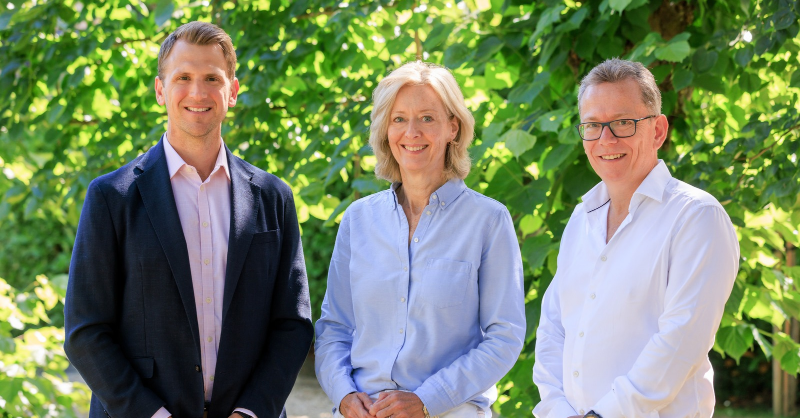
Andrew Hinkly and Kevin Eggers founded AP Ventures together and remain its senior leadership as Managing Partner and Partner respectively. Hinkly spent more than three decades across Anglo American, Ford, and venture capital roles before co-founding the firm, with a background in civil engineering and an MBA. Eggers joined Anglo American in 2008 and led the company's new ventures function from 2014, bringing a decade of commercial and corporate finance experience inside the mining group before AP Ventures spun out independently.
The firm has built a substantially larger bench than most funds this size disclose: 25 team members across investment, finance, legal, and investor-relations functions, including venture partners Birgit Behrendt, a former Ford purchasing and supply-chain executive, and Mardé van Wyk, who brings 14 years in private equity. Penny Freer chairs both the Investment Committee and the LP Advisory Committee. The team includes dedicated staff in Johannesburg and San Francisco, including Calum Ferguson leading the San Francisco office, and two investment professionals, Shimpei Yamashita and Yohei Hosokawa, with backgrounds at Sumitomo and Mitsubishi Corporation respectively, a bench that lines up naturally with the firm's Japanese LP relationships.
Early Portfolio
Fund III has backed 13 companies since its 2024 initial close. Named holdings include Teragen Energy, which builds metal-supported solid oxide fuel cells for on-site power and raised a $6 million pre-seed round in August 2026 co-led by BEVC and Energy Capital Ventures with AP Ventures participating; Aether Fuels, which converts waste gases, biogas, and biomass into liquid fuels and raised a $34 million Series A; Rosy Soil, which makes peat-free potting soil from biochar and raised a $5 million Series A; Reclinker, which uses electric arc furnace processes to turn used cement back into Portland cement and raised a £10 million Series A; Rubi Laboratories, which converts captured CO2 into cellulose for textile fibres and raised a $7.5 million Series A; CREW Carbon, which pairs mineral-based wastewater treatment with carbon removal credits; and Lydian Labs, which builds modular reactors that turn electricity, water, and CO2 into synthetic fuels. Earlier funds backed Plug Power, Amogy, and ZeroAvia, three of the better-known names to have come out of the firm's original hydrogen thesis.
What This Means for Founders
If you're building seed-to-Series-A industrial or energy technology, particularly anything touching low-carbon molecules, carbon capture, or advanced recycling and materials recovery, AP Ventures is both actively deploying and sitting on a decade of operating relationships inside heavy industry, chemicals, steel, and aviation that most climate-focused funds simply don't have. That network, built originally through Anglo American and now extended through LPs like the Development Bank of Japan, is arguably more valuable to a hardware-and-pilot-stage company than the check size itself.
The firm's seed-and-Series-A stage focus also means it's a realistic first institutional check for genuinely technical teams, not just a follow-on investor waiting for traction. Given the fund's modest size relative to Fund II, founders should go in assuming AP Ventures will be disciplined about reserves, and should ask directly about follow-on capacity before assuming a seed check guarantees support through Series B.
Fund Momentum Take
What we find most interesting here isn't the $300 million figure, it's the gap between what AP Ventures said about its LP base and what's actually true. Describing backers only as sovereign wealth funds, corporates, pension funds, and family offices is standard practice, but once specific names like KIRKBI and the Development Bank of Japan come to light, it's worth asking why a firm with a genuinely interesting LP roster, strategic industrial capital and a family office with its own public decarbonization mandate, doesn't make more of that itself.
The size question deserves a direct answer the firm hasn't given yet. A $16 million step-down from a fund that grew to $395 million, happening during a period when climate and industrial tech funding has expanded significantly, is not what a confident up-round story usually looks like. It may simply reflect a firm being deliberately disciplined about capital it can actually deploy well, which would be a defensible and even admirable choice in a sector littered with overcapitalized failures. But AP Ventures' own materials don't say that, and the ambiguity is doing the firm no favors.
Our bet is that the portfolio, not the fund size, is what will ultimately validate or undercut this close. Companies like Reclinker and Rubi are tackling genuinely hard, capital-intensive problems in cement and textiles, categories most VCs avoid entirely. If even two or three of AP Ventures' Fund III bets move from pilot to real commercial volume, the firm's specialist patience will have been the right call regardless of how this fund's size compares to its predecessor.
Frequently Asked Questions
What is AP Ventures Fund III?
It's the third fund from AP Ventures, a London-based early-stage investor in industrial and energy technology, closed at $300 million after an initial close in 2024 and 13 investments made since.
Who are AP Ventures' LPs?
AP Ventures itself has only described its backers by category: sovereign wealth funds, corporates, pension funds, and family offices. At least 16 specific LPs have since been identified, including the Development Bank of Japan, KIRKBI A/S (the Lego family office), and other Japanese corporates.
Why is Fund III smaller than Fund II?
Fund II grew to $395 million after Temasek joined as a later LP, versus Fund III's $300 million final close. AP Ventures hasn't explained the difference directly; it may reflect a deliberate choice about deployment discipline rather than reduced LP demand.
What does AP Ventures invest in?
Early-stage, seed-to-Series-A companies in industrial and energy technology, including hydrogen and other low-carbon molecules, carbon capture and utilisation, and circularity and advanced recycling, targeting sectors like chemicals, steel, aviation, and heavy mobility.
How did AP Ventures get started?
It began in 2013 as a hydrogen-focused investing unit inside Anglo American Platinum's corporate venture arm, then spun out as an independent firm in 2018 with $200 million in backing from Anglo American Platinum and South Africa's Public Investment Corporation.
Have a fund closing to announce? Submit your fund here.
Need help raising capital? Check out our Fundraising Advisory services.
Related funds in the index
Climate & Sustainability funds from the verified index
| Fund | Size | Stage | Location | Focus |
|---|---|---|---|---|
| BackingMinds Invest Fund III | €50M EUR | Seed | Sweden | Climate & Sustainability, AI/ML +1 |
| Graduate Ventures Seed Fund II | €125 million target EUR | Seed | Netherlands | AI/ML, Deep Tech +2 |
| Eureka! Fund II – Deep Tech Lazio | €20M EUR | Pre Seed | Italy | Defense, Mobility & Transport +6 |
| Zero Infinity Partners Fund II | $156M USD | Seed | United States | InfrastructureTech, EnergyTech +6 |
| Asiana-JCC Advanced Manufacturing & Innovation Fund | $104.4M USD | Series A | India | Manufacturing, Robotics & Automation +3 |