
Anti Fund Closes $100M Growth I, Lifting AUM Past $180M
TL;DR
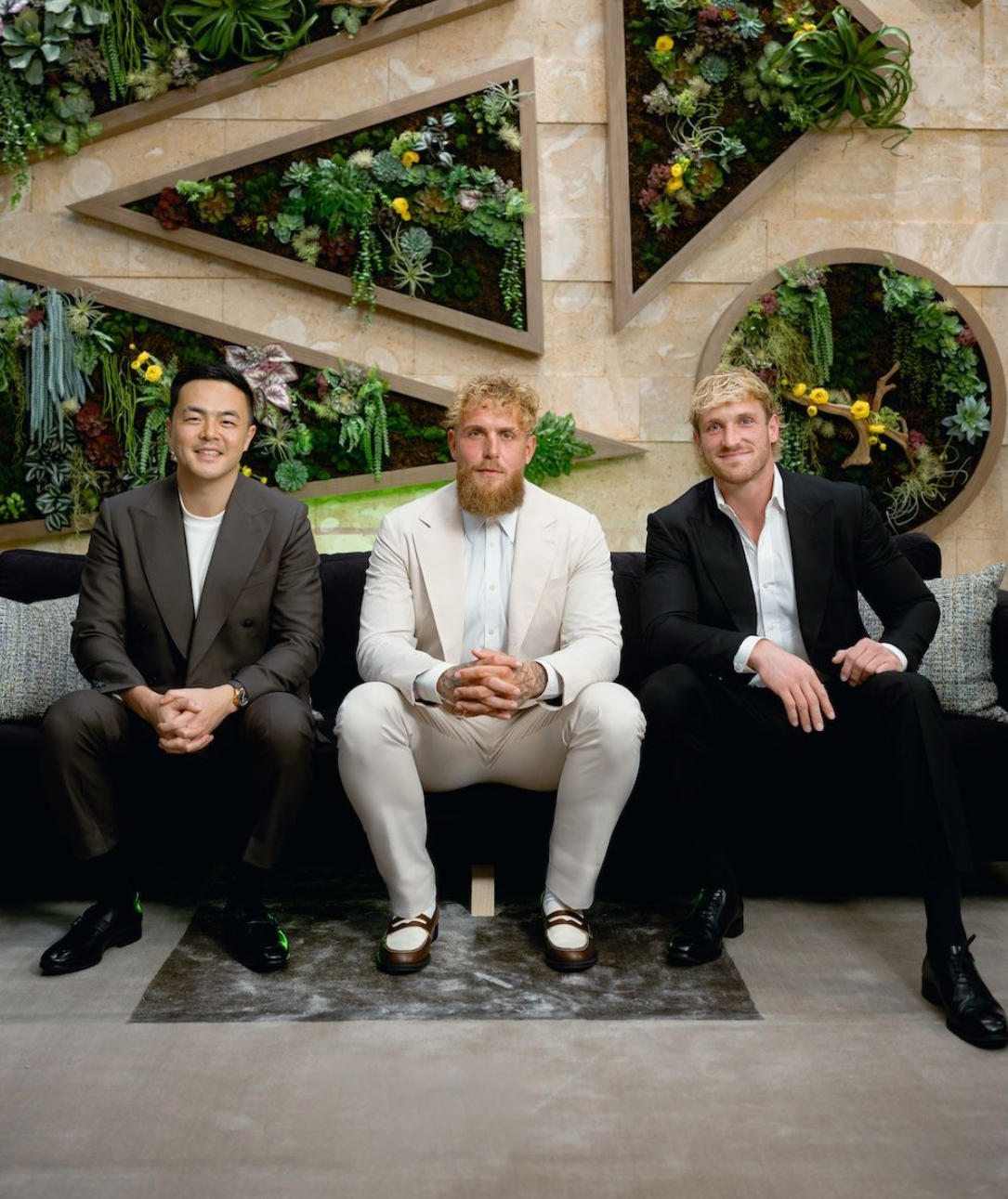
Anti Fund, the venture and growth platform run by Geoffrey Woo and Jake Paul with Logan Paul as general partner, has closed an oversubscribed $100 million growth vehicle called Anti Fund Growth I, lifting total firm assets above $180 million. Growth I completes a deliberate barbell: an earliest-stage venture fund on one end and a concentrated, late-stage book on the other that already holds positions in OpenAI, Anduril, SpaceX, Cognition and a cluster of frontier-infrastructure names. The headline talent is real, but the more interesting story is a creator-economy brand converting distribution into late-stage access at a moment when the best growth rounds are brutally hard to get into.
Key Takeaways
The barbell is now complete. Anti Fund has paired its earliest-stage Venture I with a growth book that concentrates capital in companies already compounding. Running both ends and skipping the crowded middle is a coherent portfolio-construction choice, not just a marketing line, and it lets the firm re-engage the same founders twice across a company's life.
Access, not capital, is the moat they are selling. $100 million is small for growth investing, yet Growth I is already on the cap tables of OpenAI, Anduril and SpaceX. Getting allocation in those rounds is the hard part, and that is precisely what the firm's attention machine and operator network are engineered to win.
An institutional anchor gives the celebrity fund credibility. Aquarian Holdings, anchoring across both Venture I and Growth I through its advisory platform, brings the kind of balance-sheet seriousness that LPs need to see before they look past the Paul brothers' YouTube numbers. FocusPoint running placement signals this was sold as an institutional product, not a fan club.
This is a concentrated, late-cycle AI bet. The portfolio is a who's-who of frontier AI and defense at valuations that already price in a lot. The upside case rests on these being generational winners; the risk is buying the consensus trade near the top with a fund too small to diversify its way out of a drawdown.
Fund Overview
Fund Name: Anti Fund Growth I
Fund Size: $100 million (oversubscribed); firm AUM now above $180 million
Stage: Growth / late-stage and pre-IPO, paired with the firm's earliest-stage Venture I
Check Size: Not disclosed; concentrated positions rather than a broad index
Geography: Primarily US
Focus: Artificial intelligence, robotics, frontier infrastructure, defense, energy, fintech, consumer and pre-IPO technology
Key LPs: Aquarian Holdings (anchor across both funds, ~$27.1B AUM via its advisory platform); FocusPoint Private Capital Group (exclusive placement agent); Daniel Michalow (ex-D.E. Shaw); Matt Holt (Thoreau Group, ex-New Mountain Capital); Athanor Capital; Asher Genoot (CEO, Hut 8)
Why This Fund Matters
The reflex is to dismiss anything attached to Jake and Logan Paul as a celebrity vanity vehicle. That reflex is increasingly wrong. The defining scarcity in late-stage venture right now is not capital, it is allocation. Rounds in OpenAI, Anduril and SpaceX are dramatically oversubscribed, priced by the seller, and parceled out to investors who bring something beyond a wire transfer. Anti Fund's wager is that mass attention, founder-grade operator empathy and a genuinely useful go-to-market network are that something, and the fact that Growth I is already inside those names suggests the wager is paying off.
The barbell structure is the real intellectual content here. By running an earliest-stage fund and a concentrated growth fund while deliberately avoiding the Series A-to-C middle, Anti Fund sidesteps the part of the market where generalist firms cluster and pricing is least differentiated. It can find founders before there is a clean category label, then re-enter the winners years later when the question shifts from "is this real" to "how big." That is a defensible way for a young firm to matter without pretending it can outspend Tiger or Thrive.
Size, though, is the obvious constraint. A $100 million growth fund cannot write the nine-figure checks that anchor a SpaceX or OpenAI round, so these are minority allocations obtained through relationships rather than lead positions won through price. That is a perfectly good model for a firm selling access, but it also means returns hinge on a handful of marks and on continued invitations into the next rounds. The franchise only compounds if today's allocations convert into tomorrow's larger ones.
There is also a timing question worth naming. Growth I is a concentrated bet on the most consensus corner of the market: frontier AI, defense and compute, at valuations that already embed enormous expectations. If this cohort delivers, a small concentrated fund will post eye-watering numbers. If the AI-infrastructure trade resets, a fund this size has little room to diversify its way to safety. This is a high-beta expression of a single macro thesis, and LPs should hold it as such.
The Team
Anti Fund is led by Managing Partners Geoffrey Woo and Jake Paul, with Logan Paul as General Partner. Woo is the institutional spine of the operation, a technical founder and investor who gives the firm credibility with engineers and with LPs; he is the partner most associated with sourcing and diligence. Jake and Logan Paul contribute what almost no traditional fund can manufacture: distribution at planetary scale and a hard-won understanding of how to convert attention into ownership and durable businesses. The firm describes itself as operators backing operators, and across the three principals there is genuine company-building experience rather than purely financial pedigree. The LP roster reinforces the seriousness, with Aquarian Holdings anchoring and individuals such as Daniel Michalow and Matt Holt bringing institutional investing backgrounds to the base.
Early Portfolio
Growth I has already built positions in OpenAI, Anduril, SpaceX, Cognition, Saronic, Etched, Helion, Erebor and Modal, spanning artificial intelligence, defense, robotics, energy and frontier infrastructure. It is a portfolio that reads like the most contested cap tables of the cycle, which is exactly the point: the firm is signaling that it can get into rounds most emerging managers never see.
What This Means for Founders
If you are a technical founder at the earliest stage, Anti Fund's Venture I is built for you, and the pitch is unusually concrete: capital plus a distribution and go-to-market engine that can put your product in front of customers, recruits and partners faster than a conventional seed fund. The tough-love engagement model the firm advertises is a feature for founders who want operators in the room and a mismatch for those who prefer a hands-off check.
For growth-stage founders, the relevant value-add is reach and narrative. Anti Fund will not lead your round or set your price, but it can amplify your story to the right audiences and open commercial doors through its network. Founders should be clear-eyed that they are adding a brand and a megaphone to the cap table, which is valuable for consumer-facing and recruiting-intensive companies and less decisive for quietly technical infrastructure businesses.
Fund Momentum Take
We are more bullish on Anti Fund than the cynics, and more cautious than the hype. The barbell is smart, the access is demonstrably real, and the institutional anchoring from Aquarian plus a credible placement process means this should be read as a real fund rather than an influencer side project. The single most underrated asset here is Woo, who gives the operation the technical and investing seriousness that makes the Pauls' distribution usable rather than gimmicky.
The risks are concentration and timing. A $100 million fund stacked into the most expensive, most consensus names in AI and defense is a leveraged bet on one macro story continuing to compound. If it does, the marks will be spectacular; if the frontier-AI trade cools, there is nowhere to hide. Our bet is that the access advantage is durable and that Anti Fund earns its way into progressively larger allocations, but we would watch closely for whether early positions convert into follow-on invitations, because that, not the headline close, is the real test of the franchise.
Frequently Asked Questions
How big is Anti Fund Growth I and what is the firm's total AUM?
Growth I closed oversubscribed at $100 million, bringing Anti Fund's total assets under management to more than $180 million across its venture and growth strategies.
Who runs Anti Fund?
Geoffrey Woo and Jake Paul are Managing Partners and Logan Paul is General Partner. Woo anchors the technical and investing side, while the Pauls bring large-scale distribution and operator experience.
What is Anti Fund's investment strategy?
A barbell: Venture I backs technical founders at the earliest stages, and Growth I concentrates capital in later-stage companies converting technical edge into scale, deliberately skipping the crowded middle.
What companies has Growth I invested in?
Disclosed positions include OpenAI, Anduril, SpaceX, Cognition, Saronic, Etched, Helion, Erebor and Modal, across AI, defense, robotics, energy and frontier infrastructure.
Who are the limited partners?
Aquarian Holdings is the anchor LP across both funds through its advisory platform, with FocusPoint Private Capital Group as exclusive placement agent and additional backers including Daniel Michalow, Matt Holt, Athanor Capital and Hut 8 CEO Asher Genoot.
Have a fund closing to announce? Submit your fund here.
Need help raising capital? Check out our Fundraising Advisory services.
Related funds in the index
Growth · AI/ML funds from the verified index
| Fund | Size | Stage | Location | Focus |
|---|---|---|---|---|
| E2D European Defence & Dual-Use Fund | €500M EUR | Growth | Germany | Defense, Space +3 |
| Anti Fund Growth I | $100M USD | Growth | United States | AI/ML, Defense +3 |
| Benchmark Growth Fund I | $1.25B USD | Growth | United States | AI/ML, Enterprise Software +2 |
| BAI Capital USD Fund | $800M USD | Growth | China | AI/ML, Enterprise Software +2 |
| Scaleup Europe Fund (EQT) | €5B EUR | Growth | Sweden | AI/ML, Deep Tech +5 |