
Merantix Capital Closes €103M, Its Largest Fund Yet, to Build European AI From the Pre-Idea Stage
TL;DR
Merantix Capital, the investing arm of Berlin's Merantix AI group, has closed a €103 million fund to back early-stage, AI-native teams across Europe. It is the firm's largest vehicle to date — roughly three times the size of its first fund, a venture-studio-only vehicle publicly reported at €30-35 million — and it is structured unusually: half the capital funds founders Merantix helps build from the pre-idea stage, and half goes into direct pre-seed and seed deals. The fund targets around 40 companies and leans hard into AI applied to Europe's industrial base.
Key Takeaways
A venture studio with a real fund behind it. The defining feature is the even split between company-building and traditional investing. Half the €103 million backs founders who work with the Merantix team from "pre-idea," validating concepts inside the firm's ecosystem and building at the Merantix AI Campus in Berlin; the other half funds external pre-seed and seed rounds. That is a structurally different bet from a pure check-writing seed fund.
The thesis is industrial Europe, not consumer AI. Merantix is targeting AI for logistics, manufacturing, energy, finance, healthcare, life sciences, robotics, enterprise software, and physical AI. The bet is that Europe's edge is not another chatbot but applying AI to the sectors the continent already dominates in the physical economy.
Strategic and institutional LPs, not just financial ones. Named backers include Union Investment, Jungheinrich, KPMG Germany, the Robert Wood Johnson Foundation, and the W.K. Kellogg Foundation. The presence of an industrial group like Jungheinrich and a professional-services anchor like KPMG signals a fund built for enterprise distribution, not just capital.
Already deploying. Early bets include Droidrun (mobile-native AI agent infrastructure and a 2026 German Startup Award newcomer winner), Arqh (logistics optimization), and Outpost Bio (AI applied to human microbiology) — a spread that tracks the fund's industrial-and-life-sciences thesis.
Fund Overview
Fund Name: Merantix Capital AI Fund (latest vehicle)
Fund Size: €103M (the firm's largest, roughly 3x its first fund, which was publicly reported at ~€30-35M)
Stage: Pre-idea company-building plus pre-seed and seed
Check Size: Not disclosed; ~40 investments planned across the fund
Geography: Europe, anchored in Berlin
Focus: AI-native teams in logistics, manufacturing, energy, finance, healthcare, life sciences, robotics, enterprise software, and physical AI
Key LPs: Union Investment, Jungheinrich, KPMG Germany, Robert Wood Johnson Foundation, W.K. Kellogg Foundation
Why This Fund Matters
€103 million is not a large fund by US AI standards, but the structure is the story. Most European seed funds compete on access and speed; Merantix is competing on origination. By committing roughly half its capital to building companies from the pre-idea stage inside its own campus, the firm is manufacturing its own dealflow rather than bidding for everyone else's. In a market where the best AI seed rounds are wildly oversubscribed and priced accordingly, owning the top of the funnel is a genuine edge — if the studio actually produces winners.
The industrial thesis is also a sharp strategic read. Europe keeps losing the consumer and foundation-model race to the US and, increasingly, China, but it retains real strength in manufacturing, logistics, mobility, and life sciences. A fund that applies AI to those domains is playing to home-field advantage rather than fighting on terrain where European startups are structurally disadvantaged. The LP base reinforces this: a forklift-and-warehouse-automation giant like Jungheinrich is exactly the kind of strategic partner that turns an industrial-AI portfolio company into a real commercial pipeline.
Roughly tripling fund size in a tough European fundraising environment is itself a signal. LPs have been cautious, emerging managers have struggled to hit targets, and many 2026 closes have come in below plan. Merantix raising around 3x its prior vehicle, with a mix of strategic and institutional capital, suggests the studio model has produced enough credibility to command conviction checks.
The risk is the perennial one for venture studios: the model is operationally heavy and historically inconsistent. Building from pre-idea ties up team bandwidth, the ownership-versus-effort math can disappoint, and studio companies sometimes carry a perception discount with later-stage investors. Splitting the fund 50/50 with direct investing is a sensible hedge, but it also means Merantix has to be excellent at two quite different disciplines at once.
The Team
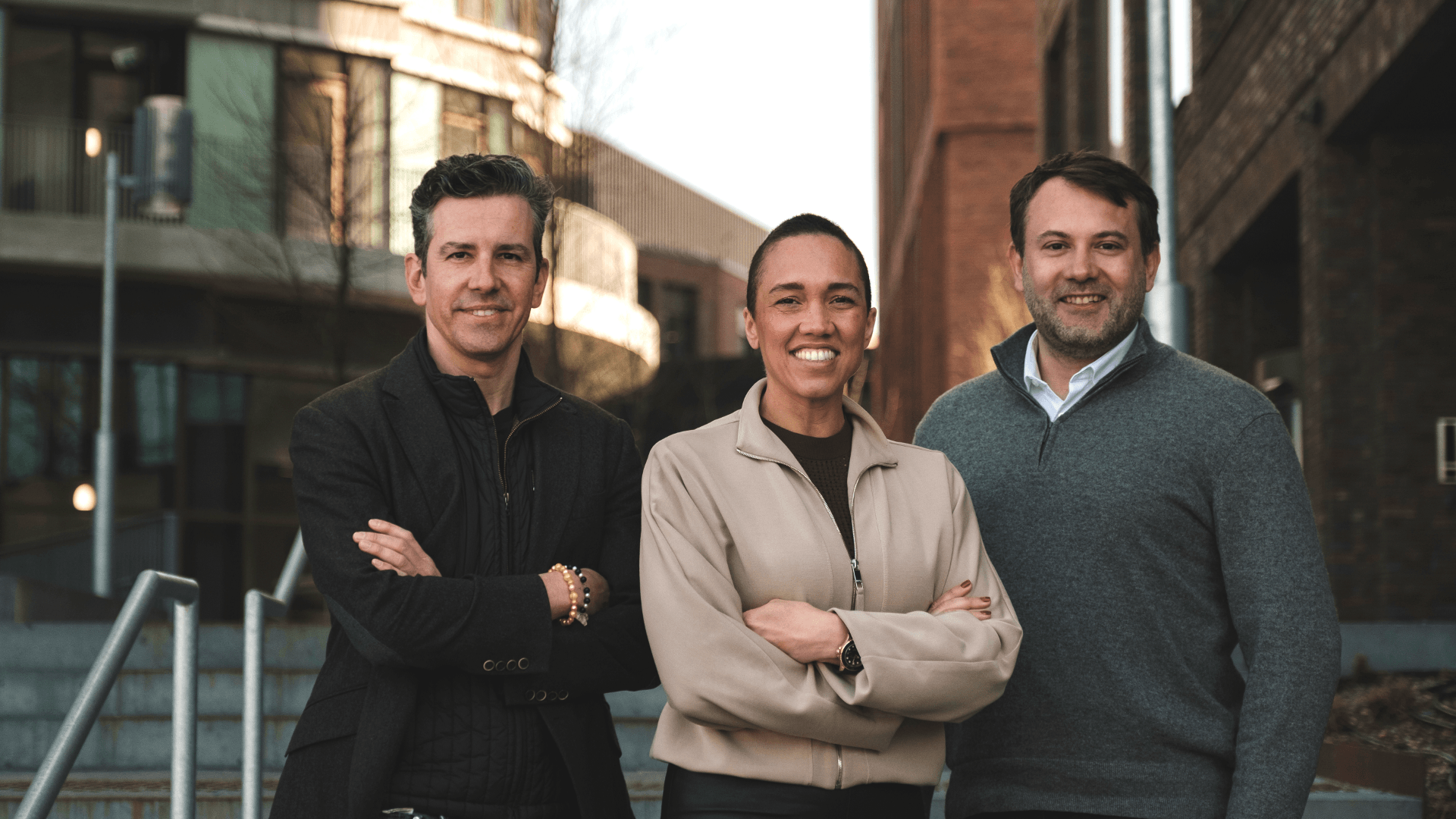
The fund is led by Merantix co-founders Rasmus Rothe and Adrian Locher, who co-founded the broader Merantix group in 2016 and have built it out in Berlin over the better part of a decade. Rothe, who holds a PhD in computer vision and deep learning from ETH Zurich and chairs the German AI Association (KI Bundesverband), brings deep technical credibility and a long history of convening the region's AI talent; Locher, a serial entrepreneur who previously built and sold Swiss marketplace DeinDeal, brings the operating and investing track record. Joining them full-time alongside the new fund is Nicole Büttner, previously founder and CEO of Merantix Momentum and a founding partner of Merantix Capital, who adds depth on the applied AI-solutions side. The team's central asset is the Merantix AI Campus, which functions as both a physical hub for Berlin's AI scene — 80-plus resident companies and hundreds of events a year — and the engine room for the studio side of the fund, giving the team unusually early visibility into founders and ideas before they are fundable.
What This Means for Founders
If you are an AI founder still at the idea stage, Merantix is one of the few European backers that will engage before you have a company at all, providing capital, a building environment, and a network in exchange for early ownership. For technical founders without a co-founder or a go-to-market network, that scaffolding can be the difference between a project and a startup.
If you already have a team and traction, the relevant half of the fund is the direct pre-seed and seed pool, where the value-add is the industrial LP network and the campus ecosystem rather than hands-on company-building. Founders selling into manufacturing, logistics, or energy should weigh the strategic-distribution upside heavily; founders in pure consumer or horizontal software will find the thesis fit weaker and should calibrate accordingly.
Fund Momentum Take
We like this fund more than its size suggests. The industrial-AI thesis is one of the few genuinely defensible European positions, and pairing it with a company-building engine and strategic LPs who can buy the product is a coherent, hard-to-copy model. In a year when "European AI champion" is a phrase every fund deck borrows, Merantix has actually built the infrastructure to originate them.
The thing we would watch is studio discipline. The 50/50 split is smart, but venture studios live and die on whether they kill weak concepts fast enough; the failure mode is subsidizing mediocre internal ideas because the team is emotionally and operationally invested. If Merantix maintains the same selectivity on its own builds that it would apply to an external deal, this is a top-quartile European seed vehicle. If the campus becomes a reason to fund things that would never clear an outside bar, the direct half will end up carrying the fund.
Our bet: the industrial and physical-AI positions are early and correctly placed, and at least one of Droidrun, Arqh, or Outpost Bio becomes a recognizable name. Merantix is playing the European game it can actually win.
Frequently Asked Questions
How big is the new Merantix Capital fund?
€103 million, the firm's largest to date and roughly three times its first fund, which was a venture-studio-only vehicle publicly reported at €30-35 million.
What makes the fund structurally unusual?
Roughly half the capital builds companies from the pre-idea stage at the Merantix AI Campus in Berlin, and half goes into direct pre-seed and seed investments.
What does the fund invest in?
AI-native teams across logistics, manufacturing, energy, finance, healthcare, life sciences, robotics, enterprise software, and physical AI, with a European industrial focus.
Who are the limited partners?
Named backers include Union Investment, Jungheinrich, KPMG Germany, the Robert Wood Johnson Foundation, and the W.K. Kellogg Foundation.
Has the fund made investments yet?
Yes. Early portfolio companies include Droidrun, Arqh, and Outpost Bio, and the fund targets around 40 investments in total.
Have a fund closing to announce? Submit your fund here.
Need help raising capital? Check out our Fundraising Advisory services.
Related funds in the index
Pre Seed · AI/ML funds from the verified index
| Fund | Size | Stage | Location | Focus |
|---|---|---|---|---|
| Bison Ventures Fund II | $160M USD | Pre Seed | United States | AI/ML, Digital Education (Consumer) +1 |
| Enzo Ventures Fund II | €20M EUR | Pre Seed | United Kingdom | AI/ML, SaaS |
| Nauta Fund VI, Vintage 2026 | €60M EUR | Pre Seed | United Kingdom | Enterprise Software, SaaS +6 |
| Pear Fund V | $333M USD | Pre Seed | United States | AI/ML, Cloud & DevOps +5 |
| Oraseya Capital Fund | AED 1B AED | Pre Seed | United Arab Emirates | Digital Health, FinTech +2 |