
Creator Fund Closes $56M to Back Europe's PhD Founders Before the Deck
TL;DR
Creator Fund has reached a $56 million final close (roughly €48.6 million / £42 million) on its first pan-European fund, built to write the very first cheque into PhD and scientific founders, often before there is a pitch deck, let alone a company. The UK-based pre-seed firm, run by founder and CEO Jamie Macfarlane and COO Alexandra Ntemourtsidou, says this is the largest VC fund in the world targeting students, and it stepped up from a $41 million first close in October 2025. The standout signal is the cap table: Germany's state-backed KfW Capital came in as the largest LP, Denmark's EIFO joined as a major backer, and 71 LPs from 21 countries committed in total, a level of institutional and sovereign interest that says European deep tech sovereignty has become an LP thesis, not just a policy talking point.
Key Takeaways
This fund attacks the earliest, hardest part of the deep tech funnel. Creator Fund's whole premise is that Europe's best scientific talent gets discovered too late, after researchers have been pulled into academia, Big Tech or US labs. By embedding a network of student investors across 30 universities in 10 countries and running a 20-part Scientific Founder programme that has processed 250-plus students, it is industrialising founder discovery at a stage no traditional VC can economically reach.
The LP base is the real story. KfW Capital as anchor plus Denmark's EIFO is two European governments effectively underwriting a thesis about homegrown technological sovereignty. Add Equation Capital, Basecamp (Phoenix Court), Jameel's JIMCO and Allocator One, and you have 71 LPs across 21 countries. That breadth de-risks the next fund and signals that "we can't depend on Chinese semiconductors or an unreliable US" has become an investable narrative.
$56 million is deliberately a first-cheque fund, not a full-journey fund. Macfarlane is refreshingly clear that this capital exists to find the researcher early, write the first cheque and make the next round competitive. The fund's job is to graduate companies into top-quality $5 million to $20 million seed and Series A rounds led by larger funds, positioning Creator as a feeder rather than a lifecycle investor.
There is a real exit to point to. Creator says it returned its entire first fund last year through the sale of Loci to Epic Games, a company it spotted from a six-second rendered tennis clip out of a Cambridge lab. One fund-returning exit from a debut vehicle is exactly the proof point a pre-seed manager needs to raise a bigger, government-anchored successor.
Fund Overview
Fund Name: Creator Fund (new pan-European fund)
Fund Size: $56M final close (~€48.6M / £42M), up from a $41M first close in October 2025
Stage: Pre-seed, first institutional cheque, often pre-company
Check Size: Not formally disclosed; positioned as the first cheque ahead of $5M-$20M seed/Series A rounds led by others
Geography: Pan-European, sourced through a student-investor network across 30 universities in 10 countries
Focus: PhD and scientific founders in deep tech, AI, robotics, advanced materials, biotech, semiconductors and dual-use university science (no weapons)
Key LPs: KfW Capital (largest LP), EIFO (Denmark), Equation Capital, Basecamp (Phoenix Court), JIMCO and Allocator One; 71 LPs from 21 countries
Why This Fund Matters
The structural gap Creator Fund is exploiting is genuine. European universities produce world-class science, but the venture market is built to engage after a company exists, with a deck, a demo and a round to price. By then the best researchers have often been absorbed into tenure tracks, corporate labs or American institutions that court them aggressively. Creator's answer is to move discovery upstream of the company itself, using students embedded inside the institutions to spot founders while they are still in the lab. It is closer to a talent operation than a deal-sourcing operation, and that is the point.
Macfarlane imported the model directly from US campuses, where student-run and student-adjacent funds blanket elite universities, and adapted it to a fragmented European map of 10 countries and 30 universities. The advantage of that approach is proprietary, pre-market dealflow: if your network meets the founder before anyone is calling them a founder, you are not competing on price at pre-seed, you are creating the round. The risk is equally structural, because a student-investor network is only as good as its judgment, and pre-company conviction is the hardest call in venture.
The macro tailwind is the sovereignty narrative, and it is doing real work in this raise. The UK and Europe want homegrown capability in AI, robotics, semiconductors, advanced materials, biotech and dual-use technologies, and LPs increasingly see deep tech resilience as both a returns story and a strategic hedge against dependence on Chinese supply and a less predictable US. That is precisely why a government-backed institution like KfW Capital anchors the fund. It is policy and portfolio construction pointing in the same direction, which is a rare and powerful alignment for a pre-seed manager.
The honest tension is scale versus mandate. $56 million spread across a continent-wide, first-cheque, deep-science strategy is thin per company, and deep tech is capital-hungry and slow. Creator's explicit bet is that it does not need to fund the whole journey, only to originate the best science and hand it to larger funds. That is a coherent strategy, but it makes Creator dependent on a healthy downstream market: if Series A capital for European deep tech tightens, the feeder model strains, because the value of getting there first depends on someone good being there next.
The Team
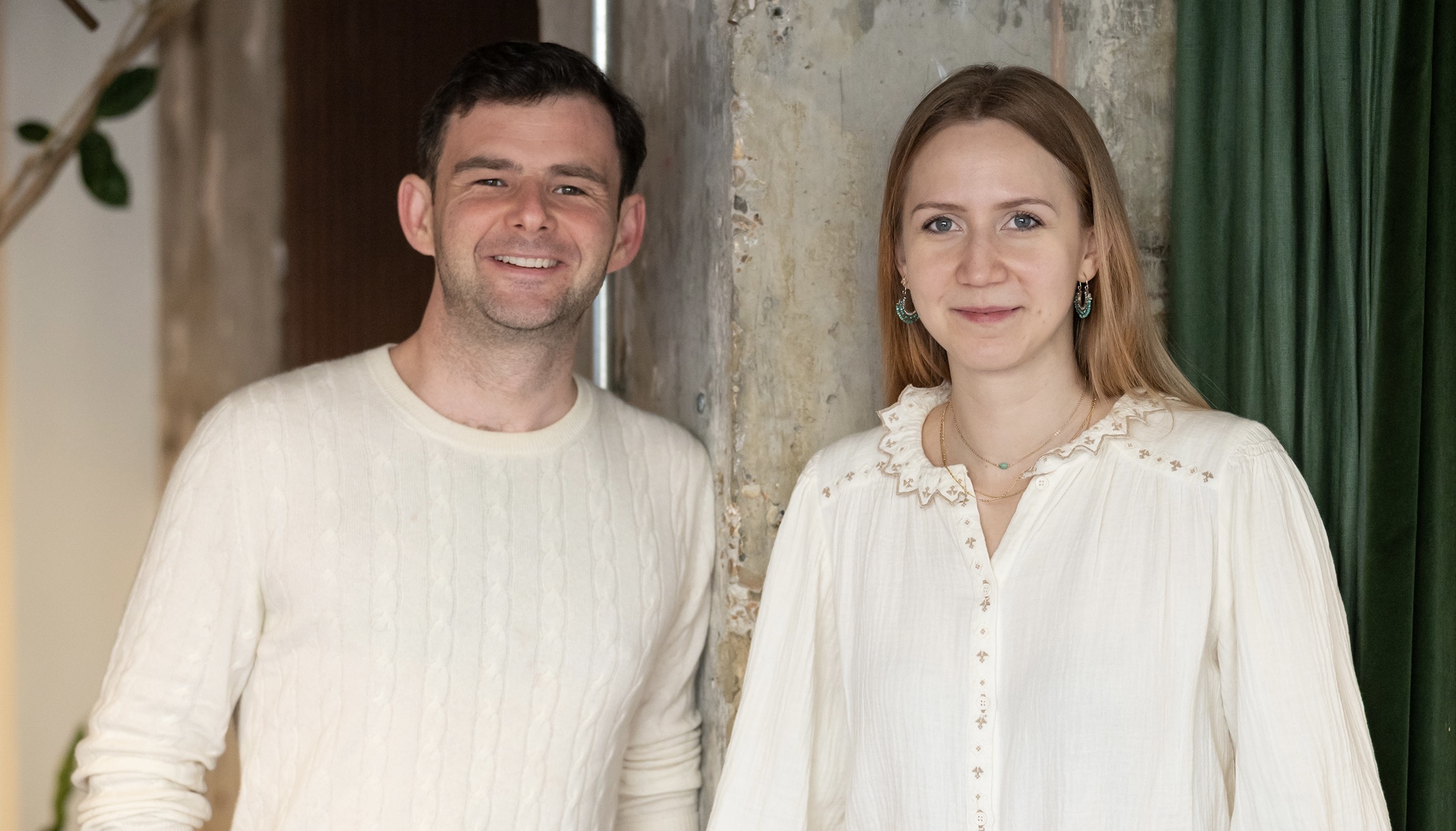
Creator Fund is led by founder and CEO Jamie Macfarlane, who ran political campaign work with WPP across markets as varied as Cambodia, Croatia and Myanmar before attending Stanford Business School, where he encountered the US campus-VC model that became Creator's blueprint. He runs the firm with COO Alexandra Ntemourtsidou. The leadership is deliberately lean, with the leverage sitting in the distributed network rather than a large partner bench.
That network is the actual investment engine. Creator operates student investors, sometimes described as venture fellows, across its university footprint, trained to identify scientific founders early and shepherd them through the Scientific Founder programme. Since 2019 the firm has scaled from seven students in London and Cambridge to backing 62 companies across Europe, with more than 250 students having gone through its founder programme. The model's credibility rests on whether that distributed, partly student-driven sourcing can keep producing outliers as it scales, which is the key thing to watch over this fund's life.
Early Portfolio
The new fund has already deployed into 11 companies across the Netherlands, Hungary, Denmark, Germany and the UK, and the early bets are unmistakably deep science. They include Ovo Labs, working on reversing the ageing of human eggs; Latent Worlds, building data capture for robots operating in extreme environments; Anzen Industries, developing new materials through enzyme reactions; and SPhotonix, which stores data on quartz glass using ultrafast lasers. Across its history Creator has backed 62 companies since 2019, and its headline exit to date is Loci, sold to Epic Games, which it says returned its first fund.
What This Means for Founders
If you are a PhD or postdoc sitting on genuinely novel science, in AI, robotics, materials, biotech or adjacent deep tech, and you have not yet decided whether you are a founder at all, you are precisely who this fund is built for. The pitch is that Creator will be the first money in, before you have a deck, and will spend real effort turning research into a company and then setting you up for a competitive, top-tier seed or Series A. For researchers intimidated by the leap from lab to startup, a specialist first investor that speaks the language of science is a meaningfully lower-friction entry point than a generalist seed fund.
The trade-off to weigh is what a first-cheque, feeder-model investor can and cannot do for you. Creator is explicit that $56 million is not enough to carry companies through the full journey, so its value is early conviction, the programme, the network and warm routes into larger funds, rather than deep follow-on reserves. Founders should value the door-opening and pressure-test the follow-on support, since in capital-intensive deep tech the quality of your next round matters as much as your first, and Creator is betting its reputation on getting you into it.
Fund Momentum Take
We are bullish on the strategy and clear-eyed about the constraint. Creator Fund is doing something most of the industry says it wants but almost no one operationally executes: reaching scientific founders before the market does, at the stage where European deep tech actually leaks talent. The student-network plus founder-programme machine is a genuine sourcing moat, and a debut fund that returned itself on a single Epic Games exit has earned the right to a bigger, government-anchored successor. The KfW and EIFO anchors are not soft money; they are a signal that sovereign-minded LPs now treat European deep tech as a strategic asset class.
The risk we would underline is dependence on the downstream. A first-cheque feeder fund is only as strong as the seed and Series A market it feeds into, and European deep tech still has a thinner growth-stage bench than the US. If that bench does not deepen, Creator's graduates could win the first round and stall at the second, which would blunt the model's returns regardless of how good the science is. There is also genuine, unavoidable uncertainty in pre-company conviction at this scale, which is the hardest bet in venture.
Our take: this is one of the more strategically important European pre-seed funds to launch this cycle, less because of its $56 million size than because of what it represents, the institutionalisation of campus-stage deep tech sourcing with sovereign capital behind it. If even a handful of these PhD bets compound, Creator will have proven that the earliest, most overlooked slice of the European science pipeline is investable at scale. That is a bet we would rather be early to than late.
Frequently Asked Questions
How much did Creator Fund raise and at what stage?
Creator Fund reached a $56 million final close (about €48.6 million or £42 million) on its first pan-European fund, stepping up from a $41 million first close in October 2025. It invests at pre-seed, frequently before a company formally exists.
Who are the fund's main backers?
Germany's state-backed KfW Capital is the largest LP, with Denmark's EIFO among the major backers, alongside Equation Capital, Basecamp (Phoenix Court), JIMCO and Allocator One. In total 71 LPs from 21 countries committed.
Who runs Creator Fund?
Founder and CEO Jamie Macfarlane, who adapted the US campus-VC model after Stanford Business School, runs the firm with COO Alexandra Ntemourtsidou, supported by a network of student investors across 30 universities in 10 countries.
What does Creator Fund invest in?
PhD and scientific founders building deep tech, including AI, robotics, advanced materials, biotech, semiconductors and dual-use university science. It does not back weapons or anything designed to take human life.
What is its track record?
Creator has backed 62 companies since 2019 and says it returned its first fund through the sale of Loci to Epic Games. The new fund has already invested in 11 companies across the Netherlands, Hungary, Denmark, Germany and the UK.
Have a fund closing to announce? Submit your fund here.
Need help raising capital? Check out our Fundraising Advisory services.
Related funds in the index
Pre Seed · Deep Tech funds from the verified index
| Fund | Size | Stage | Location | Focus |
|---|---|---|---|---|
| Empirical Ventures Fund I | £15M GBP | Pre Seed | United Kingdom | Deep Tech, EnergyTech +3 |
| Cantos Fund IV | $70M USD | Pre Seed | United States | Defense, Deep Tech +3 |
| AlleyCorp Fund II | $335M USD | Pre Seed | United States | Digital Health, Deep Tech |
| Seedcamp Fund VII | $220M USD | Pre Seed | United Kingdom | AI/ML, Enterprise Software +2 |
| Version One Ventures Fund V | $78M USD | Pre Seed | Canada | AI/ML, Robotics & Automation +2 |