
Breakout Ventures Closes $114M Fund III to Make Science Scalable with AI and Neuroscience
TL;DR
San Francisco-based Breakout Ventures has closed Fund III at $114 million, its largest vehicle to date, to back seed-stage founders commercializing scientific breakthroughs — with a sharpened focus on AI-enabled neuroscience and biology. The fund draws capital from a mix of returning and new institutional LPs including JIMCO (the Jameel family's global investment arm) and Korea Omega Investment Corporation, signaling growing international appetite for deep science bets. With $230M+ in AUM across three funds, Breakout is now one of the most established specialist platforms for scientist-founders in the US.
Key Takeaways
This is not a generalist AI fund wearing a science costume. While every VC in 2026 claims an AI thesis, Breakout's differentiation is real: it backs founders who are scientists first, building companies around platform discoveries rather than software wrappers. Managing partner Lindy Fishburne explicitly targets tools that make science "repeatable and scalable" — drug discovery, diagnostics, neurotech, and materials — not AI for admin workflows.
The neuroscience bet is well-timed. New biomarker technologies and computational tools for electronic health record analysis have unlocked a generation of neurology startups that weren't possible five years ago. Breakout is positioning Fund III to be the first institutional capital in this wave, following the playbook that worked in synthetic biology with Funds I and II.
The LP roster is telling. JIMCO — the Saudi investment vehicle of the Jameel family — and Korea Omega Investment Corporation aren't passive allocators. Their presence signals that sovereign and quasi-sovereign capital from Asia and the Middle East is actively hunting exposure to US deep science VC, a validation of Breakout's position as a credible platform in a field with few brand names.
Fund II exits de-risk the story significantly. Surf Bio was acquired by Halozyme for up to $400M. Noetik licensed two cancer research foundation models to GSK for $50M upfront. These aren't paper returns — they're cash-on-cash validation that Breakout's scientist-to-founder pipeline actually produces acquirable, partner-valuable companies within a typical fund lifecycle.
Fund Overview
Fund Name: Breakout Ventures Fund III
Fund Size: $114 million
Stage: Pre-seed to Series A
Check Size: $500K – $5M
Geography: United States (primarily)
Focus: AI-enabled scientific innovation — drug discovery, diagnostics, neurotechnology, materials science
Key LPs: JIMCO (Jameel Investment Management Company), Korea Omega Investment Corporation; returning: Cortes Capital, S-Cubed Capital, The Kraft Group, Pinegrove Venture Partners, LH Capital affiliate
Why This Fund Matters
The broader narrative around AI in biotech has become dangerously generic. Every crossover fund and healthcare-adjacent vehicle claims to be "at the intersection of AI and life sciences." What separates Breakout from the noise is an unusually specific thesis: the firm backs founders whose core innovation is scientific, not software-defined. When Lindy Fishburne talks about making science "scalable," she means deploying computational methods — machine learning, automated lab robotics, computational chemistry — to compress the time between fundamental discovery and market-ready product. That's a harder and more specific bet than most AI-bio funds are making.
Fund III's neuroscience concentration is the most interesting strategic call. The field has been largely avoided by early-stage VCs for two decades due to high trial failure rates and long development timelines. But a recent convergence — multimodal biomarker panels, EHR-trained disease models, and direct-to-device neural interfaces — has created a set of opportunities that look more like platform companies than single-asset clinical bets. Breakout appears to be one of the earliest institutional voices calling this inflection, which, if right, positions the fund for outsized returns from under-priced entries.
The team expansion also matters. Adding Dana Watt (a diagnostics founder) and Nima Ronaghi (an organic chemist) as partners directly fills the operational credibility gap that plagues many science-focused funds: the GPs understand the science themselves and can engage founders at a technical peer level. This is what Fishburne means by domain expertise as a value-add, not as marketing language.
At $114M — a modest size by 2026 standards — Breakout retains the ability to move first with meaningful conviction checks, lead rounds, and take double-digit equity positions without competing for deal flow against larger funds that need $20M+ checks to move the needle. That structural advantage is easy to underestimate.
The Team
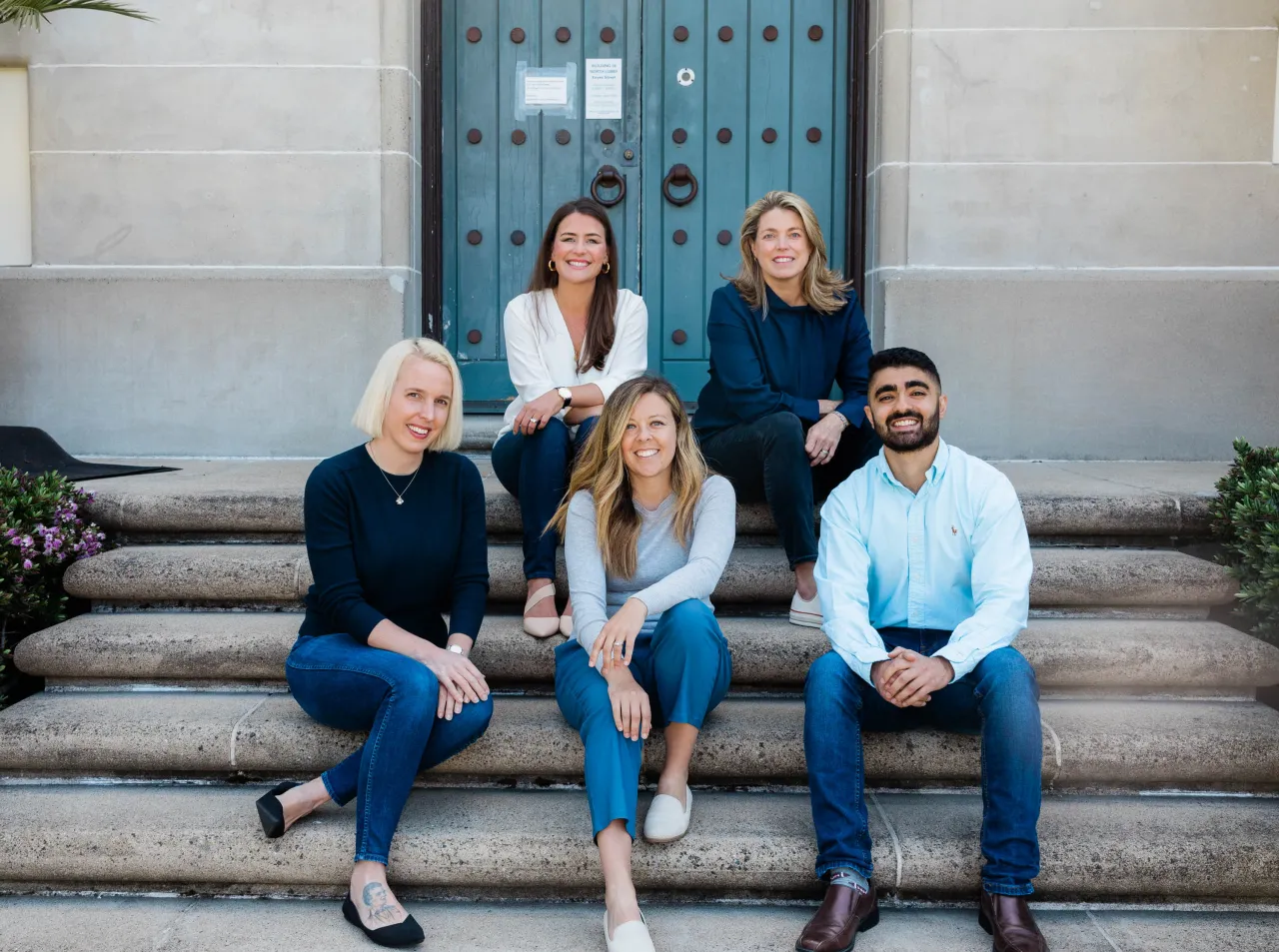
Lindy Fishburne is Breakout's founder and managing partner, having established the firm in 2015 out of a background in biotech investing and communications. Her co-managing partner Julia Moore brings complementary experience spanning biology and technology commercialization. The partnership recently expanded with Nima Ronaghi (PhD organic chemist focused on scientist-to-founder transitions), Dana Watt (diagnostics company founder), and operational hires including CFO James Chan and General Counsel Ziv Yoash. The bench reflects a deliberate effort to build a fund that can engage scientifically credible founders at parity, rather than relying on pattern-matching from afar.
Early Portfolio
Fund III early investments include Reach Industries (visual intelligence and robotics software for regulated laboratory environments), a stealth-mode University of Chicago spinout focused on computationally enhanced small-molecule discovery, and a third unnamed company commercializing frontier science. From prior funds, highlights include Noetik ($40M Series A, cancer immunotherapy discovery platform, GSK licensing deal), Phantom Neuro ($19M Series A, neural prosthetics control), ZymoChem ($21M Series A, bio-based chemical manufacturing), and Surf Bio (acquired by Halozyme for up to $400M).
What This Means for Founders
If you are a scientist-founder — or a technologist building tools that accelerate scientific research — Breakout is one of the few early-stage funds with a genuine first-check appetite and the domain literacy to evaluate what you're building. The $500K to $5M check range means they are comfortable with companies that don't yet have product-market fit in the commercial sense, but do have defensible scientific foundations. Their lead investor posture (approximately half of rounds) signals they'll take conviction positions rather than small participations.
The neuroscience angle is worth flagging specifically: if you're building in computational neurology, neurotech hardware, or CNS diagnostics, Breakout's Fund III mandate makes them among the most relevant institutional targets in the current market. Their track record in converting early scientific bets into acquirable assets (Surf Bio, Noetik) means they understand both the upside and the staging required to get there.
Fund Momentum Take
Breakout Fund III is a credible, focused vehicle from a team that has already earned its exits. The $114M size is intentionally modest — not a limitation, but a structural choice that preserves check-size discipline and deal leadership capability. The neuroscience concentration is the bold call: the field has more failed funds behind it than almost any other biotech sub-vertical, but the new generation of tools (EHR models, neural biomarkers, agentic lab robotics) is genuinely different from the CNS clinical-stage disasters of the 2010s.
The LP roster tells you something about where Breakout sits in the institutional hierarchy: JIMCO and Korea Omega don't allocate to unknown managers. Having them alongside long-term returners like The Kraft Group creates a capital base with both financial sophistication and strategic partnership potential — particularly relevant for portfolio companies looking to expand into MENA or Asian markets.
Our bet: Breakout's specific positioning in AI-enabled science, combined with a GP team that has done the exits, makes this one of the more investable early-stage deep tech vehicles currently in market. The neuroscience thesis will either look prescient in three years or remain a niche — but given the team's track record of calling inflections early, we lean toward the former.
Frequently Asked Questions
What stage does Breakout Ventures invest at?
Breakout invests from pre-seed through Series A, with initial checks ranging from $500K to $5M. The firm frequently serves as a startup's first institutional investor and leads approximately half of the rounds it participates in.
What sectors does Fund III focus on?
Fund III concentrates on companies using AI and computational tools to accelerate scientific discovery — specifically drug discovery, diagnostics, neurotechnology, and materials science. The firm avoids AI tools applied to administrative or workflow tasks in favor of AI applied to core scientific problems.
Who are the key limited partners in Breakout Fund III?
New LPs include JIMCO (Jameel Investment Management Company) and Korea Omega Investment Corporation. Returning investors include Cortes Capital, S-Cubed Capital, The Kraft Group, Pinegrove Venture Partners, and an affiliate of LH Capital.
What is Breakout's total AUM after Fund III?
With Fund III closed at $114M, Breakout manages over $230M across three funds. Fund I was approximately $60M (2017) and Fund II was $112.5M (2021).
Has Breakout had meaningful exits?
Yes. Surf Bio was acquired by Halozyme for up to $400M. Noetik signed a $50M upfront licensing deal with GSK. Adlumin (a portfolio company via earlier funds) was acquired by N-able. These are realized or near-realized outcomes, not paper returns.
Have a fund closing to announce? Submit your fund here.
Need help raising capital? Check out our Fundraising Advisory services.
Related funds in the index
Seed · AI/ML funds from the verified index
| Fund | Size | Stage | Location | Focus |
|---|---|---|---|---|
| Square Peg Fund 6 | $696M USD | Seed | Australia | AI/ML, FinTech +1 |
| USV | $900M USD | Seed | United States | AI/ML, Robotics & Automation +4 |
| Graduate Ventures Seed Fund II | €125 million target EUR | Seed | Netherlands | AI/ML, Deep Tech +2 |
| Headline EU Fund VIII | $400M USD | Seed | United Kingdom | AI/ML, Deep Tech +4 |
| IITM Unicorn Frontier Fund I | ₹450 crore first close INR | Seed | India | Digital Health, AI/ML +5 |