
Weekend Fund IV Becomes USVC's First Early-Stage Bet, Quietly Launching the Retail-LP Era for Emerging Managers
TL;DR
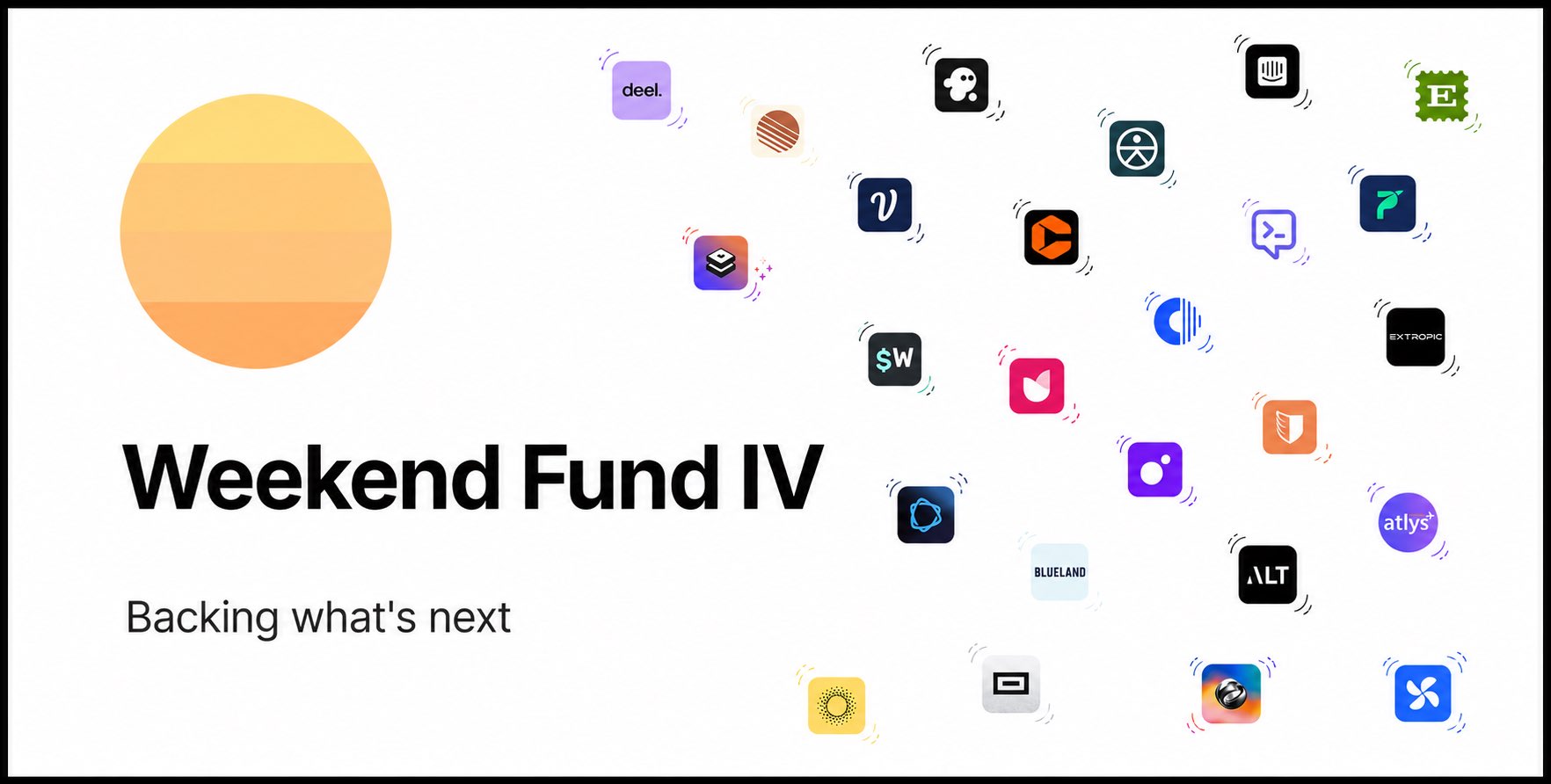
Ryan Hoover, founder of Product Hunt, and his partner Vedika Jain have announced Weekend Fund IV. The most important detail is not the fund itself but the LP structure. AngelList's USVC, the new SEC-registered closed-end fund that opens venture capital to retail investors at a $500 minimum, has committed to Weekend Fund IV as one of the first early-stage funds added to its portfolio. That makes Weekend Fund IV the first emerging-manager pre-seed and seed vehicle in history that any US adult, accredited or not, can effectively buy a slice of. The structural precedent matters far more than this single fund.
Key Takeaways
The headline is structural, not narrative. Weekend Fund IV is a continuation of Hoover and Jain's existing playbook on stage and check size. What is genuinely new is that USVC sits in the LP base, which means non-accredited US retail investors now have a packaged path into early-stage venture capital that did not legally exist 90 days ago. Every emerging manager raising in 2026 should be paying attention to this template, not the fund itself.
USVC's selection of Weekend Fund as its first early-stage LP commitment is a credibility signal both ways. For Weekend Fund, it validates a top-decile track record from Funds I and II and a credible Fund III deployment. For USVC, it signals that the fund is willing to allocate retail capital to emerging managers with real DPI rather than sticking to safe late-stage growth positions in xAI, OpenAI and Anthropic. The early-stage allocation is small in dollar terms but heavy in market signalling.
The community-LP playbook is now industrialized. Weekend Fund III tried to onboard hundreds of operator and founder LPs in 2021 and ran straight into the accreditation wall. Weekend Fund IV solves that with USVC. Expect Day One Ventures, Long Journey Ventures, On Deck-style scout funds and a wave of operator-led emerging managers to follow the same path within 12 months.
The honest counter-case is fee drag and expectations management. A retail buyer of USVC pays roughly a 2.5% net expense ratio on their USVC position, which itself owns an LP interest in Weekend Fund IV with standard 2/20 economics. The combined drag is significant, and most retail buyers will not internalise that early-stage VC is power-law math where the bottom 50% of funds lose money even before fees. The first downturn will produce a wave of retail complaints the industry is not yet prepared for.
Fund Overview
Fund Name: Weekend Fund IV
Fund Size: Not publicly disclosed at announcement
Stage: Pre-seed and seed
Check Size: $100,000 to $300,000 initial, with selective late-stage SPV exposure
Geography: Global, with a US, Europe and emerging markets bias
Focus: Consumer and B2B, founder-led startups across software, AI, prosumer tools, and creator economy
Key LPs: USVC (AngelList Asset Management), plus an operator and founder LP base of engineers, designers, researchers, data scientists and operators
Why This Fund Matters
Weekend Fund has been one of the more genuinely interesting emerging managers of the last decade. Hoover started Fund I in 2017 at $3 million, scaled Fund II to roughly $10 million in 2019 with TechCrunch and tier-one operator LPs, and used Fund III to attempt the most ambitious community LP experiment in venture, opening LP slots to roughly 350 operators and founders. The track record has earned attention. Across the platform, Weekend Fund has done 144 investments, with 18 portfolio exits to date and a most recent realisation in Block Party in March 2026. AngelList's own LP analytics flagged Funds I and II as top-decile by IRR.
That track record is precisely why USVC chose Weekend Fund as one of its first early-stage allocations. USVC launched in April 2026 after AngelList Asset Management secured an SEC exemptive order earlier in the year. The fund is structured as a closed-end vehicle with a $500 minimum investment, a 1% management fee, no carried interest at the USVC level, and a current net expense ratio of roughly 2.5%. By the end of Q1 2026, USVC had deployed about 44% of its capital across seven private positions including xAI, OpenAI, Anthropic, Sierra, Vercel, Crusoe and Legora. The bulk of that early deployment was concentrated in late-stage growth positions and secondaries.
Adding Weekend Fund IV moves USVC's strategy from a pure growth-and-secondaries vehicle into something closer to a true diversified retail VC fund of funds, with curated emerging-manager exposure as a real component. This is the strategic shift LPs in private markets have been waiting to see whether USVC could execute. It is also the part most retail investors will not understand. Owning a USVC share now means owning fractional exposure to xAI's growth round and to Weekend Fund IV's seed cheque into a 12-person team in San Francisco that may or may not exist in 24 months. Those are wildly different risk profiles.
For the broader emerging-manager ecosystem, the USVC-as-LP template is the most important structural change in years. Roughly 70% of first-time and emerging managers fail to raise a Fund II, primarily because institutional LPs, family offices and gatekeeper-style fund-of-funds will not allocate to managers without prior DPI. USVC creates a parallel LP channel that is regulatory-cleared, scalable, and brand-aligned with founder-friendly emerging managers. If USVC commits even modest cheques into 20 to 30 emerging managers per year, it becomes one of the most important new LPs in the early-stage ecosystem.
The Team
Weekend Fund is run by two general partners. Ryan Hoover founded Product Hunt in 2013 and built it into the default product-discovery layer for the global tech ecosystem before AngelList acquired it in 2016. He has been an active angel investor across more than 100 personal positions and is the co-author of Hooked: How to Build Habit-Forming Products, which has sold over 500,000 copies. Vedika Jain joined Weekend Fund in March 2019 as Partner and Chief of Staff and was promoted to General Partner shortly after Fund III closed. Her operating background runs from internships at Mithril Capital and Kairos Society, an early Stripe role from 2015 that she scaled into a multi-year tenure as the company moved through hyper-growth, and a stint as the first product manager at TrueLayer in London where she helped scale the team from roughly five to seventy people.
The combination of a globally recognised founder brand at the top of the funnel, a partner with deep product-operator credibility, and a 350-plus operator LP network is what makes Weekend Fund's deal-sourcing engine credible at this fund vintage. It is also exactly the type of profile USVC needs to anchor its emerging-manager allocation strategy. Both sides benefit reputationally from the partnership.
Early Portfolio
Weekend Fund IV's first investments have not yet been disclosed. Across its prior funds, the platform has been a meaningful early backer of consumer, prosumer, fintech and AI-application companies, with a stated bias toward founders building habit-forming products and tools for builders, creators and operators. Expect Fund IV to lean into AI-native consumer and prosumer plays, vertical AI tools, creator-economy infrastructure, and selective late-stage SPVs into Hoover and Jain's higher-conviction positions where the network can secure allocation.
What This Means for Founders
If you are a pre-seed or seed founder building consumer or B2B software, especially anything with a strong product or community angle, Weekend Fund IV is now meaningfully more attractive than the headline cheque size suggests. The reason is downstream. A Weekend Fund IV cheque now comes with two distribution layers. The traditional 350-plus operator LP base remains, which is where the Weekend Fund value-add has historically lived. On top of that, USVC's retail buyer base creates a second, broader brand-amplification surface. For a consumer-facing or community-led startup, having USVC indirect ownership through your seed VC is a marketing asset.
The trade-off is governance and timing. Weekend Fund's check sizes are not changing, which means it remains a strong support investor rather than a lead in larger seed rounds. Founders raising $5 million or more should still anchor a tier-one institutional lead and bring Weekend Fund in for the strategic and network value rather than as the round's primary check-writer.
Fund Momentum Take
This is the most interesting structural fundraise in early-stage VC so far in 2026, and we think most commentators are missing the point. The story is not that another emerging manager closed another fund. The story is that the first SEC-registered, retail-accessible US venture fund just selected its first early-stage emerging manager and the choice was Weekend Fund. That decision is going to define the playbook for retail-accessible LP capital flowing into the emerging-manager ecosystem for years.
The risks are real but bounded for Weekend Fund itself. Hoover and Jain have a credible track record, a defensible operating model, and a community LP base that has supported them through three previous funds. The bigger systemic risks live at the USVC and retail layer. Fee drag is meaningful when stacked. Liquidity mismatch between retail expectations and 10-to-12-year venture fund lives is severe. Adverse selection at the emerging-manager level becomes a real concern as USVC scales beyond marquee names like Weekend Fund into the long tail of community managers with weaker track records. Conflict-of-interest disclosures around AngelList's existing relationships with the managers it picks will need to be airtight to survive regulatory scrutiny over time.
Our bet is that Weekend Fund IV closes at the upper end of its target inside six months, deploys with the same discipline as the first three funds, and produces another top-quartile vintage. The bigger bet is that USVC closes its first $1 billion in retail commitments inside 18 months, the emerging-manager allocation grows to 25 to 40 funds, and the entire definition of what an LP looks like in early-stage venture quietly shifts. If you are an emerging manager raising in 2026 or 2027, you should be building a USVC-eligibility narrative into your fund deck right now. The asymmetry of getting onto USVC's allocation slate is too large to ignore.
Frequently Asked Questions
What is Weekend Fund IV?
Weekend Fund IV is the fourth pre-seed and seed venture capital fund from Ryan Hoover and Vedika Jain. The fund continues Weekend Fund's strategy of writing $100,000 to $300,000 cheques into consumer and B2B startups globally.
How is USVC involved?
USVC, the AngelList Asset Management retail-accessible closed-end venture fund, has committed to Weekend Fund IV as one of the first early-stage funds added to its portfolio. That makes Weekend Fund IV indirectly accessible to US retail investors who buy USVC shares.
Can non-accredited US investors invest in Weekend Fund IV directly?
No. Direct LP commitments to Weekend Fund IV remain restricted to accredited investors. Non-accredited US investors can gain indirect exposure by buying shares of USVC, which holds an LP interest in Weekend Fund IV alongside other positions.
What is Weekend Fund's track record?
Weekend Fund has made 144 investments and recorded 18 exits across its prior funds, with the most recent realisation in Block Party in March 2026. AngelList's internal LP analytics have previously flagged Funds I and II as top-decile by IRR.
Why does this announcement matter for the broader VC industry?
Weekend Fund IV is the first early-stage emerging manager added to USVC's portfolio. This sets a structural precedent for retail capital flowing into emerging managers via a regulated wrapper, which could materially change how Fund I and Fund II managers raise LP capital in the years ahead.
Have a fund closing to announce? Submit your fund here.
Need help raising capital? Check out our Fundraising Advisory services.
Related funds in the index
Active funds from the verified index
| Fund | Size | Stage | Location | Focus |
|---|---|---|---|---|
| Anorak Ventures Fund III, | $35M USD | Seed | United States | |
| venture vehicle Fund II | Targeting $400 million USD | Pre Seed | United States | |
| DIG Ventures Fund III | $106M USD | Pre Seed | United Kingdom | |
| Headline EU Fund VIII | $400M USD | Series A | United Kingdom | |
| Eastend Ventures Fund I | A$30M AUD | Growth | United States |