
VGames Launches $10M Indie Fund for Premium PC & Console Studios
TL;DR
Vgames, the Tel Aviv firm that built Israel's first games-dedicated venture fund, has carved out a $10 million Indie Fund to bankroll independent premium PC and console studios. The structural twist matters more than the headline number: rather than buying equity, the vehicle finances individual games in exchange for a share of their revenue, aiming to back roughly 20 studios at around $500,000 a project. It is a deliberate bet that indie console and PC development is better served by non-dilutive, revenue-based capital than by the equity-and-exit model that defined the last mobile gaming cycle.
Key Takeaways
This is project finance, not equity. The Indie Fund deploys capital game-by-game and recoups through revenue share, leaving founders their cap table and their IP. For studios that have a fundable game but no appetite to sell a chunk of the company, that is a fundamentally different instrument than a seed round or a publisher advance.
Vgames is building a three-instrument platform. The firm now pairs its flagship equity funds (over $400 million in AUM across vehicles raised in 2020, 2021 and 2024) with a user-acquisition financing line and, now, project financing. That breadth lets Vgames meet a gaming company at whichever capital structure actually fits the moment, which most pure-equity gaming funds cannot do.
The structure follows the exit math. Mobile gaming has delivered a healthy run of exits; premium PC and console has been far thinner on both number and size of outcomes. Revenue-based financing is the rational response to a hit-driven category where equity upside is binary and slow to materialize.
Small checks, fast deployment, portfolio logic. Roughly $500,000 across about 20 titles is a spread bet, not a concentration bet. The fund is built to start deploying immediately and to treat single-title risk as a diversification problem rather than a conviction problem.
Fund Overview
Fund Name: Vgames Indie Fund
Fund Size: $10 million
Stage: Project financing for independent studios (non-dilutive, revenue-share)
Check Size: ~$500,000 per title (target of roughly 20 studios)
Geography: Global
Focus: Premium PC and console games across all genres
Key LPs: Not disclosed
Why This Fund Matters
The most interesting thing about the Indie Fund is not its size but its shape. Slate and project financing have been standard in film and television for decades, where a financier funds a specific production and recoups from its revenue rather than owning the studio. Games have largely resisted that model, defaulting instead to equity rounds for studios and milestone-based advances from publishers. Vgames is importing the film logic into premium games, and the timing is not accidental.
Premium PC and console development sits in an awkward capital gap. The budgets are too large and too lumpy for most angels, the timelines are too long and too uncertain for venture equity that needs markups, and publisher deals often demand control, platform exclusivity or a punishing share of upside. A revenue-share project facility threads that needle: it gives a studio enough to ship a game without surrendering equity, IP or creative control, and it gives the financier exposure to the title's revenue from day one rather than waiting on a distant equity event.
It also reflects an honest read of the category. The independent premium scene has produced outsized commercial hits in recent years, but those outcomes are concentrated and hard to underwrite at the company level. By financing titles rather than companies, Vgames can participate in the revenue of a breakout without needing the studio to become a venture-scale business or get acquired. That is a more durable way to monetize a hit-driven market than betting the equity will eventually clear.
The risk, of course, is adverse selection and recoupment mechanics, which we take up below. But as a structural innovation, this is the kind of capital the indie premium ecosystem has been asking for.
The Team
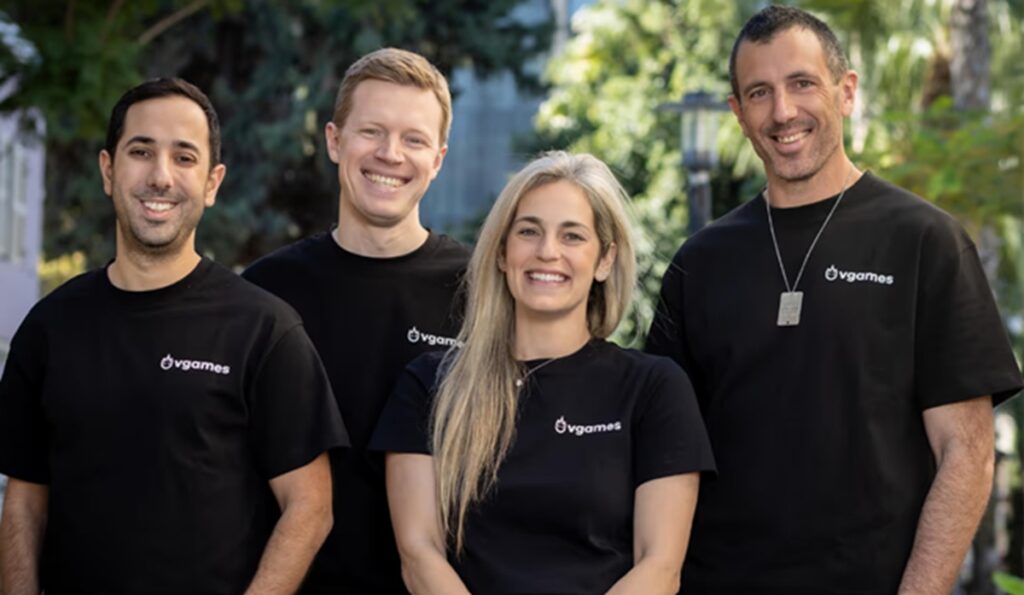
Vgames was founded in 2020 by Eitan Reisel, a former Googler who built what was then Israel's first games-focused venture fund, and remains its Founder and Managing Partner. He is joined by Partner Daniel Mironov and COO David Digmi, alongside a bench of associates. The firm has raised a sequence of progressively larger flagship vehicles, roughly $60 million in 2020, about $141 million in 2021 and roughly $142 million in 2024, and now manages more than $400 million across its strategies. Its track record runs heavily through mobile, where the exit environment has been strongest, and the firm has been an active multistage backer of gaming and interactive-entertainment companies. The Indie Fund extends that operating knowledge into a part of the market the equity funds were never designed to serve.
What This Means for Founders
If you are an independent studio building a premium PC or console title and you have a credible plan to ship, this is capital worth understanding. The pitch is that you can fund a game without diluting your company or handing a publisher creative and commercial control, while plugging into a firm that has spent five years studying what makes gaming companies succeed. For teams between a working prototype and a publisher conversation, that is a genuinely new option on the menu.
The diligence question to ask is about recoupment: where the revenue share sits in the waterfall, what multiple or cap applies, and how it interacts with any future publisher or platform deal. Non-dilutive does not mean cost-free, and the terms of a project facility can be more or less founder-friendly depending on how aggressively they are structured. Studios that model this carefully will know whether revenue financing or equity is the cheaper capital for their specific title.
Fund Momentum Take
We like this more as a signal than as a $10 million fund. Revenue-based project financing is arguably the correct instrument for premium PC and console, where outcomes are hit-driven, equity markups are slow and acquisitions are scarce. Vgames is right that the category's capital structure has been mismatched to its economics, and being early to fix that is a smart place to stand.
The honest risks are real. Adverse selection is the obvious one: the strongest studios with the most fundable games can often secure publisher advances or equity on good terms, which can push a revenue-share facility toward the projects that could not raise elsewhere. Single-title concentration, recoupment timing and the difficulty of underwriting creative outcomes all cut the same way. And at $10 million across roughly 20 titles, this reads as a disciplined pilot rather than a category-defining vehicle.
Our bet: if Vgames can show that revenue financing produces respectable returns on a handful of indie titles, the more important outcome is a much larger follow-on fund and a template other gaming investors copy. The number to watch is not the $10 million raised but the recoupment data on the first cohort.
Frequently Asked Questions
How big is the Vgames Indie Fund?
It is a $10 million vehicle, targeting roughly 20 studios at around $500,000 per title.
Is it equity or debt?
Neither in the traditional sense. It is non-dilutive project financing: Vgames funds a specific game and recoups through a share of that game's revenue, rather than taking equity in the studio.
What kind of games does it back?
Independent premium PC and console titles across all genres.
How does this fit with the rest of Vgames?
It is a third instrument alongside the firm's flagship equity funds and its user-acquisition financing, giving Vgames the ability to back gaming companies at multiple points in their capital structure.
Why project financing instead of equity?
Premium PC and console exits have been thinner than mobile, making revenue-based financing a better fit for a hit-driven category where equity upside is binary and slow to realize.
Have a fund closing to announce? Submit your fund here.
Need help raising capital? Check out our Fundraising Advisory services.
Related funds in the index
Gaming funds from the verified index
| Fund | Size | Stage | Location | Focus |
|---|---|---|---|---|
| Animal Capital Fund III | $33M USD | Seed | United States | Consumer & Commerce, Creator Economy +2 |
| Griffin Gaming Partners SOF | $100M USD | Seed | United States | Gaming |
| Gamma Waves Partners | €100M EUR | Growth | Netherlands | Gaming, Consumer & Commerce |
| Firstpoint VC Fund I | €50M EUR | Seed | Israel | Gaming, AI/ML |
| Esports Global Fund I | €47M EUR | Seed | United Kingdom | Gaming |