UVC Partners Launches Dedicated €150M Growth Fund to Double Down on Europe's Deeptech Champions
TL;DR
UVC Partners, Munich's leading deeptech VC firm and the investment arm of the UnternehmerTUM innovation ecosystem, has reached a €77M first close on a dedicated Growth Fund targeting €150M — aiming to reach final close by summer 2026. Led by Managing Partner Johannes von Borries and Partner Benjamin Erhart, the Growth Fund addresses a structural gap in European venture: the chronic shortage of homegrown growth capital for deeptech companies in space, fusion energy, robotics, dual-use, climate tech, and AI. UVC is now writing growth checks of up to €15M into companies it often backed at seed — including Proxima Fusion and Isar Aerospace — combining insider knowledge with dedicated follow-on firepower.
Key Takeaways
This is not a bigger fund — it is a structurally different product. UVC Partners has run four early-stage venture funds with a combined €400M+ in AUM, building a track record of identifying European deeptech winners at their earliest stages. The Growth Fund is a separate, dedicated vehicle specifically designed to write larger growth-stage checks into those same companies — a product that did not exist in UVC's toolkit before. The separation is deliberate: early-stage investing and growth-stage investing require different return profiles, different risk tolerance, and different LP bases.
The insider advantage in deeptech is decisive at growth stage. UVC's unique edge in this fund is its existing ownership position in portfolio companies like Proxima Fusion and Isar Aerospace. When a growth-stage investor writes a €15M check into a nuclear fusion startup, they are largely flying blind on the technology's true maturity. When UVC writes that same check, they are investing with years of board-level visibility into the science, the team, and the commercial roadmap. This asymmetric information advantage is not replicable by any outside growth fund entering cold.
European deeptech's growth capital gap is real and large. The structural problem UVC is solving has been documented repeatedly: European deeptech companies routinely achieve exceptional technical milestones at seed and Series A, then struggle to raise growth-stage capital from homegrown European investors who have the domain competence to evaluate the risk. American crossover funds fill the gap selectively, but on terms that often disadvantage European founders and dilute European ownership in the companies most likely to become strategic assets. A dedicated European deeptech growth fund with genuine technical credibility is a meaningful structural response to this problem.
Von Borries' next fund signals: €500M-€1B growth vehicle within a few years. The ambition is explicit: the current €150M target is a starting vehicle, not the destination. UVC is building toward a dedicated growth fund at a scale that would make it one of Europe's premier growth-stage deeptech investors. The timeline — "a couple of years" — is achievable if the first close performance validates the strategy.
Why This Fund Matters
UVC Partners' decision to launch a dedicated growth product is one of the most strategically coherent fund structure decisions to come out of European venture in recent memory. The firm spent 15 years building a portfolio of exceptional deeptech companies at the earliest stages — funding Proxima Fusion's first serious experiments in nuclear fusion, backing Isar Aerospace before its first rocket, and writing the first institutional check into Planqc's quantum computing ambitions. Those companies are now reaching the phase where they need €10-15M growth checks to scale production, prove commercial traction, and reach the inflection points that drive Series B and beyond valuations.
The problem is that the European growth capital market for deeptech is deeply underdeveloped. Generalist European growth funds lack the technical credibility to evaluate fusion plasma confinement timelines or orbital launch economics. American crossover funds will invest — but they price in an enormous information premium, and they bring neither European network nor European strategic context. The companies that UVC has backed since 2016 are now hitting a capital gap that their early-stage backer is uniquely positioned to close. The Growth Fund is the logical institutional response to that gap.
The sectors targeted — space, fusion energy, robotics, dual-use, and climate tech — are not chosen for trend-following reasons. They represent the categories where the intersection of European scientific excellence, industrial manufacturing capability, and increasing government procurement demand is most pronounced. Germany's aerospace industry, Europe's climate commitments, the rapid acceleration of NATO defense spending, and the global race in next-generation energy all create specific commercial pathways for the deeptech companies in UVC's portfolio. This is a fund investing into secular tailwinds, not cyclical hype.
The robotics positioning deserves particular attention. Erhart's framing — asking what great use cases go beyond humanoid hype — signals a disciplined, application-specific approach to robotics investing at a time when the market is flooded with humanoid-first narrative. Industrial robotics, autonomous logistics, dual-use autonomous systems, and specialized manipulation platforms are where the near-term commercial value sits. UVC's portfolio positioning here reflects genuine domain depth rather than surface-level exposure to the robotics megatrend.
The Team
Johannes von Borries has been building UVC Partners since its founding as the investment arm of UnternehmerTUM, Europe's largest entrepreneurship center at the Technical University of Munich. His vision for UVC has always been to build a multi-decade institution, not a fund-by-fund business — and the launch of the Growth Fund is the clearest expression yet of that institutional ambition. Von Borries' ability to articulate a €500M-€1B next vehicle while announcing a €150M first close suggests both confidence in the model and genuine LP appetite for the strategy.
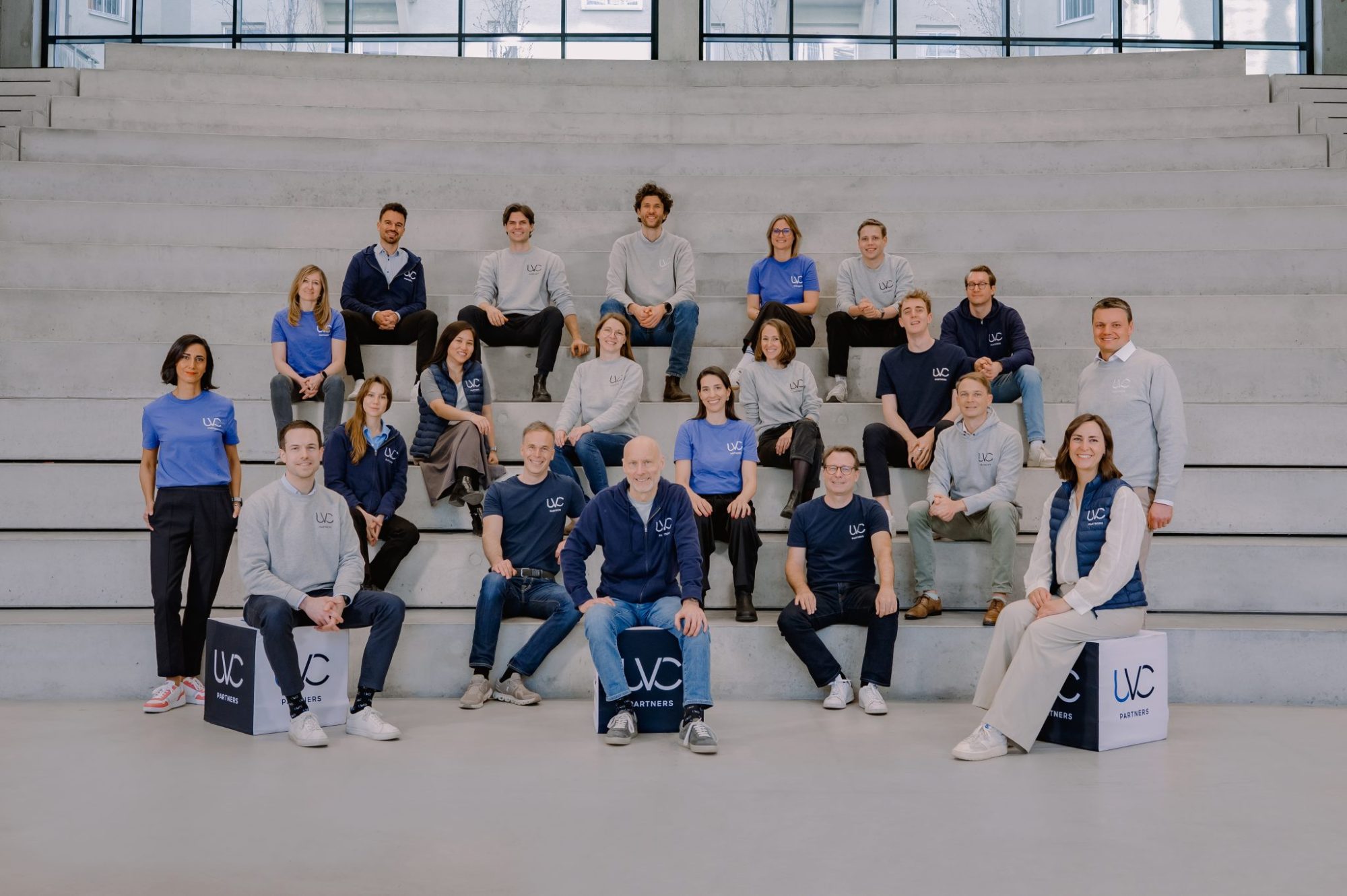
Benjamin Erhart leads the Growth Fund as Partner, bringing focused attention to the specific challenges of growth-stage deeptech investing. His stated interest in identifying robotics applications beyond humanoid hype reflects the kind of domain-specific skepticism that separates genuine deeptech investors from the generalists who have flooded into the category. UVC's broader team of investment professionals spans backgrounds from rocket science to economics — the precise diversity of expertise that deeptech portfolio companies at the growth stage need from their investors.
Early Portfolio
UVC Partners' most prominent growth-stage portfolio companies include Proxima Fusion, the Munich-based nuclear fusion startup that completed a landmark €130M Series A in 2025 and is building toward a demonstration power plant; Isar Aerospace, the European commercial launch company developing its Spectrum rocket for small-to-medium payload orbital delivery; Planqc, a quantum computing startup from Max Planck Institute researchers building neutral atom quantum processors; Tacto, a procurement intelligence platform backed by leading European enterprise investors; and Flix, the intercity mobility platform that has grown into one of Europe's most valuable mobility companies. Across four early-stage funds, UVC has backed over 50 companies with a portfolio collectively valued in the billions.
What This Means for Founders
If you are a European deeptech founder in space, fusion, robotics, dual-use, or climate technology who is approaching your Series B or a large growth round — and if you are already in the UVC portfolio or have a credible relationship with the Munich deeptech ecosystem — the Growth Fund represents one of the most compelling homegrown growth capital options available in Europe. The €15M check ceiling is meaningful for companies at this stage, the sector expertise is genuine, and UVC's network within the German and European industrial complex can open doors that US-headquartered growth funds fundamentally cannot.
For founders outside the UVC portfolio: the fund will selectively evaluate inbound opportunities in its core sectors, but the primary mandate is to serve existing portfolio companies at inflection points. New entrants should expect a high bar and genuine technical due diligence rather than the relationship-driven momentum rounds that characterize some growth-stage investing.
Fund Momentum Take
UVC Partners' Growth Fund is one of the more intellectually coherent fund launches in European venture this cycle. The thesis — that deeptech companies need specialized growth capital from investors with actual technical domain expertise, and that UVC's existing portfolio ownership creates a structural advantage in evaluating that capital deployment — is both well-reasoned and empirically grounded in the failures of generalist growth capital to serve European deeptech effectively.
The risk worth naming: €150M is a small growth fund for the ambition of the sectors it targets. Fusion energy and orbital launch companies have capital requirements that will quickly exceed what a €150M vehicle can meaningfully support across a diversified portfolio. UVC's model — using the Growth Fund as the next check after early-stage, before handing off to larger crossover funds — is the right positioning given this constraint, but it means the fund is a bridge, not a long-term capital partner, for its most capital-intensive portfolio companies.
The next-fund ambition (€500M-€1B) is the real strategic signal here. If UVC can demonstrate over the next two to three years that their insider knowledge translates into top-decile growth-stage returns, they will be building one of Europe's most important venture institutions — a firm that can support European deeptech from napkin sketch through to major commercial scale. The €77M first close is the beginning of that story, not the destination.
Frequently Asked Questions
What is UVC Partners' Growth Fund and how is it different from their other funds?
The Growth Fund is a dedicated vehicle specifically designed to write larger growth-stage checks of up to €15M into European deeptech companies — separate from UVC's four early-stage venture funds. While the early-stage funds back companies at seed and Series A, the Growth Fund focuses on companies that have already proven their technology and are scaling commercially, allowing UVC to maintain and increase ownership in its best-performing portfolio companies through later rounds.
What sectors does the UVC Partners Growth Fund target?
The fund targets European deeptech across space, fusion energy, robotics (with a focus on applications beyond humanoid hype), dual-use and defense-adjacent technologies, climate tech, mobility, and software/AI. These sectors were selected based on UVC's existing portfolio depth and the structural commercial tailwinds in European industrial, aerospace, and energy markets.
What is UVC Partners' track record?
UVC's first fund has returned more than 2x to limited partners, and its second fund has already returned 50% of invested capital to LPs — strong performance metrics for a deeptech-focused early-stage VC operating in capital-intensive sectors. The firm manages over €400M in AUM across five vehicles including the new Growth Fund.
Who leads UVC Partners' Growth Fund?
The Growth Fund is led by Managing Partner Johannes von Borries and Partner Benjamin Erhart. Von Borries has built UVC Partners from its origins as the investment arm of UnternehmerTUM (the Technical University of Munich's innovation ecosystem) into one of Europe's leading deeptech VC firms.
When will the UVC Partners Growth Fund reach final close?
UVC Partners is targeting a final close of €150M by the end of summer 2026, having already achieved a €77M first close. Von Borries has indicated ambitions to launch a significantly larger follow-on growth vehicle — potentially €500M-€1B — within the next few years if the current fund validates the strategy.
Have a fund closing to announce? Submit your fund here.
Need help raising capital? Check out our Fundraising Advisory services.