
Tenet Launches €80M Debut Fund to Back AI-Powered Roll-Ups Across Europe
TL;DR — What You Need to Know
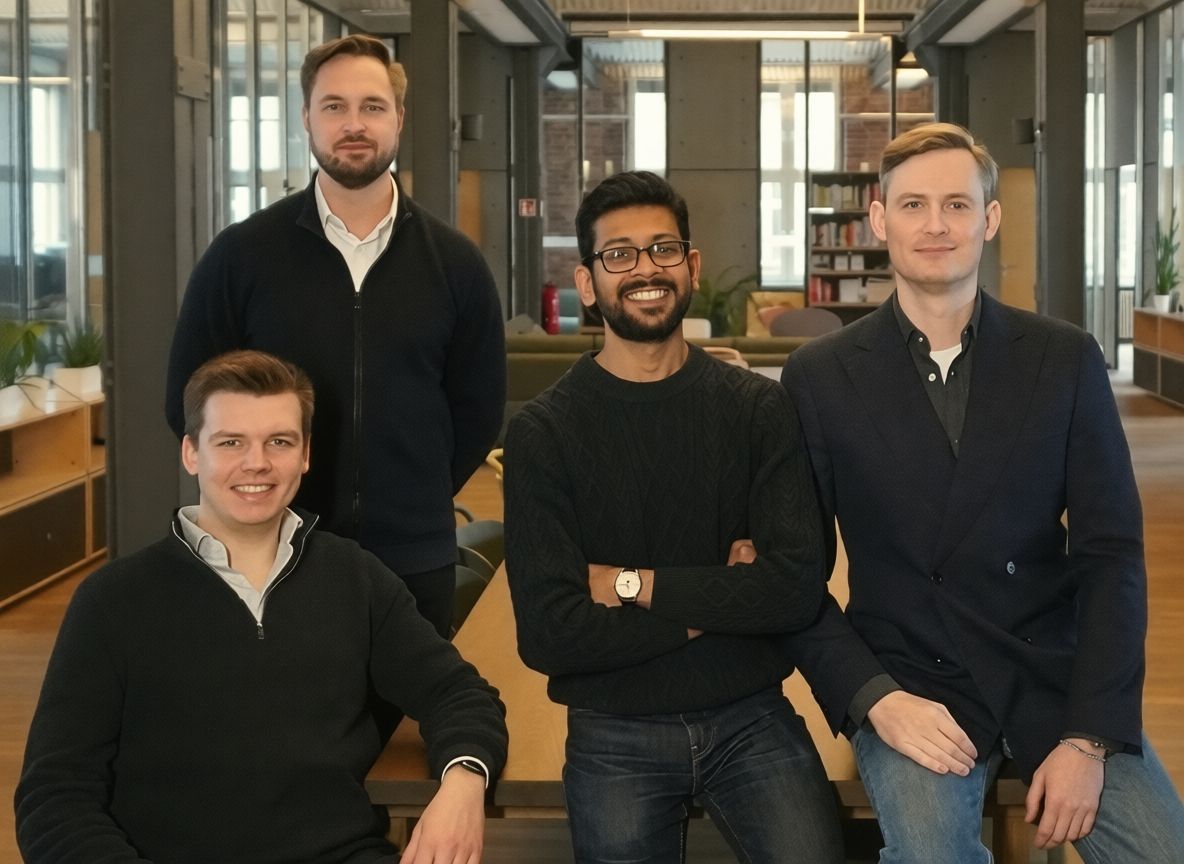
Tenet is a new Berlin-based investment firm targeting an €80M debut fund to back AI-powered roll-ups across Europe at inception stage. The firm has raised approximately one-third of its target at launch and already deployed its first €5M cheque into Taxforce, a German AI-native tax advisory platform. The four General Partners collectively bring over 25 years of experience spanning early-stage VC, growth equity, and private equity, a deliberate team composition designed to serve a new asset class that sits in the structural gap between traditional venture capital and buyout funds. The clear signal: AI roll-ups are emerging as a distinct investment category in Europe, and Tenet is betting that the continent's deep SaaS adoption gap and looming SMB succession crisis create a larger opportunity than anywhere else in the world.
Key Takeaways
AI roll-ups represent a genuinely new asset class that neither traditional VC nor classic PE is well-equipped to serve at inception. Tenet is purpose-built to fill this gap with €5M cheques that fund both acquisition activity and AI product development simultaneously.
Europe's structural conditions make it the most attractive geography for AI roll-ups globally. Only single-digit percentages of European SMBs use vertical SaaS, compared to roughly 60% in the US, while millions of small business owners face succession challenges with no clear buyer or successor in sight.
US mega-funds are already moving aggressively into AI roll-ups. General Catalyst, Lightspeed, and Thrive Capital have all made significant plays in this model stateside. Tenet is positioning itself as the European specialist before these US firms expand their strategies across the Atlantic.
The Taxforce first investment signals exactly how the model works in practice. A former Klarna Head of Engineering and an experienced fintech entrepreneur are acquiring German tax advisory firms and rebuilding them with AI, backed by Tenet's €5M inception cheque.
Fund Overview
Fund Name: Tenet (AI Roll-Ups Fund)
Fund Size / Closing: €80M target, approximately €27M raised at launch with anchor investor secured
Country: Germany (Berlin)
Industry Focus: AI-Powered Roll-Ups, AI-Native Services, Professional Services Transformation
Stage Focus: Inception / Seed (~€5M cheques)
Website: tenetcapital.eu
LinkedIn: Tenet on LinkedIn
Fund Manager: Martin Janicki (General Partner), Alexander Maly (General Partner), Sahil Patwa (General Partner), Simon Lohmann (General Partner & COO)
Why This Fund Matters
Tenet's launch is significant not because of its fund size, but because of what it represents: the formalisation of AI roll-ups as a distinct, fundable investment thesis in Europe.
The model works like this. A founder identifies a fragmented professional services sector, think tax advisory, insurance brokerage, property management, or engineering consultancies. They acquire multiple small firms in that sector at reasonable multiples, often from retiring owners with no succession plan. Then, instead of simply consolidating operations the traditional PE way, they embed AI into the core workflows of these businesses, fundamentally transforming their cost structures and service delivery. The goal is to turn businesses running on 10% margins into AI-native platforms operating at 30-40% margins.
The problem is that no existing fund type is designed to back this model at inception. Traditional seed VC writes €1-3M cheques, which is insufficient to simultaneously build AI capabilities, acquire operating assets, and reach cash-flow sustainability. Private equity requires substantial scale and debt leverage at entry, making it unsuitable for backing roll-ups before the first acquisition has even closed. Search funds and micro-PE lean heavily on debt and early cash-flow optimisation, lacking the flexibility for transformational AI investments that may take years to compound.
Tenet has structured itself to occupy this gap. With €5M inception cheques and a team that spans VC, growth equity, and private equity backgrounds, the fund provides enough capital for founders to make their first acquisitions and build their AI stack, without forcing premature debt structures or aggressive organic growth benchmarks.
The Team
The four General Partners were chosen to cover the full capital stack from which AI roll-ups emerge:
Martin Janicki was previously a Partner at Cavalry Ventures, the Berlin-based early-stage VC now known as NAP, where he focused on software and B2B investments. He left Cavalry in mid-2024 to build Tenet. He brings deal sourcing networks, founder pattern recognition, and the early-stage investor mindset needed to back pre-revenue roll-up platforms.
Alexander Maly comes from private equity firm Clearsight Investments, bringing the buy-and-build operational lens that most VC teams fundamentally lack. His experience in acquisition execution, integration planning, and portfolio company operations is critical for a fund that backs founders doing M&A from day one.
Sahil Patwa previously served as Principal at Unbound, a London-based investment firm. He has written extensively and publicly on the mechanics and selection criteria of AI-powered roll-ups, and brings deep transformation and change management experience from his time at BCG. His published frameworks on AI roll-up underwriting have become reference material for founders exploring the model.
Simon Lohmann, who serves as both General Partner and COO, previously worked at Atlantic Labs and FoodLabs, where he was Head of Investor Relations. He brings operational experience from the Berlin startup ecosystem and manages the fund's operations, LP relationships, and portfolio support infrastructure.
The firm is supported by an advisory network that includes founders of existing European AI roll-ups such as Arbio, Buena, and Zinco, providing real-world operational playbooks for portfolio companies.
First Investment: Taxforce
Tenet's first and only announced investment to date is Taxforce, a German AI-native tax advisory platform. Tenet led a €5M inception-stage round into the company.
Taxforce was co-founded by Burkhard Reffeling, formerly Head of Engineering at Klarna, and Caspar Gerleve, an experienced fintech entrepreneur. The company is acquiring traditional German tax advisory firms and modernising them with AI-powered workflows, a textbook execution of the AI roll-up thesis in one of Germany's most fragmented and under-digitised professional services sectors.
Germany has approximately 90,000 tax advisory firms, the vast majority of which are small practices with aging partners and minimal technology adoption. The combination of a severe succession crisis in the sector, high regulatory barriers to entry that limit competition, and standardised workflows that are highly amenable to AI automation makes tax advisory one of the most obvious beachheads for the AI roll-up model in Europe.
What This Means for Founders
If you are building or considering building an AI-native services company or roll-up platform in Europe, Tenet is actively deploying capital and looking for specific founder profiles.
The ideal Tenet founder has strong technical credentials, often from scaling engineering teams at major tech companies, combined with either direct industry experience or a deep understanding of the target sector's operational workflows. The fund explicitly values change management capability. Acquiring and integrating SMBs while simultaneously implementing new AI-driven processes requires founders who respect incumbent employees and existing customer relationships, not just founders who can build impressive AI demos.
Target sectors include any professional services vertical where businesses are highly fragmented, margins are compressed by manual labour, succession pipelines are empty, and workflows are standardised enough for AI to deliver step-change improvements. Tax advisory, legal services, insurance brokerage, property management, accounting, engineering consultancies, and HR services all fit the profile.
Tenet typically writes €5M first cheques at inception, before the first acquisition has closed, and structures its capital to be flexible enough to accommodate both VC-style scaling and PE-style buy-and-build pathways as the business evolves.
Fund Momentum Take
Tenet is one of the most thesis-driven fund launches we have tracked in recent months. The AI roll-up model is gaining serious traction in the US, where General Catalyst, Lightspeed, and Thrive Capital have all deployed significant capital into the category. Tenet's argument that the opportunity is actually larger in Europe is compelling: deeper SaaS under-adoption, a more acute SMB succession crisis, world-class AI engineering talent, and lower acquisition multiples for target businesses create structural conditions that few other geographies can match.
The risks are real. AI roll-ups are still largely unproven at scale. The model demands operational intensity that most venture-backed companies never face, combining startup speed with M&A execution, post-merger integration, AI product development, and change management across acquired workforces that did not sign up for a technology transformation. Any one of these is hard. Doing all four simultaneously is extraordinarily difficult.
But with €5M inception cheques, a team deliberately assembled to bridge VC and PE skill sets, and an advisory network of founders already operating AI roll-ups in production, Tenet is better positioned than most to test whether this thesis translates from US hype to European reality.
One to watch closely.
Frequently Asked Questions
What is an AI roll-up?
An AI roll-up is a company that acquires multiple small businesses in a fragmented service sector, such as tax advisory or insurance brokerage, and then uses artificial intelligence to fundamentally transform their operations, cost structures, and service delivery. Unlike traditional private equity roll-ups that focus on consolidation and cost-cutting, AI roll-ups aim to rebuild acquired businesses as AI-native platforms with software-like margins.
How is Tenet different from a traditional VC fund?
Tenet invests at inception like a VC fund but backs a fundamentally different business model. Traditional VC-backed startups build products and acquire customers organically. Tenet-backed founders acquire existing businesses and transform them with AI. This requires different cheque sizes (€5M versus typical €1-3M seed), different operational support (M&A execution, integration, change management), and a different team composition that spans both venture capital and private equity expertise.
What types of founders is Tenet looking for?
Tenet targets founders with strong technical backgrounds, often from scaling engineering teams at major tech companies, who want to acquire and transform traditional professional service businesses into AI-native platforms. The fund values change management experience and sector understanding alongside technical capability. Empathy for incumbent employees and existing business workflows is considered non-negotiable.
Is Tenet still fundraising?
Yes. At launch in February 2026, Tenet had raised approximately one-third of its €80M target and secured an anchor investor. The fund is actively raising and deploying simultaneously.
What sectors does Tenet focus on?
Tenet is sector-agnostic within professional services but targets verticals where businesses are highly fragmented, margins are compressed by manual labour, succession pipelines are thin, and workflows are standardised enough for AI to deliver meaningful improvements. Tax advisory, legal, insurance, property management, accounting, and engineering services all fit the thesis.
Track Tenet and 840+ other funds with fresh capital to deploy on FundMomentum.
Have a fund closing to announce? Submit your fund here.
Need help raising capital? Check out our Fundraising Advisory services.
Related funds in the index
AI/ML funds from the verified index
| Fund | Size | Stage | Location | Focus |
|---|---|---|---|---|
| AIP Seed | $40M USD | Pre Seed | Poland | AI/ML, FinTech +3 |
| Nomi Capital Defense Fund I | $50M USD | Seed | United States | Defense, Space +3 |
| Worldbuild Fund I | $30M USD | Pre Seed | United States | Data Infrastructure, AI/ML +3 |
| Inflexor Ventures Fund III | $48M USD | Seed | India | Deep Tech, Semiconductors +3 |
| Haystack Fund VIII | $85M USD | Pre Seed | United States | Consumer & Commerce, Cloud & DevOps +3 |