
Ruya Ventures Closes $50M Solo-GP Debut Fund for Day-Zero Deeptech
TL;DR
Ruya Ventures, the London-based deeptech firm founded by former Speedinvest deeptech lead Rick Hao, has closed its debut pre-seed fund at $50 million (~€43M) — oversubscribed, final-closed in under a year, and run by a single GP. The fund will back roughly 20 companies at "day zero," often pre-incorporation, across AI, batteries, robotics, semiconductors, materials science, and novel computing. Five investments are already deployed, including grid-infrastructure company WLF Energy and AI-compute cooling startup MegaCool. In a deeptech market drifting toward mega-funds, a deliberately capped solo-GP vehicle at this size is a structural statement.
Key Takeaways
$50 million is unusually large for a solo GP in deeptech. Solo-GP funds are now common in software, but rare in capital-intensive, science-heavy categories where LPs typically demand partnership depth. Hao raising this from a standing start — firm launched October 2025, final close by July 2026 — suggests LPs are underwriting his Speedinvest track record of 30-plus deeptech investments as a portable franchise.
The thesis targets commercialization failure, not science failure. Hao's core argument is that most deeptech companies stall not because the science breaks but because nobody helps founders cross from working prototype to manufacturable, adoptable product. A pre-seed fund built around manufacturing, supply-chain, and go-to-market support attacks the actual mortality curve of the category.
Capped on purpose. Ruya says it turned away additional LP capital to stay true to strategy — roughly 20 concentrated positions rather than a spray of options. At pre-seed in deeptech, where follow-on risk is brutal, discipline on fund size is arguably the single strongest alignment signal a manager can send.
Europe's deeptech moment has a new entry point. With European deeptech absorbing a reported $20 billion-plus in 2025 and defense, compute, and energy sovereignty dominating the policy agenda, most new capital has clustered at growth stage. Ruya plants itself at the opposite end — day zero — where the pipeline for all those growth funds actually gets built.
Fund Overview
Fund Name: Ruya Ventures Fund I
Fund Size: $50M (~€43M), oversubscribed, final close
Stage: Pre-seed / "day zero," often pre-incorporation
Check Size: Not disclosed; ~20 planned portfolio companies
Geography: Rooted in Europe, with networks spanning Europe, the US, and Asia
Focus: Deeptech — AI, batteries, robotics, semiconductors, materials science, and novel computing
Key LPs: Largely undisclosed; Barcelona-based fund-of-funds Aldea Ventures wrote the first LP cheque
Why This Fund Matters
European deeptech has a structural gap that everyone acknowledges and few funds are actually built to fill. The continent produces world-class science — university spinouts, lab-born IP, PhD founders — but the first institutional cheque usually arrives after the founders have already made their hardest and least reversible decisions: how to structure the company, which market to enter first, how to think about manufacturing. Ruya's "day zero" positioning, engaging before incorporation, is a bet that the highest-leverage moment in a deeptech company's life is also the least contested by other investors.
The commercialization thesis deserves to be taken seriously because it matches the failure data. Deeptech mortality clusters not in the lab but in the scale-up chasm: pilot purgatory, unit economics that never survive contact with manufacturing, and go-to-market strategies borrowed from SaaS. A GP whose stated operating focus is manufacturing readiness, supply chains, and market adoption — with networks across Europe, the US, and Asia to support them — is at minimum solving for the right variable.
The solo-GP structure cuts both ways and should be examined honestly. On one hand, concentrated authority means speed and conviction — qualities pre-seed founders value and committees destroy. On the other, a 20-company deeptech portfolio spanning semiconductors to batteries is an enormous technical surface area for one investing partner to cover with genuine depth. Hao's counter-evidence is his Speedinvest tenure, where he built and led the deeptech practice across AI, quantum, batteries, semiconductors, and robotics, and the EUVC "Newcomer of the Year" award Ruya collected in April 2026 while still operating in stealth.
Finally, the speed of the raise is itself a signal. A first-time solo manager final-closing an oversubscribed $50 million fund in under a year, in a European LP market that remains conservative on emerging managers, says the institutional appetite for credible deeptech specialists currently exceeds supply. Expect imitators.
The Team
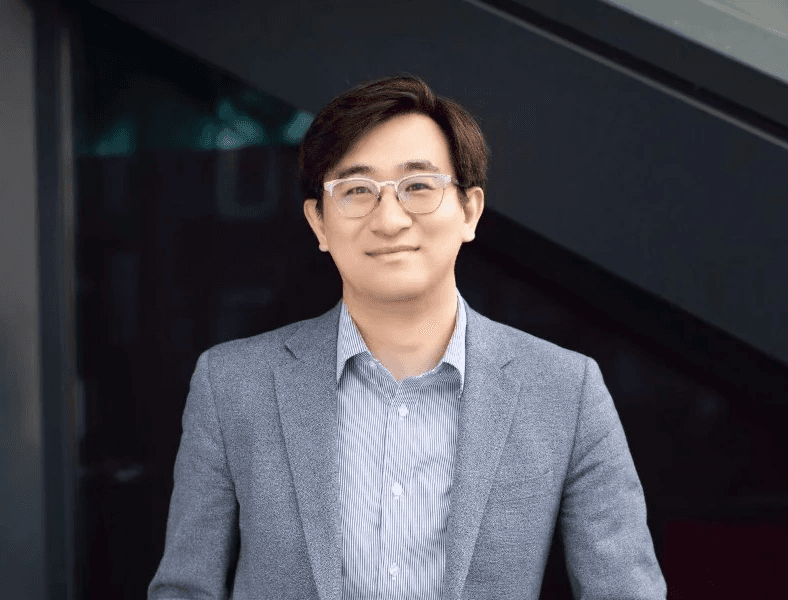
Ruya is Rick Hao, Founder and Managing Partner, and deliberately so. Hao previously built and led the deeptech team at Speedinvest as partner, backing more than 30 companies across AI, battery technology, quantum computing, semiconductors, energy, and robotics over a decade-plus investing career, with board and advisory roles across the portfolio. He is also a mentor at Creative Destruction Lab in its next-generation computing stream. The firm launched from stealth in October 2025 and carries founder endorsements from prior portfolio leaders. There are no other partners; LPs and founders alike are explicitly buying a single point of conviction — and a single point of failure.
Early Portfolio
Five companies are already funded. The two disclosed names are WLF Energy, a German energy-infrastructure company operating "from generation to grid" that emerged from stealth as Ruya's first investment, and MegaCool Technologies, building cooling hardware for modern AI compute — a direct pick-and-shovel play on data-center thermodynamics. Three further companies remain in stealth: a real-time speech-translation AI company, an industrial-intelligence infrastructure play in robotics, and a PCB-manufacturing venture serving regulated industries. As a set, they track the fund's thesis precisely: physical-world bottlenecks where engineering depth, not distribution, is the moat.
What This Means for Founders
If you are a scientist or engineer in Europe sitting on lab-validated technology in AI, energy storage, robotics, semiconductors, materials, or novel compute — and you have not yet incorporated, priced a round, or picked a first market — Ruya is now arguably the most purpose-built first call on the continent. The pitch that will land is one that takes commercialization seriously from day one: manufacturing pathway, supply-chain realism, and a credible first customer, not just a benchmark-beating result.
Founders should also calibrate expectations around the model. A concentrated 20-company fund means Ruya's yes is rare, its involvement heavy, and its follow-on reserves finite — syndicate construction for the seed and Series A will matter enormously. Ask directly how the firm bridges its portfolio to larger deeptech leads in Europe and the US; with a solo GP, the network is the platform.
Fund Momentum Take
Ruya is the most interesting kind of debut: small, sharp, and structurally contrarian. While European deeptech capital consolidates into growth-stage mega-vehicles, Hao has built the inverse — a capped, concentrated, single-decision-maker fund at the stage where the category's pipeline actually forms. The oversubscription and the sub-year close suggest LPs see what we see: specialist pre-seed deeptech is undersupplied relative to the volume of science Europe produces.
The risks are structural rather than thesis-level. Key-person risk is absolute in a solo-GP vehicle. The technical breadth — six sectors, each with its own commercialization physics — will stretch any single investor's diligence depth. And pre-seed deeptech has the longest duration profile in venture; LPs in Fund I should be underwriting a 12-to-15-year journey, not a quick markup cycle, whatever the early portfolio's momentum.
Our bet: the model works if Hao's network genuinely substitutes for a partnership — and his first five investments, which read like a thesis executed rather than a thesis described, are early evidence that it might. If Fund I's stealth companies emerge as category leaders, Ruya becomes the template for a wave of European specialist solo GPs.
Frequently Asked Questions
What is Ruya Ventures?
A London-based deeptech venture firm founded in October 2025 by Rick Hao, former partner and deeptech lead at Speedinvest. It closed its debut fund on July 1, 2026.
How large is Ruya Ventures' first fund?
$50 million (~€43M), oversubscribed and final-closed in under a year. The firm says it turned away additional LP capital to keep the fund deliberately small.
What does Ruya Ventures invest in?
Pre-seed and "day zero" deeptech companies — often before incorporation — across AI, batteries, robotics, semiconductors, materials science, and novel computing, with a planned portfolio of roughly 20 companies.
Who is Rick Hao?
Ruya's founder and sole General Partner. He previously built and led the deeptech investment team at Speedinvest, backing more than 30 companies across AI, quantum computing, batteries, semiconductors, and robotics. Ruya won "Newcomer of the Year" at the 2026 EUVC Awards while still in stealth.
What has Ruya Ventures invested in so far?
Five companies: WLF Energy (energy infrastructure from generation to grid), MegaCool Technologies (cooling hardware for AI compute), and three stealth startups in real-time speech translation, industrial-intelligence infrastructure, and PCB manufacturing for regulated industries.
Have a fund closing to announce? Submit your fund here.
Need help raising capital? Check out our Fundraising Advisory services.
Related funds in the index
Pre Seed · Deep Tech funds from the verified index
| Fund | Size | Stage | Location | Focus |
|---|---|---|---|---|
| Empirical Ventures Fund I | £15M GBP | Pre Seed | United Kingdom | Deep Tech, EnergyTech +3 |
| Cantos Fund IV | $70M USD | Pre Seed | United States | Defense, Deep Tech +3 |
| AlleyCorp Fund II | $335M USD | Pre Seed | United States | Digital Health, Deep Tech |
| Seedcamp Fund VII | $220M USD | Pre Seed | United Kingdom | AI/ML, Enterprise Software +2 |
| Version One Ventures Fund V | $78M USD | Pre Seed | Canada | AI/ML, Robotics & Automation +2 |