
Restive Ventures Closes $45M Fund III to Back AI-Native Fintech After 6.3x Mark on Fund I
TL;DR
Restive Ventures has closed Fund III at $45 million to keep doing what it has done well: writing first checks into AI-native financial services companies. The track record is the headline - Fund I (2019) marked at 6.3x and Fund II (2021) marked at 4x - and it explains why the firm is staying disciplined on size rather than chasing AUM. Fund III's first publicly disclosed portfolio company, Hiro, was acquired by OpenAI three months out of stealth.
Key Takeaways
A 6.3x mark on Fund I is the real story. The single best signal in venture is unrealized markups on early funds, and Restive's 2019 vintage at 6.3x puts it in the top decile of fintech funds from that period. Fund II at 4x in 2021 - one of the worst vintages in modern venture - is even more impressive given the macro headwinds. LPs are buying continuity of process, not narrative.
Concentration over coverage is a deliberate choice. A $45M fund deploying first checks across the AI-native fintech category is a high-conviction strategy, not a sprayer. Restive will likely back roughly 15-25 companies, which means each portfolio bet matters. That is the right structure for early-stage AI deals where the winner-takes-most dynamics are even more pronounced than in classical fintech.
The Hiro-to-OpenAI exit is a meaningful Fund III proof point. Three months from stealth to acquisition is fast, and the buyer being OpenAI signals that Fund III's deal flow is plugged into the strategic AI ecosystem at a level most fintech funds cannot match. This is the kind of early validation that compresses the Fund IV fundraising timeline.
Strategic LP demand reveals where the smart money thinks fintech is going. Banks, insurers, payments processors, and tech platforms participating as LPs is not new - but the volume of strategic demand Restive describes for Fund III is a directional signal that incumbents view AI-native fintech as the durable disruption pattern, not the latest CRM cycle.
Fund Overview
Fund Name: Restive Fund III
Fund Size: $45 million
Stage: Pre-seed and seed (first check)
Check Size: Not publicly disclosed; based on $45M target and concentrated strategy, likely $1M-$3M initial checks with substantial follow-on reserves
Geography: Primarily US, opportunistic global
Focus: AI-native financial services - agentic payments, autonomous underwriting, AI-driven financial operations
Key LPs: Returning LPs from Fund I and II, plus new institutional capital from endowments and global asset managers, and strategic capital from banks, insurance, payments, and technology platforms
Why This Fund Matters
The AI-native fintech thesis is one of the most contested narratives in venture right now. Generalist AI funds want it, generalist fintech funds want it, and the major platform companies want it. Restive's edge is that the team has been investing in fintech infrastructure since well before the LLM era and has the muscle memory to evaluate financial services workflows from a regulatory, operational, and unit economics standpoint - not just a model-quality lens.
The $1 trillion in incremental financial services revenue Restive cites is not a small claim, but the directional argument is sound. AI is collapsing the cost structure of underwriting, customer service, compliance, and back-office operations across banking, insurance, and payments. Companies that build AI-native from day one have structural cost advantages that legacy fintech wrappers cannot replicate. The opportunity for venture is in identifying the companies that turn those advantages into network effects or regulatory moats before incumbents catch up.
Restive's concentrated, first-check strategy is well-suited to this dynamic. At seed, the differentiation between AI-native winners and AI-flavored losers is mostly invisible from the outside. The fund's value comes from its conviction on technical and team diligence at a stage when most LPs cannot evaluate the bet themselves. That is also why the team's track record matters so much - LPs are buying judgment, not access.
The strategic LP base also has implications for portfolio companies. Banks, insurers, and payments processors as LPs means warm intros for go-to-market and pilot programs that startups would otherwise spend 12-18 months trying to manufacture. That is a tangible, repeatable advantage that scales with the fund's network.
The Team
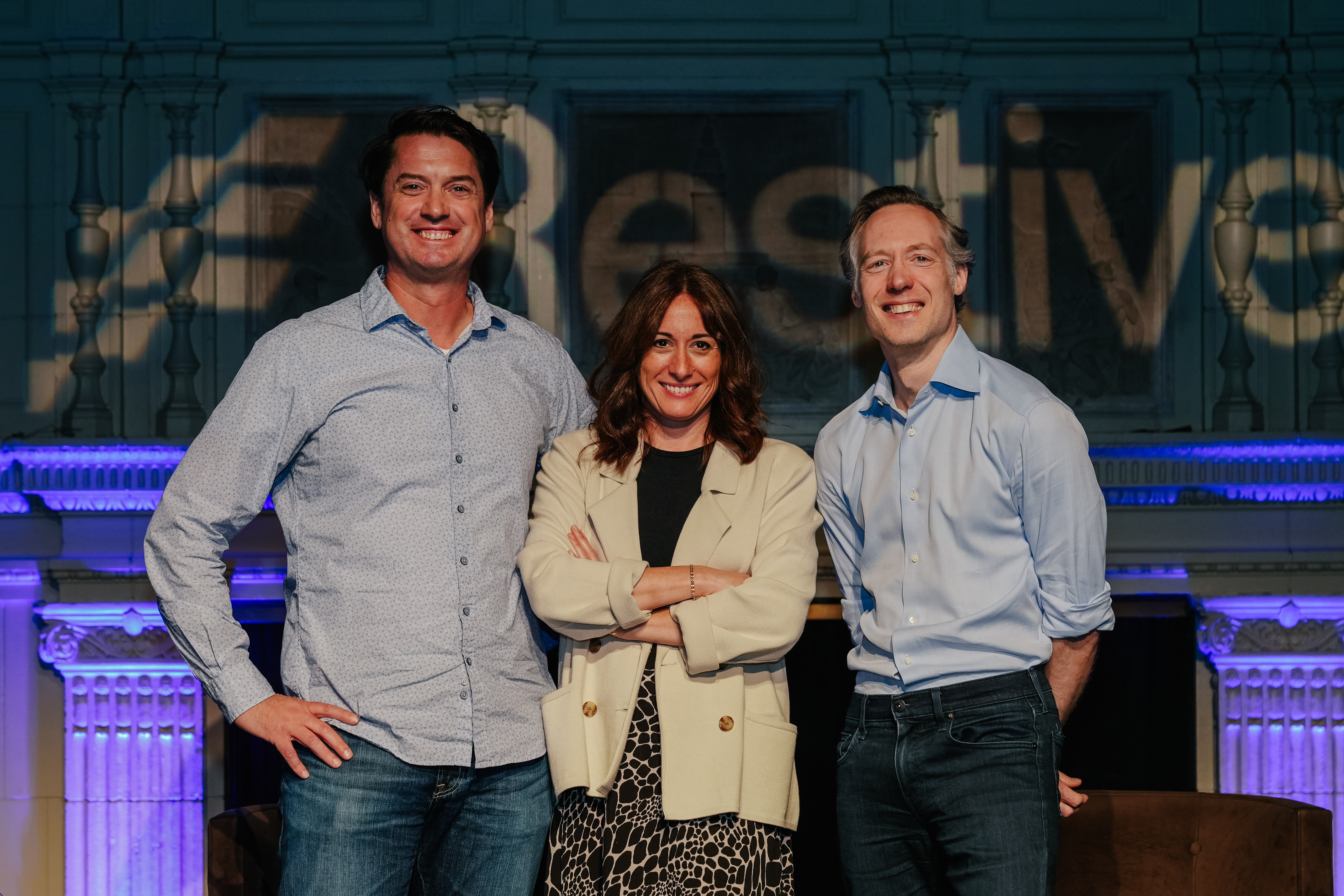
Restive is co-founded and managed by Ryan Falvey and Tyler Griffin. Falvey has been one of the more consistent voices on financial services innovation for over a decade, with a track record that includes the Financial Solutions Lab at JPMorgan Chase. Griffin brings a complementary investment-and-operating background, with deep relationships across the fintech operator network. The Falvey-Griffin partnership has been intact across all three funds, which is the kind of stability LPs underwrite at the manager level. The firm's portfolio support model emphasizes hands-on operational guidance rather than passive capital - a pattern that is particularly relevant for early-stage fintech founders navigating regulatory complexity.
Early Portfolio
The most notable disclosed Fund III portfolio company is Hiro, which was acquired by OpenAI within three months of its stealth-mode exit. Across the Fund I and II portfolios, Restive has backed one company that has gone public, two unicorns, and dozens of portfolio companies that have raised hundreds of millions in follow-on capital. Specific Fund III investments beyond Hiro have not been publicly disclosed at announcement.
What This Means for Founders
If you are a pre-seed or seed-stage founder building AI-native financial infrastructure, payments, underwriting, or fin-ops products, Restive should be in your top three target funds. The bar is high - the team writes few checks per year and is highly selective - but the value of the relationship if you get in is meaningful. Restive will lead seeds with conviction, and the firm's strategic LP base accelerates enterprise pilots in a way few seed funds can.
The fit signal: founders building AI-native systems that fundamentally change how capital moves, how risk is assessed, or how financial decisions are automated. Founders building AI-augmented versions of legacy fintech workflows will have a harder time getting conviction. The team has a distinct view that incremental AI-on-top-of-fintech is the wrong investment, and they want to see thesis-level rebuilding from the protocol layer up.
Fund Momentum Take
This is one of the cleanest fundraises of 2026. Top-decile-likely Fund I performance, sub-vintage strong Fund II returns, a credible thesis for the cycle, and an early Fund III exit at OpenAI all combine to make this a very straightforward LP underwrite. The only critique we would offer is that the fund could probably have raised meaningfully more if the team had wanted to, and choosing $45M is a deliberate signal that they are protecting the math for return generation, not maximizing fee income. That is the right call.
The risk worth watching: AI-native fintech is becoming a crowded category, and the next 12-24 months will see significant capital flowing into seed deals from generalist AI funds, fintech specialists, and corporate venture arms. Restive's first-check, concentrated approach means the fund needs to win the best deals, not just participate. The team's track record gives them sourcing leverage, but pricing discipline at seed will be tested when generalist funds offer 3x the valuation Restive would.
Net-net: this is a high-quality vehicle managed by a high-quality team in a high-conviction category. The Hiro-to-OpenAI exit is the kind of early DPI signal that compresses the Fund IV cycle, and we expect Restive will be in market for Fund IV inside 24 months at meaningfully larger size if Fund III pacing follows the historical pattern.
Frequently Asked Questions
What is the size of Restive Fund III and what is its strategy?
$45 million, with a concentrated first-check strategy at pre-seed and seed across AI-native financial services.
What is Restive's prior track record?
Fund I (2019) is currently marked at 6.3x and Fund II (2021) at 4x. Across the firm's prior portfolio, one company has gone public, two are unicorns, and dozens more have raised hundreds of millions in follow-on capital.
Who are the managing partners?
Ryan Falvey and Tyler Griffin, co-founders and managing partners. Both have been at the firm across all three funds.
What does AI-native financial services mean in Restive's thesis?
Companies that are building entirely new products, workflows, and outcomes - not AI features layered onto existing fintech infrastructure. Specific areas of focus include agentic payments, autonomous underwriting, and AI-driven financial operations.
Has Fund III had any exits yet?
Yes. Hiro, a Fund III portfolio company, was acquired by OpenAI within three months of emerging from stealth.
Have a fund closing to announce? Submit your fund here.
Need help raising capital? Check out our Fundraising Advisory services.
Related funds in the index
FinTech funds from the verified index
| Fund | Size | Stage | Location | Focus |
|---|---|---|---|---|
| AIP Seed | $40M USD | Pre Seed | Poland | AI/ML, FinTech +3 |
| Highland Europe Technology Growth Fund VI | €1.1B EUR | Series B | United Kingdom | Data Infrastructure, AI/ML +2 |
| Greylock 18 | $1.5B USD | Seed | United States | AI/ML, Cybersecurity +3 |
| Savano Capital Partners IV | $252M USD | Late Stage | United States | Enterprise Software, Cybersecurity +2 |
| Catalyst Fund | $30M USD | Pre Seed | Kenya | Climate & Sustainability, AgriTech +1 |