
Partech Impact Closes €300M to Fix Europe's Missing Middle for Impact Tech Scale-Ups
TL;DR
Partech Impact has closed its inaugural €300 million fund targeting Europe's most commercially mature impact-native technology companies — businesses generating €10 million or more in annual revenue that need scale-up capital and operational firepower rather than another round of venture cash. The fund, which is already 40% deployed across four portfolio companies in electric vehicle infrastructure, digital agriculture, sustainable product design, and infrastructure AI, represents one of the largest debut impact franchises in Europe in years, and it directly addresses what Partech's team calls the "missing middle" — the structural gap between early-stage impact VC and full-scale buyout capital.
Key Takeaways
Partech Impact fills a genuine structural gap, not a manufactured one. The European impact ecosystem has been well-served at the seed and Series A levels for years. What has been consistently absent is growth-stage capital with private equity operational discipline for companies that have already proven their model. Partech Impact's €10M+ revenue filter is not a marketing requirement — it is a deliberate quality gate that keeps the fund away from the speculative early-stage impact theses that have disappointed many investors in recent cycles.
The GP team's PE and consulting pedigree is the real differentiator here. Rémi Said and Arnaud Minvielle bring backgrounds from Bain Capital, McKinsey, Bridgepoint, and Goldman Sachs — not from traditional venture capital. That means the operational playbook they run with portfolio companies is closer to a private equity value creation program than a typical VC board dynamic. For impact companies trying to institutionalize operations, expand internationally, and raise their next round at a premium, that kind of hands-on scaling support is genuinely rare.
The LP mix tells a compelling story about where institutional conviction is moving. Allianz, Bpifrance, the European Investment Fund, British Business Bank, Neuberger Berman, and Visa Foundation in the same fund is not an accident. Each of these institutions has a specific reason to want exposure to European impact-native B2B technology at scale — regulatory pressures, ESG mandates, development finance objectives, and commercial portfolio diversification are all at play. The geographic spread across Europe, the US, Asia, and Australia suggests the fund is not dependent on any single regional allocator pool.
Six thematic pillars give the fund enough focus to be credible and enough breadth to find deals. Clean production, sustainable agriculture, clean construction, new mobility, economic empowerment, and digital health are all areas where commercially mature software and tech-enabled services companies exist right now, generating real revenue with paying enterprise customers. The fund is not waiting for breakthrough science — it is backing businesses that have already crossed the traction threshold and need capital to scale internationally.
Why This Fund Matters
The impact investing landscape in Europe has a well-documented problem: too much capital chasing early-stage impact narrative, and too little available for the companies that have moved past narrative into real commercial traction. The result has been a cohort of impact-native companies stuck in what the Partech Impact team accurately describes as a "missing middle" — generating meaningful revenue, serving real enterprise customers, and delivering measurable environmental or social outcomes, but unable to access the type of institutional growth capital they need to scale across European markets.
Partech Impact's answer is to bring private equity-grade operational rigor to a cohort of companies that traditional PE firms tend to overlook because their revenue is growing fast enough to command VC-style multiples, but their impact thesis makes them structurally harder to underwrite on a pure financial returns basis. The fund's 50-50 weighting between financial returns and impact outcomes in its incentive structure is one way to manage this tension — it aligns the team's interests with both the LP base's financial requirements and the broader mission of scaling companies that genuinely move the needle on decarbonization, agricultural efficiency, and infrastructure modernization.
The four portfolio companies already in the fund — Gireve in EV charging interoperability, xFarm in digital agriculture, Makersite in sustainable product design, and FYLD in AI-powered field management for infrastructure — are representative of the kind of businesses the fund is targeting: B2B software or tech-enabled services companies with paying enterprise customers, operating in sectors with clear structural tailwinds from regulatory pressure and economic incentives alike. None of these are moonshots; all of them are businesses with real unit economics and identifiable paths to market leadership.
The broader significance of this close is what it signals about the European impact ecosystem's maturation. A debut fund closing at €300 million in what Partech's team describes as one of the toughest fundraising environments in a decade is not a soft validation — it is a strong signal that institutional LPs have grown past the "impact as marketing" phase and are now backing vehicles with concrete commercial and operational track records. The Allianz and Neuberger Berman commitments in particular carry weight, as both are sophisticated multi-asset allocators with deep internal underwriting capabilities.
The Team
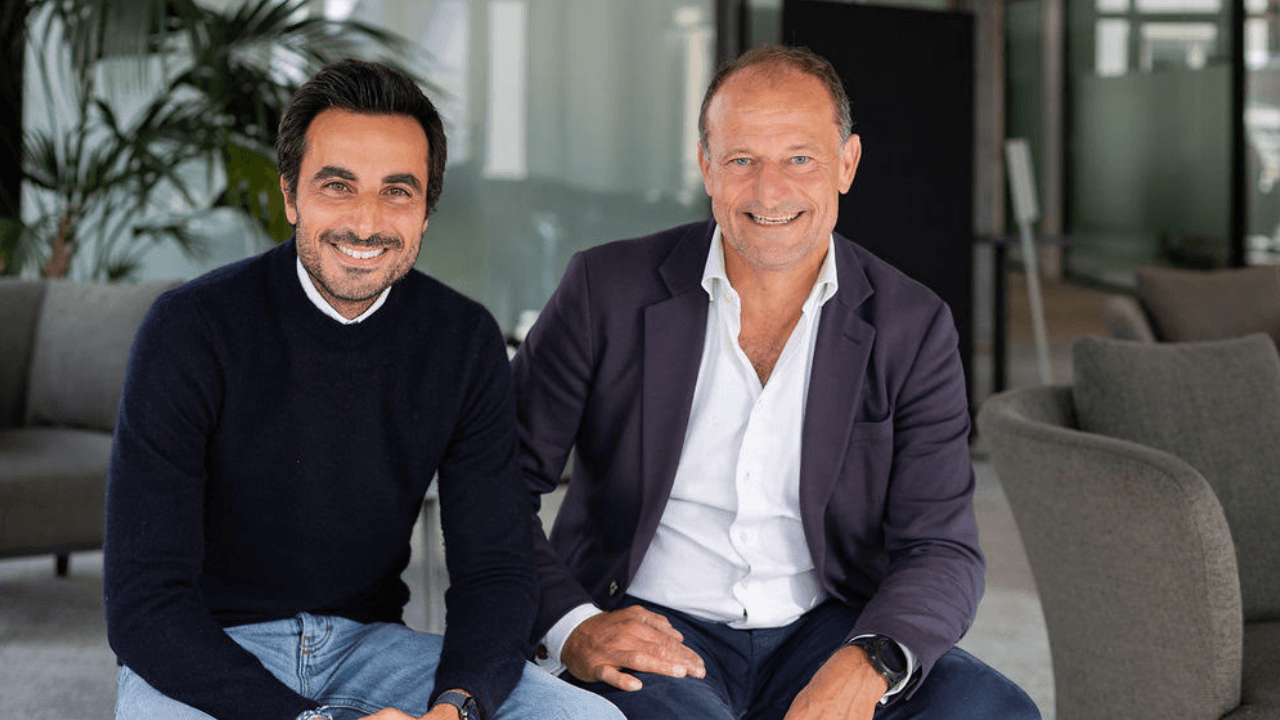
The Partech Impact fund is led by General Partners Rémi Said and Arnaud Minvielle, both of whom bring a private equity and management consulting background rather than a traditional venture capital orientation. Said and Minvielle's experience at Bain Capital, McKinsey, Bridgepoint, and Goldman Sachs gives the team a functional toolkit that is unusual in the impact investing world — they are built for the operational complexity of scaling a €10M+ revenue business into a pan-European or global player, not just for board governance at an early-stage startup. This distinction matters considerably when the target company needs to institutionalize its finance function, hire a CFO capable of running an IPO process, or expand into three new geographies simultaneously. Partech's broader platform provides additional support and deal flow, leveraging the firm's long history of European technology investing across its core venture funds.
Early Portfolio
The fund has deployed approximately 40% of its capital across four portfolio companies. Gireve operates in the electric vehicle transition space, focused on interoperability infrastructure for EV charging networks — a critical and often overlooked layer in the energy transition stack. xFarm is a digital agriculture platform helping farmers optimize inputs, monitor field conditions, and integrate with supply chain systems, addressing one of the most durable and undercapitalized areas of sustainable technology. Makersite brings AI-powered analysis to sustainable product development, helping manufacturers embed cost and environmental impact assessments into their design workflows before products reach production. FYLD, a UK-based company, applies AI to field management for infrastructure maintenance crews, reducing time, cost, and risk in the physical world of utilities and construction — a sector that has historically been slow to digitize.
What This Means for Founders
If you lead a B2B technology company in Europe with €10 million or more in annual revenue, a clear impact thesis tied to decarbonization, agricultural efficiency, clean construction, mobility, health, or economic empowerment, and you need growth capital from a team that will actively help you scale operationally — not just sit on your board and ask about your pipeline — Partech Impact should be a priority conversation. The fund's private equity DNA means the team is prepared to roll up their sleeves on the commercial and operational challenges that typically stall impact-native companies at precisely the scale-up moment when they need experienced partners most.
The fund is less relevant for companies still in the product-market fit or early revenue phase. Partech Impact's mandate is explicitly post-traction, and the €10M revenue bar is a real filter. If your business is not yet at that threshold, the right move is to build toward it and approach the Partech Impact team once you have demonstrably crossed it. Companies at €5-8M revenue with strong growth trajectories in the right sectors may still be worth an early conversation to establish a relationship for the right timing.
Fund Momentum Take
Partech Impact is executing a genuinely differentiated strategy, and the €300 million close in a difficult environment validates both the market need and the team's credibility. The missing-middle thesis is real — we see it constantly in the European ecosystem, where excellent impact-native companies stall between their Series B and the point where they can credibly run an IPO or strategic sale process. Partech Impact has positioned itself as the natural owner of that transition window, and the private equity operating model gives it a competitive angle that pure-play impact VC funds cannot replicate.
The risk we see is execution speed. With 40% already deployed and six thematic areas to cover, the team will need to move quickly and selectively to deploy the remaining capital at the same quality bar before market conditions or LP reporting cycles create pressure. Growth equity at this stage is also inherently less forgiving than early-stage VC: entry valuations are higher, exit timelines are more defined, and the margin for operational misjudgement is smaller. The PE backgrounds of Said and Minvielle are an asset here, but the European growth equity exit market — particularly for impact-categorized companies — remains thinner than the equivalent in the US.
Overall, this is one of the more interesting and credible fund launches in the European impact space in the past several years. The LP roster is impressive, the portfolio companies are commercially grounded, and the team's operating model is genuinely differentiated. Partech Impact is a fund to watch closely, particularly as its portfolio companies approach their next milestones over the next 24 to 36 months.
Frequently Asked Questions
What is Partech Impact's investment focus?
Partech Impact invests in commercially mature, impact-native B2B technology companies in Europe — specifically those with €10 million or more in annual revenue operating across six themes: clean production, sustainable agriculture, clean construction, new mobility, economic empowerment, and digital health.
What is the "missing middle" that Partech Impact targets?
The "missing middle" refers to the structural gap in European impact investing between early-stage venture capital (which is relatively well-supplied) and large-scale buyout capital. Impact-native companies generating real revenue but needing growth-stage institutional capital and operational support have historically had few options. Partech Impact is designed to fill precisely that gap.
Who leads Partech Impact?
The fund is led by General Partners Rémi Said and Arnaud Minvielle, whose backgrounds span Bain Capital, McKinsey, Bridgepoint, and Goldman Sachs, giving the team a private equity and management consulting toolkit rather than a traditional venture capital orientation.
Which companies has Partech Impact already invested in?
The fund has deployed approximately 40% of its capital and is invested in Gireve (EV charging interoperability), xFarm (digital agriculture), Makersite (sustainable product design), and FYLD (AI-powered infrastructure field management, UK-based).
How does Partech Impact measure success?
The fund uses a 50-50 weighting between financial returns and impact outcomes in its incentive structure, aligning the team's carry with both commercial performance and measurable environmental or social results across the portfolio.
Have a fund closing to announce? Submit your fund here.
Need help raising capital? Check out our Fundraising Advisory services.
Related funds in the index
Growth · Climate & Sustainability funds from the verified index
| Fund | Size | Stage | Location | Focus |
|---|---|---|---|---|
| All Aboard Coalition | $133M USD | Growth | United States | Climate & Sustainability, Carbon Removal +1 |
| EIF ETCI 2 | €15B EUR | Growth | Luxembourg | AI/ML, Biotech +3 |
| Luminous Ventures Fund VI | $460M USD | Growth | China | Climate & Sustainability, Deep Tech +3 |
| Partech Impact Fund | €300M EUR | Growth | France | Climate & Sustainability |
| Mundi Ventures LatAm Fund I | $100M USD | Growth | Spain | InsurTech, FinTech +2 |