
Herbert Ventures Launches €32.5M Zurich DeepTech Fund With No Follow-On Reserves
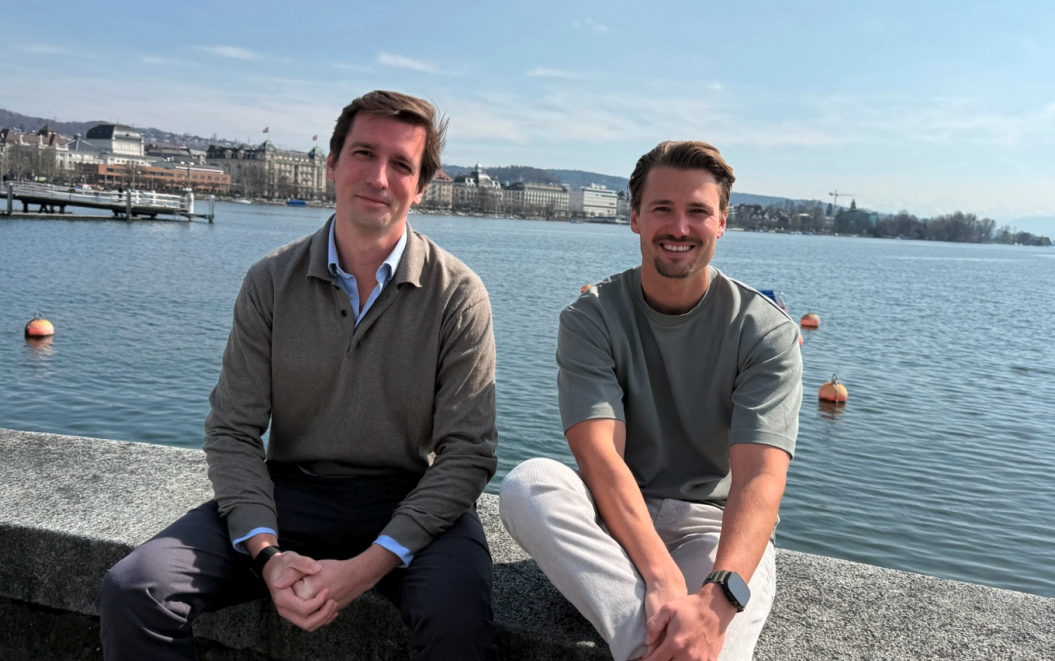
Updated 10 July 2026: Herbert has since disclosed its check size (€500K–€1M), confirmed a co-investment-only model, and grown the visible portfolio from one company to three — DroidRun, Rheo, and Pluto. The firm's live positioning has also shifted from the original "DeepTech" press framing toward a deliberately industry-agnostic, founder-first thesis.
TL;DR: Zurich-based Herbert Ventures launched a €32.5M (CHF 30M) Pre-Seed and Seed fund built around a deliberately contrarian structure: no follow-on reserves, an 8% LP hurdle, and roughly 30 concentrated first checks of €500K–€1M. Founders Ben Simon (ex-VAY, Forbes 30 Under 30) and Luis Huber (ex-QBIT Capital) always co-invest alongside other VCs and then step aside, letting later-stage specialists lead follow-ons. Three months on, the thesis is taking shape: the disclosed portfolio now spans DroidRun (mobile AI-agent orchestration), Rheo (continuous hospital vitals monitoring), and Pluto — and Herbert's own site now markets the fund as industry-agnostic and founder-first rather than pure DeepTech.
Key Takeaways
The structure is the product. No follow-on reserves, an 8% hurdle before carry, a "we always invest with other VCs" co-investment rule, and a substantial GP commitment. For a first-time manager, that is an unusually LP-aligned package — Simon and Huber are underwriting to outperform, not to compound management fees on a large reserve pool.
Check size is now on the record. Herbert writes €500K–€1M initial checks and does not follow on. That is a clean, legible ask for a Pre-Seed or Seed syndicate: known entry size, no pro-rata politics downstream.
The portfolio has tripled. At launch the only disclosed bet was DroidRun. Herbert now publicly lists DroidRun, Rheo, and Pluto — early proof that a concentrated, ~30-slot fund is deploying at a measured pace.
The "DeepTech" label is softening. Early coverage (including ours) framed Herbert as a DACH DeepTech fund. The firm's own site now describes itself as "purposefully industry agnostic, focused on people," investing Europe-wide. The first checks still skew technical, but the mandate is broader than the original headline suggested.
Fund Overview
Fund Name: Herbert Ventures Fund I
Fund Size: €32.5M (CHF 30M), structured as a Luxembourg SCSP via HS Capital AG (Claridenstrasse 36, Zurich)
Stage: Pre-Seed and Seed, roughly 30 investments planned
Check Size: €500K–€1M initial, no follow-on reserves
Geography: Europe-wide, with DACH roots and a Zurich/Madrid footprint
Focus: Exceptional founder teams — industry-agnostic, technically skewed in practice
LP terms: 8% hurdle rate, substantial GP commitment, unfiltered LP reporting
Herbert launched Fund I on 9 April 2026, one of the freshest independent Pre-Seed vehicles in the Swiss and broader DACH ecosystem. The design point is concentration: instead of spraying capital across hundreds of tickets, Herbert plans to back around 30 founder teams with meaningful ownership from a single, one-shot check. The fund is domiciled in Luxembourg as an SCSP and run out of Zurich via HS Capital AG, with Huber also operating from Madrid.
Why This Fund Matters
The headline innovation is what Herbert deliberately does not do: it holds no follow-on reserves. Every check is a one-shot commitment. Herbert invests, always alongside other VCs, and then steps aside so later-stage leads can run follow-ons without signaling games or pro-rata friction.
The logic is behavioral. Follow-on reserves quietly manufacture sunk-cost bias: GPs re-up into struggling companies to defend optics and paper markups rather than to maximize returns. By removing reserves entirely, Herbert forces each first check to stand on its own underwriting. Pair that with an 8% hurdle and a real GP commitment, and the incentive structure points squarely at initial-ownership discipline and DPI, not fee accumulation.
This runs against the grain of 2026 European Pre-Seed, where most funds are stacking reserves at 50–70% of fund size to defend positions through longer private cycles. Herbert is making the opposite bet — and the "we always invest with other VCs" rule is the load-bearing detail that makes it work. Because Herbert co-invests rather than going in alone, its portfolio companies still have a syndicate with dry powder to lead the next round. Herbert supplies conviction and initial ownership; its co-investors supply the follow-on capital Herbert has chosen not to reserve.
The open question is upside capture. If a company breaks out, Herbert cannot buy more of its winners. Fund I's TVPI will therefore lean heavily on entry ownership, dilution discipline, and whatever secondary or pro-rata-adjacent tools the GPs can improvise. That is the structural risk buyers of this model should price.
The Team
Ben Simon — General Partner, Zurich. A founder turned investor, Simon co-founded and served as COO of VAY, an ETH Zurich computer-vision spin-out (motion and movement analysis) that was acquired by Nautilus/BowFlex in 2021. He was named to the Forbes 30 Under 30 Tech Europe list and has been an active angel across 15-plus startups and several funds. He brings operator credibility and a dense ETH and founder network — and, judging by portfolio testimonials from founders at Rheo, Lumvin, and Billte, hands-on commercial and pitch support.
Luis Huber — General Partner, Zurich and Madrid. Huber was most recently Senior Partner at QBIT Capital, a Swiss university-spin-out fund, where he built and operated an institutional venture platform with deep sourcing, diligence, and portfolio experience. He anchors Herbert's LP relationships and fund operations, and extends the firm's reach into the Iberian ecosystem.
Early Portfolio
Herbert's disclosed investments now span three companies, up from one at launch:
DroidRun — a German Pre-Seed building an MCP (Model Context Protocol) orchestration layer for AI agents operating inside mobile applications. It sits at a timely intersection — mobile agentic AI infrastructure — and is exactly the technical, infrastructure-layer bet the thesis was designed for. It was Herbert's first disclosed check.
Rheo — a Swiss digital-health company replacing manual, intermittent nurse-taken vital signs with a continuous data stream from an upper-arm sensor, extending monitoring from the hospital to the home via cellular connectivity and layering predictive analytics on top. Founded by CEO Dr. Philipp Vetter with Boston-based CTO Jonathan Fisher, Rheo has an FDA-registered device and has picked up early Venture Kick support. It is the clearest "deep" bet in the portfolio — regulated medtech with a defensible data moat.
Pluto — listed by Herbert among its portfolio companies. Public details on the specific company Herbert has backed are limited, so we are not characterizing its product here to avoid conflating it with similarly named businesses; we will update once Herbert or the company confirms specifics.
Separately, the partners' prior and angel track record — surfaced on Herbert's own site — includes VAY (exited to Nautilus/BowFlex), Billte, ContextSDK, Roundtable, Lumvin, and S2S Ventures. That operator-investor history is the real underwriting signal for LPs backing a first-time fund.
What This Means for Founders
If you are raising Pre-Seed or Seed anywhere in Europe, Herbert is actively writing €500K–€1M first checks right now. A few practical implications: expect clean cap-table mechanics, since no reserves means no pro-rata drama at your Series A and later leads will appreciate it; expect to be part of a syndicate, because Herbert always co-invests and will want other VCs around the table; and expect a high bar, because roughly 30 slots across a multi-year deployment means deep diligence and a binary answer.
One nuance worth internalizing: Herbert's "industry-agnostic, founder-first" framing is real, but the first checks (mobile AI agents, regulated medtech) skew technical. If you have research-lab or hard-technical DNA and a co-lead lined up, you are squarely in the strike zone. If you need a single investor to carry your round and then keep funding you, Herbert is structurally the wrong partner — and they will tell you so quickly.
Fund Momentum Take
The no-reserves model is intellectually honest and structurally elegant, and the "always co-invest" rule is the piece that keeps it from being reckless: Herbert has effectively outsourced follow-on capital to its syndicate rather than pretending its portfolio won't need it. That is a smarter version of the reserve-free pitch than the one we saw at launch, and the disclosed check size (€500K–€1M) makes the strategy legible to both founders and LPs.
The risk is unchanged and unavoidable: if Rheo, DroidRun, or a future breakout runs, Herbert can't press its edge. Fund I lives or dies on entry ownership and selection. The early portfolio is encouraging on the selection front — regulated medtech with an FDA-registered device and an agentic-AI infrastructure bet are both credible, non-consensus swings — but three names is still a small sample, and we'd want to see how Herbert handles its first genuine markup before calling the model proven.
Net-net, this remains one of the more interesting first-time structures in European Pre-Seed. The 8% hurdle and GP commitment tell you the partners believe their own pitch. For founders who want meaningful ownership, a strong operator on the cap table, and zero downstream politics, Herbert is a rare and clean option in 2026. For LPs, the bet is simpler than it looks: you are underwriting Simon and Huber's selection and their discipline in never following on. We like it — with eyes open on the upside-capture question.
FAQ
How big is Herbert Ventures Fund I?
€32.5M (CHF 30M), structured as a Luxembourg SCSP via HS Capital AG in Zurich.
What check sizes does Herbert write?
€500K–€1M as an initial investment, with no follow-on reserves. Herbert always co-invests alongside other VCs.
What stages does Herbert invest at?
Pre-Seed and Seed, with roughly 30 investments planned over the fund's life.
Where is Herbert Ventures based?
Zurich, Switzerland, with a partner presence in Madrid and a Europe-wide mandate rooted in the DACH region.
Who are the GPs?
Ben Simon (ex-VAY, acquired by Nautilus/BowFlex; Forbes 30 Under 30) and Luis Huber (ex-QBIT Capital Senior Partner).
What is Herbert's thesis?
Concentrated, founder-first Pre-Seed and Seed investing across Europe — marketed as industry-agnostic though technically skewed in practice — with no follow-on reserves and an 8% LP hurdle.
Which companies has Herbert backed?
Disclosed investments include DroidRun (mobile AI-agent MCP orchestration), Rheo (continuous hospital vitals monitoring), and Pluto.
Raising a fund or raising from a fund like Herbert Ventures?
Fund Momentum helps emerging managers and founders navigate Pre-Seed and Seed fundraising with surgical positioning and LP/VC targeting.
Related funds in the index
Pre Seed funds from the verified index
| Fund | Size | Stage | Location | Focus |
|---|---|---|---|---|
| Oraseya Capital Fund | AED 1B AED | Pre Seed | United Arab Emirates | Digital Health, FinTech +2 |
| Monte Carlo Capital Fund II | $15M USD | Pre Seed | Global | Deep Tech, AI/ML +2 |
| PSV Tech Fund II | €56M EUR | Pre Seed | Sweden | AI/ML, Digital Infrastructure +1 |
| NVM Venture – Lazio compartment | €23.6M EUR | Pre Seed | Italy | Manufacturing, EnergyTech +6 |
| Anorak Ventures Fund III | $35M USD | Pre Seed | United States | Defense, Manufacturing +1 |