
Framework Ventures Closes $400M Fund IV, Expanding Beyond Crypto
TL;DR
Framework Ventures has closed FVIV, a $400 million fourth fund, and used the announcement to formally rebrand itself from a crypto-native shop into a vertical-agnostic frontier-technology firm. The San Francisco manager will keep backing stablecoins, tokenization and digital assets, but FVIV explicitly opens the aperture to AI, robotics, energy and fintech, writing $1M-$50M checks from pre-seed through Series A across both private equity and liquid tokens. Notably, the fund is the same headline size as the firm's 2022 vintage, which makes the story less about a bigger war chest and more about a deliberate repositioning of where one of DeFi's earliest believers now thinks the alpha lives.
Key Takeaways
This is a pivot, not a step-up. FVIV's $400M matches Framework's 2022 Fund III dollar-for-dollar. In a stretch where most crypto-native managers either raised down or skipped a vintage entirely, holding flat and being oversubscribed is a credibility signal in its own right. The headline isn't the number; it's the new mandate.
The thesis is convergence. Framework is betting that the next generation of category-defining companies won't sit cleanly inside one vertical: AI for decision-making, blockchain rails for settlement and capital formation, robotics and energy for the physical layer. FVIV is structured to chase the company, not the sector label.
The liquid-plus-venture structure is the real moat. FVIV deploys across private companies, liquid digital assets and select public securities. That hybrid mandate, which most traditional VCs cannot or will not run, is Framework's genuine differentiator as it walks into crowded AI and robotics rooms.
Institutional LPs have finally underwritten the team. An anchor described as an Ivy League endowment, plus sovereign wealth funds, nonprofits and funds of funds, is exactly the LP base that stayed away from crypto-native GPs for years. Winning it is arguably the firm's biggest unlock.
Fund Overview
Fund Name: Framework Ventures Fund IV (FVIV)
Fund Size: $400 million (oversubscribed; flat versus the 2022 Fund III)
Stage: Pre-seed through Series A, plus liquid and select public positions
Check Size: $1 million to $50 million
Geography: Global, headquartered in San Francisco
Focus: Frontier technology, vertical-agnostic, spanning crypto/stablecoins/tokenization, AI, robotics, energy and fintech
Key LPs: Undisclosed; described as a predominantly institutional base anchored by an Ivy League endowment, alongside nonprofits, sovereign wealth funds and funds of funds
Why This Fund Matters
Framework has always been a useful tell for where crypto-native capital is heading next. Founded in 2019, the firm built its reputation as arguably the first VC to go all-in on decentralized finance, with early conviction positions in Aave and Chainlink that defined the category. Its fund history reads like a map of the last cycle: roughly $15M in 2019, $100M in 2021, and $400M in 2022. FVIV holding at that same $400M mark is the most interesting data point in the entire announcement.
Here's why. Between 2023 and 2025, the crypto fund market contracted hard. Several marquee names raised materially smaller follow-on funds or quietly let a vintage lapse while they worked through 2021-era portfolios. Against that backdrop, raising an oversubscribed $400M is less a flex of size than a statement that institutional LPs are willing to keep funding this team at peak-cycle scale, even as the team rewrites its own job description.
The repositioning is the substance. Framework is no longer selling itself as a crypto fund; it's selling a frontier-technology mandate where blockchain is one rail among several. That is a genuinely different pitch to LPs and founders alike, and it reflects a broader truth in the market: the lines between AI, crypto infrastructure, robotics and energy are dissolving, and the most interesting companies increasingly span all four. Framework is trying to position FVIV as the fund built for that overlap rather than for any single lane.
It is also a recognition of a more uncomfortable reality. Blockchain was the contrarian bet in 2019; AI in 2026 is the consensus trade. By broadening into AI and robotics, Framework is moving toward where capital is already most crowded, and it will have to prove that a crypto-native brand can win competitive rounds against generalist megafunds and specialist AI shops. The firm's answer is that its liquid-and-private toolkit and its capital-formation expertise let it structure deals others can't.
The Team
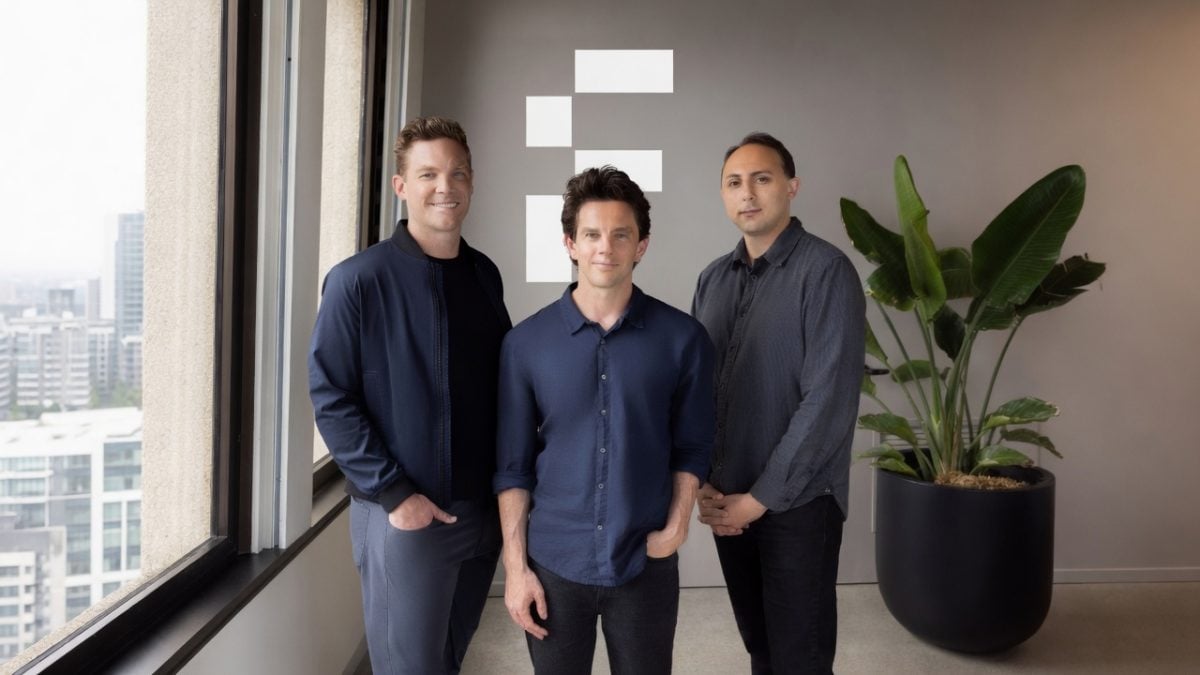
Framework remains led by its two co-founders and general partners, Michael Anderson and Vance Spencer, who built the firm's reputation through the last DeFi cycle and continue to frame its thesis publicly. Alongside the raise, the firm promoted Rajiv Patel-O'Connor, a longtime partner and early member of its investment committee, to general partner, giving FVIV a three-person GP bench to carry the broadened mandate.
The supporting build-out is telling. Framework promoted Fred Neary to general counsel and brought in Ryan Barney from Pantera Capital and Nick Trileski from DRW as partners. The Pantera hire signals crypto-native continuity; the DRW addition points squarely at the trading and liquid-markets muscle a hybrid public-and-private mandate actually requires. These two joined as partners rather than general partners, and the GP roster for FVIV is Anderson, Spencer and Patel-O'Connor.
Early Portfolio
Framework has already started putting FVIV to work, leading the $60 million Series A of Mecka AI and backing distributed energy network Daylight, both squarely outside the firm's legacy crypto lane. That sits alongside an existing digital-asset book that includes the derivatives platform Hyperliquid, yield-bearing stablecoin issuer Sky and the stablecoin-focused chain Plasma. The mix is the thesis made concrete: AI and energy on one side, on-chain financial infrastructure on the other.
What This Means for Founders
If you're building at the seams, an AI company with on-chain settlement, a robotics or energy startup that needs novel capital formation, a stablecoin or tokenization play, Framework is now explicitly set up to lead your round and write a check anywhere from $1M to $50M. The firm's willingness to hold liquid tokens and public positions alongside equity also means founders whose value accrues to a token, not just a cap table, get an investor that actually understands that structure rather than treating it as an afterthought.
The flip side: if you're a pure-play AI or robotics founder with no crypto angle, you should pressure-test what Framework's value-add looks like outside its home turf. The firm's network, brand and operating help in DeFi are deep and proven; in robotics and energy hardware they are newer and unproven. Ask for specific, named references in the vertical you actually occupy before assuming the brand carries the same weight there.
Fund Momentum Take
We like the honesty embedded in this raise. Keeping FVIV at $400M rather than stretching for a vanity number suggests a team sizing the fund to the opportunity and to realistic deployment, not to its own ego. The liquid-plus-private structure remains Framework's most defensible edge, and the DRW and Pantera hires show the firm is staffing the capability gap rather than hand-waving it. For LPs, an Ivy endowment anchor on a crypto-native GP is a meaningful vote of confidence that the franchise has graduated into the institutional tier.
The risk is style drift dressed up as evolution. LPs originally underwrote a DeFi-native team with a specific, hard-won edge; deploying into robotics and energy is a different game with different diligence, different timelines and different competitors. The fact that roughly half the fund is reportedly already committed is either admirable conviction or uncomfortable speed, and it will take a couple of years of marks to know which. There's also the consensus problem: a firm that earned its returns by being early and contrarian is now expanding into the most crowded theme in venture.
Our bet: Framework's structural flexibility, the ability to move fluidly between equity and liquid tokens, is real and rare enough to keep it relevant as those frontier verticals converge. The open question is whether a crypto-native brand can win the AI and robotics deals it now says it wants, against incumbents who own those categories. FVIV is a smart, disciplined repositioning. Whether it's a winning one depends entirely on execution outside the lane that made the firm famous.
Frequently Asked Questions
How big is Framework Ventures Fund IV?
FVIV closed at $400 million and was oversubscribed. That is the same headline size as Framework's 2022 Fund III, making it a flat raise rather than a step-up.
What does FVIV invest in?
The fund is vertical-agnostic frontier technology. It continues backing crypto, stablecoins and tokenization while expanding into AI, robotics, energy and fintech, deploying across private equity, liquid digital assets and select public securities.
What stage and check size does Framework target?
FVIV backs companies from pre-seed through Series A, with check sizes ranging from $1 million up to $50 million.
Who runs Framework Ventures?
Co-founders Michael Anderson and Vance Spencer are general partners, joined by newly promoted GP Rajiv Patel-O'Connor. The firm also added Ryan Barney (ex-Pantera Capital) and Nick Trileski (ex-DRW) as partners.
How much does Framework manage?
The firm reported roughly $1.28 billion in assets under management as of December 2025, per an SEC filing, before the FVIV close.
Have a fund closing to announce? Submit your fund here.
Need help raising capital? Check out our Fundraising Advisory services.
Related funds in the index
Web3 (Finance) funds from the verified index
| Fund | Size | Stage | Location | Focus |
|---|---|---|---|---|
| Haun Ventures | $1B USD | Seed | United States | Web3 (Finance), Web3 Infrastructure +2 |
| a16z Crypto Fund 5 | $2.2B USD | Seed | United States | Web3 (Finance), Web3 Infrastructure +2 |
| ParaFi Capital Venture Fund III | $125M USD | Seed | United States | Web3 (Finance), Web3 Infrastructure +1 |
| Backed VC Fund III | €86M EUR | Pre Seed | United Kingdom | AI/ML, Biotech +2 |
| Archetype Crypto Fund III | $100M USD | Seed | United States | Web3 Infrastructure, Web3 (Finance) +1 |