
Deep33 Closes $200M Debut Fund, Betting on the Physical World of AI
TL;DR
Deep33, a US-headquartered, Israel-rooted deep-tech firm founded at the start of 2026 by investor Lior Prosor and entrepreneur Michael Broukhim, has closed its debut fund at $200M, roughly a third above its $150M target. The fund backs the unglamorous, capital-intensive layer beneath the AI boom: power, compute, quantum, advanced materials and the physical infrastructure that models actually run on. The most interesting structural detail is the LP base, with more than half coming from overseas and, notably, Israeli institutions that were cool on hardware just six months ago now writing checks.
Key Takeaways
The "picks and shovels" thesis just got a $200M vote of confidence. Deep33 is explicitly betting that the next decade's defining companies won't be another SaaS cohort but the energy, compute and materials businesses that unblock AI's physical bottlenecks. Closing 33% above target in a market where most first-time deep-tech managers struggle to reach a first close is a strong signal of LP appetite for the infrastructure trade.
Israeli institutional capital is thawing on hardware. The fund's managers note that six months ago domestic institutions treated deep-tech and hardware as too complex and too risky. Their participation here is a leading indicator that the local LP base is broadening beyond software and cyber, which has long-term implications for the kinds of companies Israel can fund at home.
This is a cross-border fund by design, not by accident. Operating from the US with roughly 70% of capital earmarked for Israeli-founded companies and 30% for US startups, Deep33 is positioning itself as a bridge in a deliberately framed US-Israel deep-tech alliance, with go-to-market access to American customers and government channels baked into the model.
Access, not just capital, is the differentiation. The firm's "Deep to Market" network is its real product wedge, connecting frontier founders with AI incumbents, quantum communities and US government officials. For deep-tech companies with long sales cycles and regulated buyers, that distribution layer can matter more than the check size.
Fund Overview
Fund Name: Deep33 (debut fund)
Fund Size: $200M final close (target was $150M)
Stage: Early-stage deep tech
Check Size: Not formally disclosed; concentrated early-stage positions
Geography: US-based; ~70% Israeli-founded companies, ~30% US
Focus: AI infrastructure, advanced energy, quantum computing, communication components, robotics and advanced physical technologies
Key LPs: Majority overseas (primarily US, some UK) plus Israeli institutional investors
Why This Fund Matters
The dominant venture narrative of the last two years has been the application layer of AI: copilots, agents, vertical software. Deep33's wager is that the value is migrating down the stack, toward the physical constraints that no amount of clever software can wish away. Training and serving frontier models consumes enormous amounts of electricity, specialized silicon, networking components and cooling, and those inputs are bottlenecked. A fund built specifically to finance the companies that relieve those bottlenecks is a coherent, contrarian-to-consensus position at a moment when most capital is chasing the opposite end of the stack.
The size of the close is meaningful in context. Deep tech is structurally hard to raise for: longer time-to-exit, heavier capital requirements, technical diligence that most generalist LPs cannot perform, and binary technology risk. A first-time team clearing $200M against a $150M target is not a rounding error; it reflects genuine conviction in the category and in the principals. It also lands at a time when capital concentration at the top of venture is acute, which makes a debut manager's oversubscription more notable, not less.
There is a geopolitical layer worth naming. Deep33 frames itself around the idea that Israel can become to critical deep-tech what Taiwan is to semiconductors, a supplier of strategic technologies to allied markets. Whether or not that analogy holds, the framing aligns the fund with a real tailwind: Western governments and corporates are actively re-shoring and "friend-shoring" critical technology supply chains, and capital that sits at the intersection of allied innovation bases is positioned to benefit from that reordering.
The risk, of course, is that "physical world of AI" is a broad church. Energy, quantum, communication components and robotics have very different unit economics, regulatory regimes and exit profiles. The fund's ability to underwrite across that surface area, rather than spreading thin, will determine whether the thesis produces a portfolio or a grab bag.
The Team
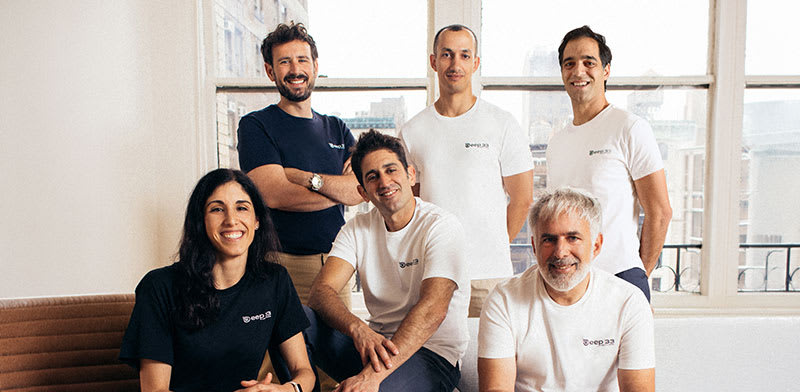
Deep33 was co-founded by Lior Prosor, a venture investor, and Michael Broukhim, a US entrepreneur best known as a co-founder of consumer-commerce company FabFitFun. The pairing is deliberate: a technical-investing lead matched with an operator who has built and scaled a company in the US market, which is where much of the portfolio's commercial and customer access is expected to come from.
The firm is chaired by Lior Susan, founder of Eclipse Ventures, one of the more credible names in industrial and hardware investing, which lends the platform real category credibility at the board level. Government relations and non-dilutive funding strategy are led by Yarden Golan, previously chief of staff to Israel's ambassador to the US, a role that maps directly onto Deep33's emphasis on grants and US government access. It is worth being precise here: Susan's involvement is as chairman rather than a day-to-day investing partner, and Golan's mandate is government and grant strategy, with Prosor and Broukhim driving the fund itself.
Early Portfolio
Deep33 has already deployed into several companies, including Particle, QuamCore, Seabridge and OHR, alongside additional investments the firm has not yet disclosed. The early roster skews toward quantum, advanced physical and infrastructure-adjacent bets, consistent with the fund's stated focus rather than the broader, software-heavy deal flow most generalist seed funds accumulate.
What This Means for Founders
If you are building in quantum, advanced energy, AI infrastructure, communication components or robotics, and especially if you are an Israeli team that needs a credible path into US customers and government programs, Deep33 should be on your shortlist. The value-add proposition here is less about the marginal dollar and more about the "Deep to Market" network: warm access to AI incumbents, technical communities and US officials is exactly the kind of distribution support that early deep-tech companies usually lack and cannot easily buy.
Founders should also calibrate expectations to the fund's structure. This is a concentrated, conviction-led strategy, not a spray-and-pray seed program, which means diligence will be deep and technical, and the bar for a fit is a genuine physical-world bottleneck with a defensible moat. Teams whose "deep tech" is really applied software with a hardware veneer will likely find the conversation short.
Fund Momentum Take
We like this raise more than most debut funds we see. The thesis is clear, the timing is good, and the team has assembled the right scaffolding, an industrial-investing chair, US operating experience and a dedicated government-and-grants function, around a category that is genuinely under-banked relative to its strategic importance. The oversubscription against target is the kind of signal that is hard to manufacture.
Our reservations are the usual deep-tech ones, amplified by the breadth of the mandate. Quantum, energy, robotics and communications components are four different businesses to underwrite, and a $200M fund cannot be a category leader in all of them at once. The other watch-item is exit liquidity: physical deep tech tends to compound slowly and exit lumpily, and a debut fund's returns will hinge on a small number of outcomes maturing on a longer clock than software LPs are used to. The Israeli-institutional participation is encouraging precisely because it suggests patient domestic capital is starting to show up for that longer clock.
Our bet: Deep33 is one of the more serious expressions of the "physical AI" thesis to reach final close this cycle, and if the team disciplines the mandate around two or three core verticals rather than chasing all of them, it has a real shot at becoming a reference fund for allied deep-tech infrastructure. The strategic-alliance framing is a tailwind, but execution on portfolio focus is what will separate it from the wave of infrastructure-flavored funds now crowding the same narrative.
Frequently Asked Questions
How big is the Deep33 fund and did it hit its target?
Deep33 closed its debut fund at $200M, well above its original $150M target, after an earlier first close reported at around $100M.
Who founded Deep33?
The firm was co-founded in early 2026 by investor Lior Prosor and entrepreneur Michael Broukhim. Eclipse Ventures founder Lior Susan serves as chairman, and Yarden Golan leads government relations and grant strategy.
What does Deep33 invest in?
It backs early-stage deep tech across AI infrastructure, advanced energy, quantum computing, communication components, robotics and other advanced physical technologies, the "physical world" inputs the firm argues the AI era will demand.
Where is Deep33 based and where does it invest?
The fund operates from the US and expects to deploy roughly 70% of capital into Israeli-founded companies and about 30% into US startups, positioning itself as a US-Israel deep-tech bridge.
What are Deep33's early investments?
Disclosed portfolio companies include Particle, QuamCore, Seabridge and OHR, with additional undisclosed investments in energy and AI infrastructure.
Have a fund closing to announce? Submit your fund here.
Need help raising capital? Check out our Fundraising Advisory services.
Related funds in the index
Deep Tech funds from the verified index
| Fund | Size | Stage | Location | Focus |
|---|---|---|---|---|
| Empirical Ventures Fund I | £15M GBP | Pre Seed | United Kingdom | Deep Tech, EnergyTech +3 |
| Inflexor Ventures Fund III | $48M USD | Seed | India | Deep Tech, Semiconductors +3 |
| Cantos Fund IV | $70M USD | Pre Seed | United States | Defense, Deep Tech +3 |
| Khosla Ventures 2026 Fund Family | Up to $5.5B (targeted, reported) USD | Seed | United States | AI/ML, Deep Tech +3 |
| Dimension III | $800M USD | Seed | United States | Biotech, AI/ML +1 |