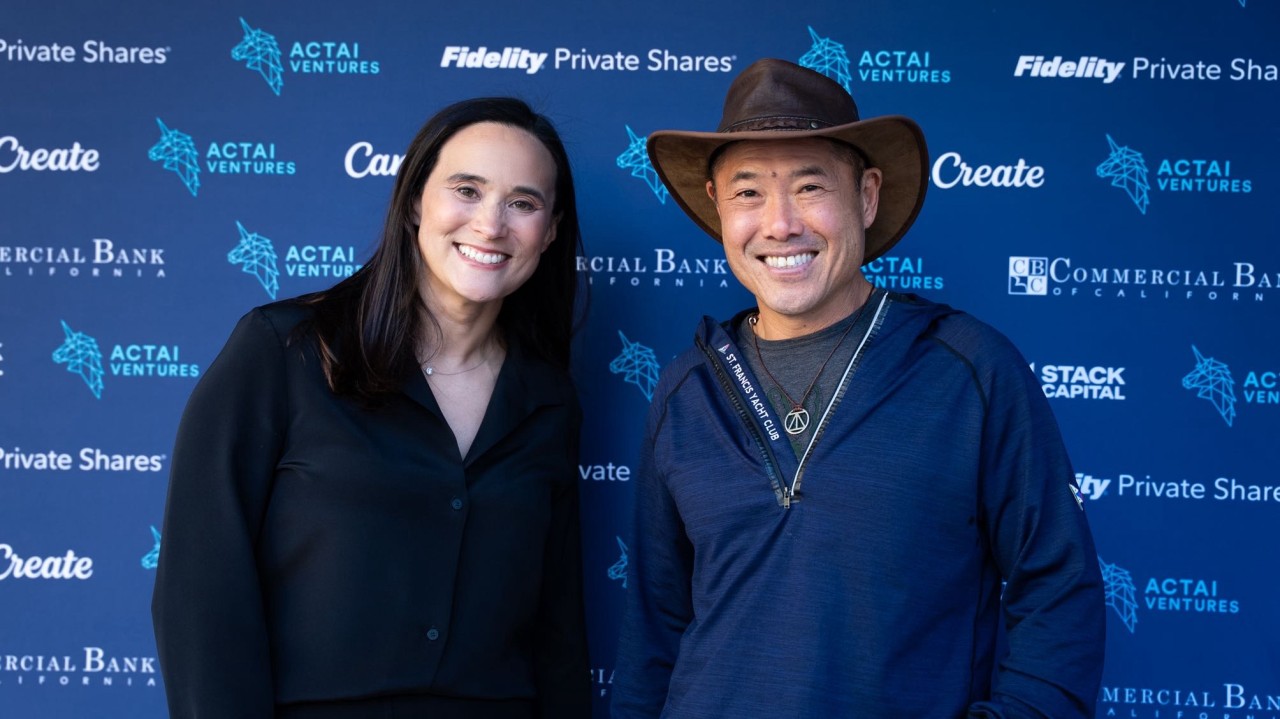
TL;DR: ACTAI Ventures, the venture firm co-founded by Amanda Terry and legendary operator-VC Bill Tai, has quietly held a first close on its Unicorn Fund III and already put capital to work in two thesis-defining deals: Sovereign Green Compute, a renewable-powered sovereign AI compute build-out in Western Australia, and ICME, a crypto-native tokenized equity marketplace backed alongside Binance Labs. The fund extends the network-driven, sub-$15M-entry playbook that turned Bill Tai into an early backer of Canva, Zoom, Dapper Labs, and Treasure Data.
Key Takeaways
- ACTAI Ventures has completed the first close of Unicorn Fund III, extending the firm's pre-seed and seed strategy into a third vintage.
- The fund's first two investments, announced in March 2026, are Sovereign Green Compute (sovereign AI compute in Perth, Western Australia) and ICME (tokenized startup equity marketplace, co-invested with Binance Labs).
- Co-founder Bill Tai is a serial operator-VC with 23 portfolio IPOs including Zoom, Canva, and Treasure Data, plus early positions in Bitfury and Dapper Labs.
- Managing Partner Amanda Terry brings a product and commercial operator background from Twitter and Metagood, with a Princeton BA and Wharton MBA.
- The thesis is unchanged from Funds I and II: enter at sub-$15M valuations, co-create companies inside a curated network, and use board seats to shape outcomes in AI, blockchain, longevity, and sustainable energy.
Fund Overview
ACTAI Ventures, founded in 2021 by Amanda Terry and Bill Tai, has positioned itself as one of the more unusual pre-seed and seed shops in the market: a small, network-driven vehicle that treats deal flow, company creation, and portfolio support as extensions of a decade-plus community of athletes, technologists, conservationists, artists, and innovators (the "ACTAI" acronym). Unicorn Fund III is the firm's third vintage and, like its predecessors, targets early-stage companies at entry valuations generally below $15M post-money across AI, blockchain, longevity, and sustainable energy.
Fund II, a 2021 vintage, deployed across 31 portfolio companies, with four exits and a majority of the book raising follow-on capital. That matters for Fund III's pitch to LPs: the network has a track record of pulling later-stage capital into the companies it seeds, which is how a fund writing $250K to $700K checks can still end up sitting next to Binance Labs or Microsoft in a cap table.
Why This Fund Matters
Most seed funds raising today are either (a) thesis-generalist solo GP vehicles trying to look like Lux, or (b) AI-only funds crowding into the same 50 companies at the same valuations. ACTAI is neither. The bet is that a curated human network built over 15 years — originally the MaiTai kitesurfing group Bill Tai convened in the early 2010s, which included some of the first 30 employees of Google, Facebook, and Twitter, plus founders like Melanie Perkins and later Safety Culture's Luke Anear — produces asymmetric access to founders conventional sourcing can't reach. Sovereign Green Compute is a textbook example: originated through the same Perth-to-Necker community that first put Canva in play in 2010.
The second reason Fund III matters is timing. Two of the most contested capital-formation questions right now are (1) where sovereign AI compute gets built and powered, and (2) how private-company liquidity gets unlocked before IPO. ACTAI's first two Fund III bets take direct positions on both. Tai himself has argued the biggest near-term AI investment opportunity is in power-hungry cooling and storage infrastructure — which is precisely where Sovereign Green Compute sits.
The Team
Amanda Terry, Co-founder & Managing Partner. Princeton BA, Wharton MBA. Former Twitter direct response product sales leader, with five prior company exits to Google, AOL, and Capital One. Co-founder of Metagood (full stack modularized tokenization platform) alongside Bill Tai. Personally has made more than a dozen angel investments since 2018 with strong mark-ups. Makes investments, runs fund operations and manages the Fund II portfoliofund operations and manages the Fund II portfolio.
Bill Tai, Co-founder & Special Limited Partner. Venture investor since 1991. Began his career at LSI Logic in 1986 alongside distant relative Jensen Huang (now Nvidia CEO), then helped set up TSMC in 1987 as employee badge number 1. Harvard MBA. Ran the semiconductor practice at Alex. Brown & Sons, then moved to Charles River Ventures and now invests through his own vehicle, KiteVC, in addition to ACTAI. First institutional backer of Zoom. Seed investor in Canva, Twitter/TweetDeck, Dapper Labs, Color Genomics, Wish, Lineage Logistics, and Safety Culture. Co-founder and former Chairman of Treasure Data (acquired by ARM for ~$600M). Chairman of Hut 8 Corp (NASDAQ: HUT), one of the largest Bitcoin miners by holdings. Bought Bitcoin at ~$0.07 in 2010 and co-founded Bitfury. 23 portfolio companies have reached the public markets. Tai describes himself as a free agent, floating catalyst — a label that captures the ACTAI operating model better than any job title.
Early Portfolio: Fund III's First Two Bets
Sovereign Green Compute — Perth, Western Australia
Sovereign Green Compute is building renewable-powered sovereign AI compute infrastructure in Western Australia, with a flagship project targeting 900MW of solar plus 40MW of hydro capacity. ARUP has completed feasibility work on the flagship site. The company is structured so that Traditional Owners co-own the infrastructure in the Kimberley and Pilbara regions, a structural choice that differentiates it from conventional hyperscale developers moving into the same geography. Sovereign Green Compute has confirmed partnership discussions with Microsoft and NVIDIA in ANZ.
ACTAI led a $700K check on a SAFE at a $15M post-money cap. Bill Tai serves as Founding Chair. The deal is a clean expression of the ACTAI thesis: Australian founders, community sourced, climate-aligned infrastructure, and a sub-$15M entry into what is structurally a capital-intensive category.
ICME — San Francisco
ICME (Internet Capital Market Exchange) is a crypto-native marketplace for tokenized startup equity. The platform lets investors buy, sell, and trade compliant tokenized ownership in pre-IPO companies with 24/7 settlement, targeting the private-market liquidity gap that secondaries funds and forge-style venues have been trying to solve for a decade. The team has publicly disclosed early traction including fast capital formation campaigns on behalf of nonprofits and startups. ICME is a Binance Labs Accelerator company.
ACTAI wrote a $400K check on a SAFE at a $25M post-money cap, alongside Binance Labs. Bill Tai is a co-founder and Founding Chair of ICME, which also tightens the coupling between the fund's deal-generation engine and its portfolio construction.
What This Means for Founders
Pre-seed and seed founders building in AI infrastructure, blockchain-native capital markets, longevity, or sustainable energy should treat ACTAI as a high-signal first call, particularly if the company is being formed inside or adjacent to the ACTAI network (West Tech Fest in Perth, Extreme Tech Challenge, ACTAI Global, or the Necker Island founder gatherings). Expect ACTAI to ask for board involvement, a sub-$15M entry valuation, and a clear path to follow-on capital from the strategic partners in the network. Founders looking for a passive check with no operational engagement should look elsewhere.
Fund Momentum Take
Operator-VC funds with genuine network moats are rare and structurally hard to copy. ACTAI's Fund III first close is interesting not because of its size (this is a sub-$30M fund by design) but because of the leverage Bill Tai's 35-year operator network provides on both the deal-sourcing and follow-on-capital sides. The two opening Fund III bets, Sovereign Green Compute and ICME, are exactly the kinds of positions a generalist seed fund can't manufacture: one is originated through a Perth-based community most Sand Hill Road firms never touch, and the other is a co-founder bet on a category the GP is personally building inside. That's not a portfolio, it's a thesis-in-motion. The risk, and it's real, is concentration: small fund, hands-on GP, bets that live or die on a handful of category-defining outcomes. LPs who can tolerate that variance profile are likely to see Fund III as one of the more differentiated pre-seed vehicles raising into the 2026 vintage.
FAQ
Who runs ACTAI Ventures? Amanda Terry is co-founder and Managing Partner; Bill Tai is co-founder and Special Limited Partner.
What stage does ACTAI invest at? Pre-seed and seed, generally targeting entry valuations below $15M post-money.
What sectors does Unicorn Fund III target? AI, blockchain, longevity, and sustainable energy.
What have been the first Fund III investments? Sovereign Green Compute ($700K at $15M post) and ICME ($400K at $25M post, alongside Binance Labs).
How does ACTAI source deals? Through a curated 15-year network of founders, operators, and community events including West Tech Fest, Extreme Tech Challenge, and ACTAI Global.
For more emerging manager and fund close coverage, visit the Fund Momentum blog or explore our VC fund database.